
 Ink On PaperEthnographic Drawing
 190019th Century
 61.0 x 43.0 cm
 National Museum of Ethnology
博物馆级艺术微喷或帆布版画,制作高效,并提供多种饰面选择。 ( 购买手绘画作 切换至数字图像销售渠道)





























从与原作比例一致的预设尺寸中进行选择。

您可以输入自定义尺寸,以适配特定的画框或空间。如果您选择的尺寸与原图比例不符,我们将对作品进行裁剪,或通过镜像填充/纯色填充边缘的方式来扩展图像。在开始制作之前,我们会向您发送一份数字效果图供您确认。
请注意,屏幕上的预览并不能反映实际的裁剪或扩展效果。只有效果图才能准确展示最终的构图。
虽然我们提供定制尺寸,但为了保持原图比例,我们建议您从预设列表中选择尺寸。

Ethnographic drawing -
复制品尺寸
In the delicate intersection of scientific observation and artistic mastery lies Fernando Barbedo Galhano’s 1900 ethnographic drawing of the ‘gabo.’ This monochrome masterpiece serves as more than a mere illustration; it is a profound window into a vanishing world. The subject, a gourd lute from South America, is captured with such meticulous precision that one can almost feel the organic texture of the dried gourd and the tension of the strings. Rendered in grayscale tones against a soft, cream-colored backdrop, the composition possesses a quiet, meditative stillness. Every line serves a purpose, tracing the contours of this indigenous instrument with a reverence that transcends simple documentation, inviting the viewer to contemplate the rhythmic soul of a culture through the silent medium of pen and ink.
The technique employed by Galhano is a testament to the rigorous discipline of early 20th-century ethnographic illustration. Utilizing fine-point pen and ink, the artist achieves a remarkable sense of depth and three-dimensionality through sophisticated hatching and varying line weights. There is a rhythmic quality to the linework that mimics the very music the gabo was designed to produce. The lighting is soft and diffuse, eschewing dramatic shadows in favor of an even, honest illumination that celebrates the structural integrity of the instrument. This realistic, observational style allows the geometric precision of the neck and strings to harmonize with the organic, rounded forms of the gourd, creating a balanced visual experience that is both intellectually stimulating and aesthetically soothing.
For the discerning collector or interior designer, this piece offers a sophisticated touch of historical elegance. Its neutral palette and fine-line detail make it an incredibly versatile addition to a curated space, capable of anchoring a room with its scholarly weight while blending seamlessly into modern, minimalist, or classical settings. Beyond its decorative value, the drawing carries an emotional resonance—a poignant reminder of our shared human heritage and the importance of preserving cultural artifacts. Owning a reproduction of this work is not merely about acquiring art; it is about hosting a piece of history that celebrates the beauty of human ingenuity and the enduring power of ethnographic storytelling.

Galhano 的艺术之旅始于波尔图大师 Artur Loureiro 的悉心教导。这段奠基性的训练不仅磨炼了他的绘画技艺,更在他心中植入了对葡萄牙文化细微差别的深刻理解。通过在 1937 年、1943 年、19CA6 年、1951 年和 1954 年参加 Salão Silva Porto 展览,他在葡萄牙艺术界进一步确立了自己的地位。
1948 年,作为半岛民族学研究中心(Centro de Estudos de Etnografia Peninsular)的一员,Galhano 与 Jorge Dias、Ernesto Veiga de Oliveira 和 Benjamim Pereira 等知名人物展开了合作。这一参与标志着他职业生涯的重要里程碑,使他成为当时领先的民族学插画家之一。他的作品涵盖了极其广泛的主题,生动地记录了时代的缩影:
Galhano 的遗产远远超出了他所处的时代。作为里斯本国家民族学博物馆(Museu Nacional de Etnologia)的创始人之一,他在保护葡萄牙文化遗产方面发挥了关键作用。他的数千幅素描不仅记录了葡萄牙文化的方方面面,更成为了窥探该国前殖民地历史的一扇窗口。
Fernando Barbedo Galhano 的一生是一幅由艺术、研究与民族学交织而成的绚丽织锦。通过他的作品,他为艺术界留下了永恒的印记,并不断激励着那些追随他足迹的人们。

1904 - 1995 , 葡萄牙
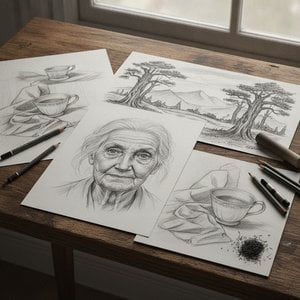
Explore the profound elegance of pencil and charcoal sketching. Discover how masters use line, shadow, and chiaroscuro to capture light and texture, bridging the gap between preparatory studies and timeless fine art masterpieces.

Explore the profound beauty of the sketch. Discover how masters use charcoal and graphite to capture raw emotion, anatomical precision, and fluid movement, bridging the gap between ephemeral marks and eternal oil masterpieces.

Explore the profound artistry of graphite drawing. Discover professional techniques for mastering depth, texture, and detail through a lens of art history, from classical sketches to modern masterpieces. Elevate your understanding of the pencil medium with our expert guide.

Elevate your artistic practice with this expert guide to mastering the line. Discover advanced techniques in graphite, charcoal, and contour drawing designed for art students seeking technical precision and expressive depth in their fine art studies.

Discover the sophisticated mastery of graphite drawing. Explore expert techniques for achieving profound depth, intricate texture, and hyper-realistic detail through the alchemy of carbon, curated for the discerning art enthusiast and professional collector.


 效果预览
效果预览
 分享
分享 分享
分享
 详情
详情 指南
指南

 下载
下载
 相似作品
相似作品 X射线
X射线 幻灯片播放
幻灯片播放 统计数据
统计数据 展开详情
展开详情









 玻璃选项仅适用于110厘米以下的尺寸。


