博物馆级艺术微喷或帆布版画,制作高效,并提供多种饰面选择。 ( 订购纯手工绘制画作 切换至数字图像销售渠道)





























您可以从与原作比例一致的预设尺寸中进行选择。

请输入您所需的宽度和高度,以适配您的画框或墙面。由于印刷品只能进行裁剪,无法超出原图尺寸,因此若比例不一致,画面的一部分将会被裁切。在正式印刷之前,我们会为您发送一份数字效果图供您确认。本页面显示的图片并非最终裁剪后的效果——只有效果图才能展示真实的裁剪情况。
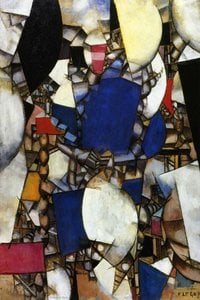
The Stove
复刻品尺寸
In the wake of the Great War, as the dust of conflict settled over a transforming Europe, Fernand Léger captured a moment of profound transition in his 1918 masterpiece, "The Stove." This work stands as a definitive emblem of Tubism, a revolutionary movement that sought to find beauty within the rhythmic, mechanical pulse of the modern age. Rather than retreating into pure abstraction, Léger utilized the language of geometry to celebrate the burgeoning influence of industrial machinery on human perception. The painting immediately captivates the viewer with its bold, unapologetic palette; dominant yellows and deep blues intertwine with assertive reds, creating a visual dynamism that mirrors the relentless energy of a world being rebuilt by steel and steam.
Léger’s technique in "The Stove" eschews traditional illusionistic representation, opting instead for a fascinatingly flattened spatial compression. Through his signature Tubist style, cylindrical forms—reminance of pipes, chimneys, and pistons—dominate the composition. These geometric shapes do not merely exist on the canvas; they interact with a sense of weight and volume that feels both architectural and organic. By utilizing these tubular structures, Léger mirrors the impact of mechanized life on our understanding of space, inviting the eye to navigate a landscape where the boundaries between domestic objects and industrial components begin to blur.
At first glance, the subject matter suggests a scene of quiet domesticity, yet beneath the surface lies a complex layer of symbolism. The stove itself serves as a potent anchor for the composition, representing warmth, comfort, and the stability of the home amidst the unsettling uncertainties of the post-war era. However, Léger deliberately disrupts this sense of traditional comfort through his fragmented, geometric approach. By deconstructing familiar objects—a clock, a chair, a bowl, and vases—into sharp, intersecting planes, he prompts the viewer to confront the underlying tension between the nostalgic pull of tradition and the inevitable march of progress.
The emotional resonance of the piece is found in this very friction. There is a palpable sense of disorientation caused by the busy, competing elements within the frame, yet there is also an unwavering conviction in the transformative power of form. The masterful use of color further deepens this emotional journey: the bright yellows embody a sense of optimism and newfound energy, while the cooler blues introduce a touch of melancholy and reflection. For the collector or interior designer, "The Stove" offers more than just a visual centerpiece; it provides a sophisticated dialogue between light and shadow, stability and movement.
For those seeking to infuse a contemporary space with historical depth and intellectual vigor, a high-quality reproduction of "The Stove" serves as an extraordinary focal point. Its vibrant primary colors and structured composition possess a unique ability to anchor a room, providing a sense of curated complexity. Whether placed in a minimalist setting to provide a burst of rhythmic energy or integrated into a more eclectic gallery wall, Léger’s work brings the spirit of the avant-garde into the modern home. It is an invitation to contemplate the beauty of structure and the enduring strength of the human spirit in an ever-changing technological landscape.

1881 - 1955 , 法国

Explore the vibrant world of Fernand Léger. Discover how his 'Tubism' and Machine Age aesthetics redefined modern art, offering profound inspiration for discerning collectors seeking geometric beauty and industrial dynamism.

Explore the profound spiritual depth of geometric abstraction. From Malevich's Suprematism to modern masters, our expert guide reveals how pure form and color command presence in fine art collections.

Explore the profound elegance of De Stijl. Discover how Piet Mondrian and the masters of Neoplasticism utilized geometric harmony and primary colors to redefine modern abstraction. An authoritative guide for the discerning collector seeking timeless, structured beauty.

Explore the profound intersection of industry and artistry. Discover museum-quality reproductions of Machine Age masterpieces by Léger and Rivera, curated for elite collectors seeking to infuse luxury interiors with the powerful, geometric soul of industrial progress.

 实景预览
实景预览
 分享
分享 分享
分享
 详情
详情 指南
指南

 下载作品
下载作品
 相似作品
相似作品 X射线
X射线 幻灯片播放
幻灯片播放 问答
问答
 统计数据
统计数据

 展开全文
展开全文









 玻璃选项仅适用于110厘米以下的尺寸。