A Burst of Modernity: Exploring Fernand Léger’s “The Polychrome Flower”
Fernand Léger's "The Polychrome Flower" is a captivating example of his distinctive artistic vision, bridging the gap between Cubism and a uniquely modern aesthetic. This painting isn’t simply a floral depiction; it’s a vibrant exploration of form, color, and the burgeoning machine age that so profoundly influenced Léger’s work.
Deconstructing Form: Style & Technique
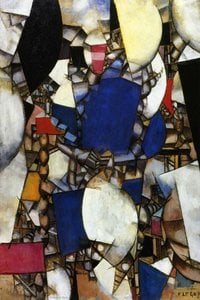
Léger is renowned for developing his signature style – often dubbed “Tubism” – a direct offshoot of Cubism but distinguished by its emphasis on cylindrical, geometric shapes. In "The Polychrome Flower," this is immediately apparent. The flower isn’t rendered with naturalistic detail; instead, it's constructed from bold, simplified forms—circles, squares, and tubes—interlocking to create a dynamic composition.
This deliberate fragmentation and reconstruction of the subject matter reflects Léger’s fascination with the mechanics of modern life. The application of color is equally striking. Léger employs a vibrant palette – yellows, oranges, blues – applied in flat planes, devoid of traditional shading. This technique further emphasizes the painting's two-dimensionality and contributes to its overall sense of energetic modernity.
Historical Context: A Response to a Changing World
Created sometime between 1918-1920 (precise dating is currently unavailable), “The Polychrome Flower” emerges from a period of immense upheaval and transformation. Léger’s experiences during World War I profoundly impacted his artistic direction. Having witnessed the horrors of mechanized warfare, he began to see beauty in the very machines that caused such destruction.
This isn't an endorsement of war, but rather a recognition of the power and aesthetic qualities inherent in industrial forms. The painting reflects this shift, moving away from purely abstract Cubism towards a more figurative style infused with mechanical elements. It’s a visual manifestation of Léger’s attempt to reconcile art with the realities of the modern world.
Symbolism & Interpretation
While seemingly straightforward in its subject matter, “The Polychrome Flower” invites deeper interpretation. The flower itself can be seen as a symbol of life and renewal, but rendered through a mechanical lens.
This juxtaposition suggests a harmonious integration of nature and technology—a vision of the future where these forces coexist. The smaller flower and circular element above it add depth and complexity to the composition, perhaps representing growth, evolution, or the cyclical nature of life. The bold colors aren’t merely decorative; they contribute to the painting's overall sense of optimism and vitality.
Emotional Impact & Aesthetic Appeal
“The Polychrome Flower” is a visually stimulating work that evokes feelings of energy, dynamism, and joy. Its vibrant colors and geometric forms create a captivating visual experience. The painting’s bold simplicity makes it incredibly versatile for interior design.
- It would serve as a striking focal point in a modern living space.
- Its energetic palette complements contemporary furniture and décor.
- The abstract nature of the work allows for individual interpretation and adds a sophisticated touch to any room.
Léger’s ability to find beauty in the mundane, to transform industrial forms into objects of aesthetic pleasure, makes “The Polychrome Flower” a timeless masterpiece—a testament to the power of art to reflect and shape our understanding of the world.