The Level Crossing
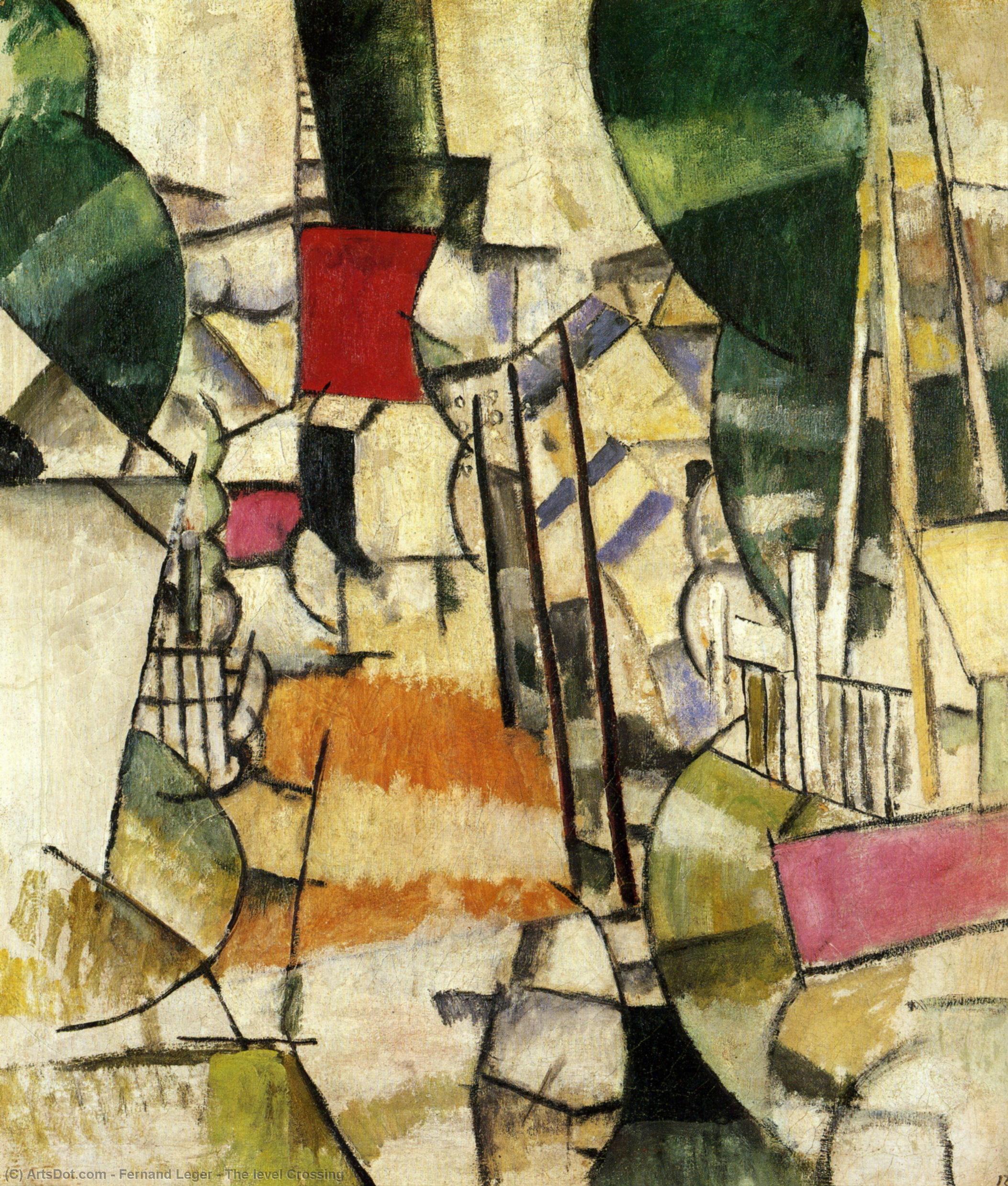
Fernand Léger’s “The Level Crossing,” created in 1912, stands as a cornerstone of Cubism and Orphism—movements that irrevocably altered the trajectory of twentieth-century art. More than just a depiction of a railway station scene, it embodies Leger's profound engagement with the burgeoning industrial age and his masterful manipulation of geometric abstraction to convey its dynamism and underlying tension. This painting isn’t merely observed; it’s felt—a visceral reaction to the rapid pace of change that defined the era.
Cubism: A Revolutionary Vision
Cubism, spearheaded by Pablo Picasso and Georges Braque, fundamentally challenged traditional artistic conventions. Rejecting illusionistic representation, Cubists fragmented objects into interlocking planes and multiple viewpoints simultaneously. This technique wasn’t simply about accuracy; it was about capturing the essence of an object's structure—its underlying geometry—rather than its surface appearance. Léger embraced this approach wholeheartedly, distilling complex scenes into simplified forms that prioritized visual impact over meticulous detail. The resulting images possess a striking immediacy and forcefulness, reflecting Leger’s conviction that art should engage with the realities of modern life.
Composition and Symbolism: Decoding the Visual Language
The painting's composition is deliberately unsettling yet captivating. Léger arranges figures—a man standing on the platform, several individuals in the foreground—within a network of cylindrical forms reminiscent of pistons and machinery. These shapes dominate the canvas, conveying a sense of relentless movement and mechanical precision. Notably, a dog sits prominently near the center, acting as an anchor amidst the swirling abstraction. The inclusion of a chair suggests a waiting area, subtly hinting at themes of anticipation and transition. Léger’s use of bold colors—primarily reds, yellows, and blues—amplifies this emotional resonance. These hues aren't merely decorative; they contribute to the painting's overall sense of energy and urgency.
Orphism: Embracing Pure Color and Geometric Harmony
Influenced by Fauvism and Paul Signac’s theoretical explorations into color perception, Léger adopted Orphism—a subset of Cubism—that prioritized pure chromatic hues over tonal gradations. This stylistic choice aligns with Orphism's belief that color alone could evoke emotion and convey meaning. Léger eschewed shading and blending techniques, opting instead for flat planes of vibrant pigment arranged in harmonious geometric patterns. The result is a visual experience akin to music—a deliberate disruption of conventional artistic norms designed to stimulate the viewer’s senses and provoke contemplation.
A Legacy of Innovation
“The Level Crossing” cemented Léger's reputation as a pioneer of modern art, securing its place within the Solomon R. Guggenheim Museum’s Founding Collection alongside other seminal works from the early 20th century. Its enduring appeal lies in its ability to encapsulate the spirit of an era—the anxieties and aspirations associated with industrialization—through a uniquely expressive visual language. For those seeking inspiration or contemplating acquiring a high-quality reproduction, Léger's “The Level Crossing” remains a testament to artistic innovation and a captivating glimpse into the transformative power of abstraction.
问答详情
费尔南·莱热 的《The level Crossing》 的色调是明亮还是深沉?
“The level Crossing”的整体亮度为bright,其亮度值为Bright Balance。
“The level Crossing”被归于哪位艺术家名下?
"The level Crossing" 的创作者是 费尔南·莱热。该作品以 费尔南·莱热 的名义编入目录。
创作《The level Crossing》时,费尔南·莱热 的年龄是多少?
费尔南·莱热 在 1912 年创作《The level Crossing》时,年龄为 31 岁。该年龄是根据艺术家的出生年份 1881 计算得出的。
"The level Crossing" 属于 费尔南·莱热 艺术生涯中的哪个时期?
“The level Crossing”属于费尔南·莱热艺术生涯中的Mature Period时期。这一分类将该作品与艺术家的创作发展历程联系在一起。
"The level Crossing" 是在哪一年创作的?
费尔南·莱热 的《The level Crossing》 的创作年份为 1912。
建议将“The level Crossing”打印成多大的尺寸?
建议将“The level Crossing”打印为 Large 尺寸。其他尺寸亦可按相同比例进行制作。
我可以使用增强现实技术在我的房间里预览 费尔南·莱热 的《The level Crossing》 吗?
通过作品的 AR 预览 页面,您可以在兼容设备上使用增强现实技术,在自己的墙面上预览 费尔南·莱热 的《The level Crossing》。