A Celebration of Modernity: Fernand Léger’s “The Dance”
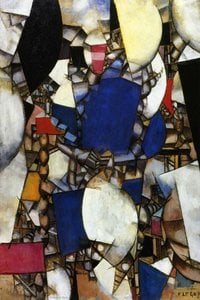
Fernand Léger's "The Dance" is a captivating example of his distinctive style, often referred to as ‘Tubism,’ a unique offshoot of Cubism. This painting presents two nude female figures engaged in what appears to be a choreographed movement or pose, rendered with the artist’s signature emphasis on cylindrical forms and simplified shapes. The composition isn't about realistic representation; instead, Léger prioritizes the *structure* of form and color, creating a dynamic interplay between figure and ground.
Stylistic Innovation & Technique
Léger moved beyond traditional perspective, breaking down the human form into geometric components. This approach isn’t cold or clinical, however. The figures retain a sense of vitality through their poses and the bold application of color. Notice how Léger uses blocks of color to define musculature and create volume – a departure from the subtle shading of earlier artistic movements.
The painting's surface is likely built up with layers of paint, contributing to its textural richness, though specific details about the technique used in this particular work are currently unknown. The inclusion of potted plants adds an unexpected element, grounding the abstract figures within a domestic or studio setting.
Historical Context & Artistic Development
Born in 1881, Fernand Léger witnessed and actively participated in the radical artistic shifts of the early 20th century. Initially influenced by Impressionism – as seen in works like “My Mother’s Garden” (1905) – he quickly embraced Cubism, developing his own distinct vocabulary. Léger's work reflects a fascination with modernity, machinery, and the energy of urban life. He sought to create an art that was accessible and relevant to the industrial age, moving away from purely representational forms. His association with the Puteaux Group further cemented his position as a leading figure in avant-garde painting.
Symbolism & Interpretation
While not overtly symbolic, “The Dance” can be interpreted as an exploration of the human form within a modern context. The simplified figures suggest a move away from traditional notions of beauty and towards a celebration of strength and dynamism.
The potted plants might represent a connection to nature amidst the increasing industrialization of society, or simply serve as compositional elements that add depth and visual interest. The act of dancing itself can be seen as symbolic of freedom, joy, and the vitality of life.
Emotional Impact & Aesthetic Appeal
“The Dance” evokes a sense of energy and movement despite its static nature. The bold colors and geometric forms create a visually stimulating experience. It’s an artwork that invites contemplation – not necessarily about narrative content, but about the fundamental elements of form, color, and composition.
Its aesthetic appeal lies in its balance between abstraction and figuration, making it suitable for both modern and contemporary interiors. The painting's vibrant energy would be a striking focal point in a living space or office environment, offering a sophisticated touch of artistic innovation.
问答详情
费尔南·莱热 的《The dance1》 使用的是什么媒介?
《The dance1》采用Acrylic On Canvas创作。
如何将 费尔南·莱热 的《The dance1》 应用于家居装饰中?
费尔南·莱热 的《The dance1》 推荐用于 Accent,理想的摆放空间为 Living Room。通过结合使用场景与空间布局,可以更好地确定复制品的陈列位置。
费尔南·莱热 是否还有其他别名或曾用名?
关于《The dance1》的创作者 费尔南·莱热,其记录在案的其他名称包括 费尔南·德·莱热, 若泽·费尔南·亨利·莱热 (全名)。