博物馆级艺术微喷或帆布版画,制作高效,并提供多种饰面选择。 ( 购买手绘画作 切换至数字图像销售渠道)





























从与原作比例一致的预设尺寸中进行选择。

您可以输入自定义尺寸,以适配特定的画框或空间。如果您选择的尺寸与原图比例不符,我们将对作品进行裁剪,或通过镜像填充/纯色填充边缘的方式来扩展图像。在开始制作之前,我们会向您发送一份数字效果图供您确认。
请注意,屏幕上的预览并不能反映实际的裁剪或扩展效果。只有效果图才能准确展示最终的构图。
虽然我们提供定制尺寸,但为了保持原图比例,我们建议您从预设列表中选择尺寸。

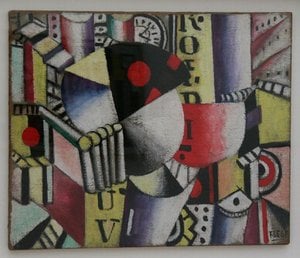
Still life with plaster mask
复制品尺寸
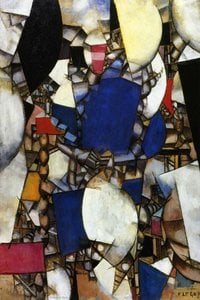
Fernand Léger’s “Still Life with Plaster Mask” is not merely a depiction of objects arranged on a surface; it's an invitation into a world where form, geometry, and the echoes of industrialization converge. Painted around 1914, during a pivotal period in Léger’s artistic evolution – a time when he moved away from the rigid constraints of Cubism towards a more expressive, almost populist style – this work embodies his fascination with the machine age while retaining a distinctly human sensibility. The central figure, a plaster mask, immediately commands attention. It's not a realistic representation but rather an abstracted form, hinting at anonymity and perhaps even a veiled identity. Léger’s deliberate simplification of shapes—the cylindrical forms reminiscent of pipes and gears, characteristic of his “Tubism”—suggests a world increasingly dominated by mechanical processes, yet the mask itself retains a certain theatricality, recalling ancient ritual objects and the power of disguise.
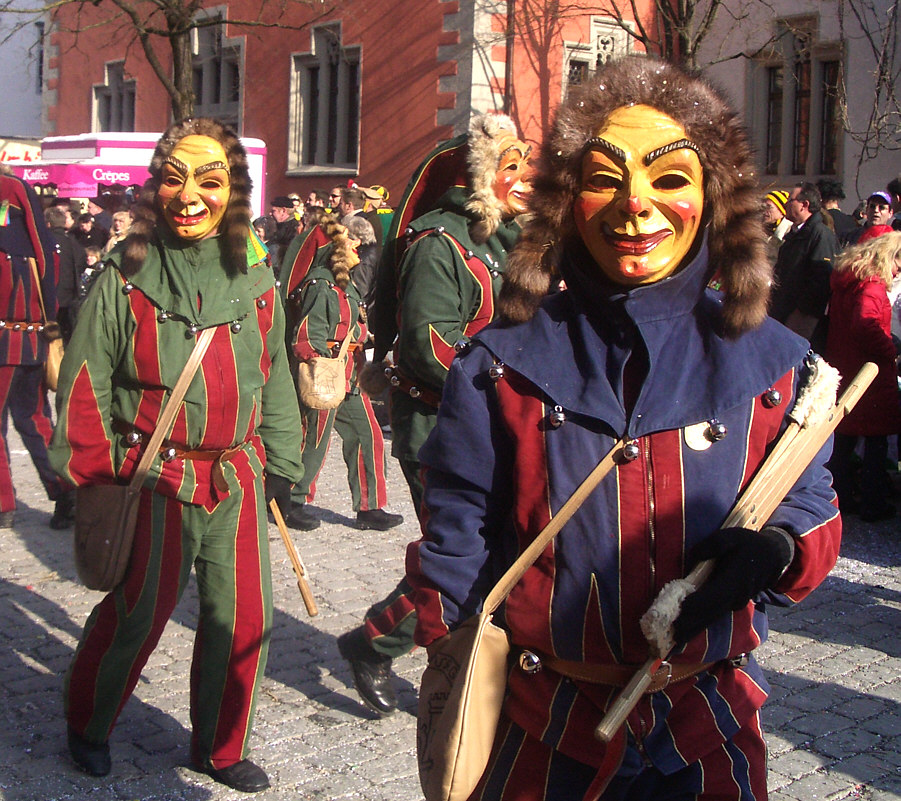
(Image: A traditional mask from Ravensburg Fasnet, illustrating the historical and ritual significance of masks)
Léger’s artistic journey is inextricably linked to the development of Cubism. Initially influenced by Picasso and Braque, he developed his own distinctive approach – “Tubism” – which prioritized simplified geometric forms, particularly cylinders, cones, and cubes. This style was a direct response to the dynamism and fragmentation he observed in the burgeoning industrial landscape. However, unlike many of his contemporaries who retreated into pure abstraction, Léger sought to integrate modernity directly into his work. “Still Life with Plaster Mask” demonstrates this brilliantly; the mask itself becomes a visual embodiment of this integration – a fragmented, stylized representation that simultaneously evokes both ancient symbolism and contemporary mechanics. The surrounding objects—a cup, a bowl, an umbrella—are treated with similar geometric precision, contributing to the painting’s overall sense of ordered chaos.
The addition of the umbrella, positioned high in the composition, introduces an element of unexpected lightness and perhaps even vulnerability against the backdrop of industrial forms. It's a subtle detail that adds depth to the work, suggesting a human presence within this machine-dominated world. Interestingly, Léger’s exploration of masks during this period coincided with his own experiences in World War I, where he witnessed firsthand the dehumanizing effects of mechanized warfare. The mask, therefore, can be interpreted as a symbol of both anonymity and the loss of individual identity – themes that resonated deeply within him.
Executed in oil on canvas, “Still Life with Plaster Mask” showcases Léger’s masterful control of color and form. He employs a limited palette—primarily primary colors punctuated by black and white—to create a sense of clarity and visual impact. The brushstrokes are bold and decisive, emphasizing the geometric shapes and contributing to the painting's overall dynamism. The use of canvas itself is integral to the work’s aesthetic; Léger deliberately avoids illusionistic depth, instead focusing on the flat surface and the interplay of shapes and colors. This approach aligns with his desire to represent the world as it *appears* rather than as it *is*, reflecting a commitment to capturing the essence of modern experience.
Beyond its formal qualities, “Still Life with Plaster Mask” carries a profound symbolic weight. The mask, as a recurring motif in Léger’s work, represents not just anonymity but also transformation, disguise, and the potential for rebirth. It speaks to our desire to conceal ourselves from the world, yet simultaneously invites us to explore hidden aspects of our own identities. The painting's overall mood is one of quiet contemplation—a subtle tension between the ordered precision of industrial forms and the inherent mystery of human existence. It’s a work that rewards repeated viewing, revealing new layers of meaning with each encounter. A high-quality reproduction allows us to appreciate Léger’s innovative approach to modern art and his enduring legacy as a pioneer of abstraction.

1881 - 1955 , 法国
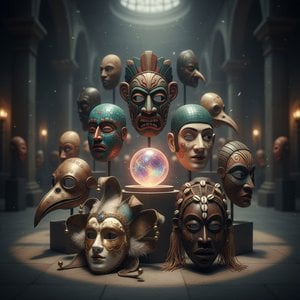
Embark on a profound journey through the world's most iconic mask artworks. Explore the spiritual depth, intricate craftsmanship, and rich cultural heritage of global traditions, from Chhau to Gomira, in this expert-led exploration of ancestral artistry and symbolic beauty.

Explore the profound evolution of Cubist still life, from Cézanne's structural foundations to the fragmented brilliance of Braque and Léger. Discover how geometric abstraction redefined reality through a sophisticated lens of form, color, and modern artistic mastery.

Explore the vibrant world of Fernand Léger. Discover how his 'Tubism' and Machine Age aesthetics redefined modern art, offering profound inspiration for discerning collectors seeking geometric beauty and industrial dynamism.


 效果预览
效果预览
 分享
分享 分享
分享
 详情
详情 指南
指南

 下载
下载
 相似作品
相似作品 X射线
X射线 幻灯片播放
幻灯片播放 统计数据
统计数据

 展开详情
展开详情









 玻璃选项仅适用于110厘米以下的尺寸。