Oil On CanvasWallArtCubism
 Modern
 27.0 x 21.0 cm
博物馆级艺术微喷或帆布版画,制作高效,并提供多种饰面选择。 ( 购买手绘画作 切换至数字图像销售渠道)





























从与原作比例一致的预设尺寸中进行选择。

您可以输入自定义尺寸,以适配特定的画框或空间。如果您选择的尺寸与原图比例不符,我们将对作品进行裁剪,或通过镜像填充/纯色填充边缘的方式来扩展图像。在开始制作之前,我们会向您发送一份数字效果图供您确认。
请注意,屏幕上的预览并不能反映实际的裁剪或扩展效果。只有效果图才能准确展示最终的构图。
虽然我们提供定制尺寸,但为了保持原图比例,我们建议您从预设列表中选择尺寸。

New York
复制品尺寸
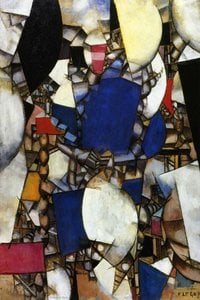
In the vibrant, fragmented landscape of "New York," Fernand Léger invites us into a world where the pulse of the machine age meets a lyrical, geometric soul. Painted circa 1928, this work stands as a striking testament to the burgeoning influence of Cubism and Purism on European art during the interwar period. More than just a depiction of a skyline, the artwork embodies Léger’s profound fascination with industrial forms and his relentless desire to translate the raw energy of the modern metropolis into a visual language that transcends mere representation. It is an ode to urban dynamism, capturing the electric spirit of a city that never sleeps through a lens of structured abstraction.
The composition presents an asymmetrical rectangle that prioritizes verticality, pulling the viewer's gaze upward as if caught in the dizzying ascent of a skyscraper. Buildings are stacked in overlapping planes, creating a layered effect that mimics the overwhelming complexity of urban architecture. Léger deliberately abandons traditional Renaissance conventions of depth; instead, he opts for a flattened space where structures appear simultaneously from multiple viewpoints. This subtle distortion of perspective conveys a sense of beautiful disorientation, mirroring the sensory overload experienced by one navigating the bustling streets of Manhattan.
Léger’s palette is nothing short of a bold declaration. He employs a striking arrangement of primary hues—scarlet red, lemon yellow, and cobalt blue—punctuated by stark black and white accents. These colors are applied in flat, decisive planes of pigment with minimal blending, reflecting the aesthetic principles of Purism and Léger’s preoccupation with machine-inspired forms. There is a rhythmic quality to the way these colors interact, creating a visual tension that feels both stable and explosive. Despite the smooth appearance of the surface, the technique relies on thin, precise layers of paint that contribute to an overall impression of geometric solidity and architectural precision.
The artist meticulously dissects architectural elements into essential components: rectangles, squares, and triangles. This fragmentation and simplification of form, heavily influenced by the legacies of Picasso and Braque, allows the viewer to see the city not as a collection of stone and steel, but as a rhythmic arrangement of shapes. Strong, defined lines delineate these forms, reinforcing the sense of structural integrity. Even within this rigid geometry, moments of softness emerge; organic, cloud-like formations drift through the sky, providing a delicate counterpoint to the unyielding angularity of the man-made structures below.
For the discerning collector or interior designer, "New York" offers much more than aesthetic beauty; it provides a profound emotional resonance. The artwork evokes feelings of dynamism, progress, and the exhilarating—if sometimes alienating—energy associated with modern city life. It is a piece that commands attention, making it an ideal centerpiece for contemporary spaces that celebrate bold, avant-garde aesthetics. Whether placed in a minimalist gallery setting or a sophisticated residential lounge, the painting’s vibrant colors and structured composition act as a window into the heart of the twentieth century's industrial revolution.
Owning a high-quality reproduction of this masterpiece allows one to bring the spirit of the machine age into the home. It serves as a constant reminder of the beauty found in structure, the power of primary colors, and the enduring allure of the urban landscape. As a bridge between the rural roots of Léger’s youth and the industrial future he so passionately depicted, "New York" remains an essential icon for those who find inspiration in the intersection of art, technology, and the relentless movement of modern life.


1881 - 1955 , 法国
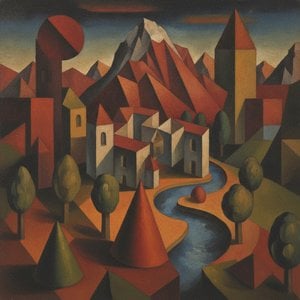
Explore the profound evolution of Cubist landscapes. Discover how masters like Braque and Picasso redefined perspective through geometric mastery, transforming nature into an intellectual mosaic of form and light for the discerning modern art collector.


 效果预览
效果预览
 分享
分享 分享
分享
 详情
详情

 下载
下载
 相似作品
相似作品 X射线
X射线 幻灯片播放
幻灯片播放 统计数据
统计数据 展开详情
展开详情









 玻璃选项仅适用于110厘米以下的尺寸。