x
 布面丙烯墙面艺术品Romanticism
 1850
1850 272.0 x 440.0 cm
 卢浮宫
卢浮宫




























从与原作比例一致的预设尺寸中进行选择。

您可以输入自定义尺寸,以适配特定的画框或空间。如果所选尺寸与原图比例不符,我们将通过裁剪作品或添加手绘元素来扩展画面。数字样稿将在制作开始前发送给您确认。
请注意,屏幕预览无法准确反映实际的裁剪或扩展效果,只有样稿才能真实呈现最终的构图。
虽然我们提供定制尺寸服务,但为了保留原作比例,建议您从预设列表中选择尺寸。

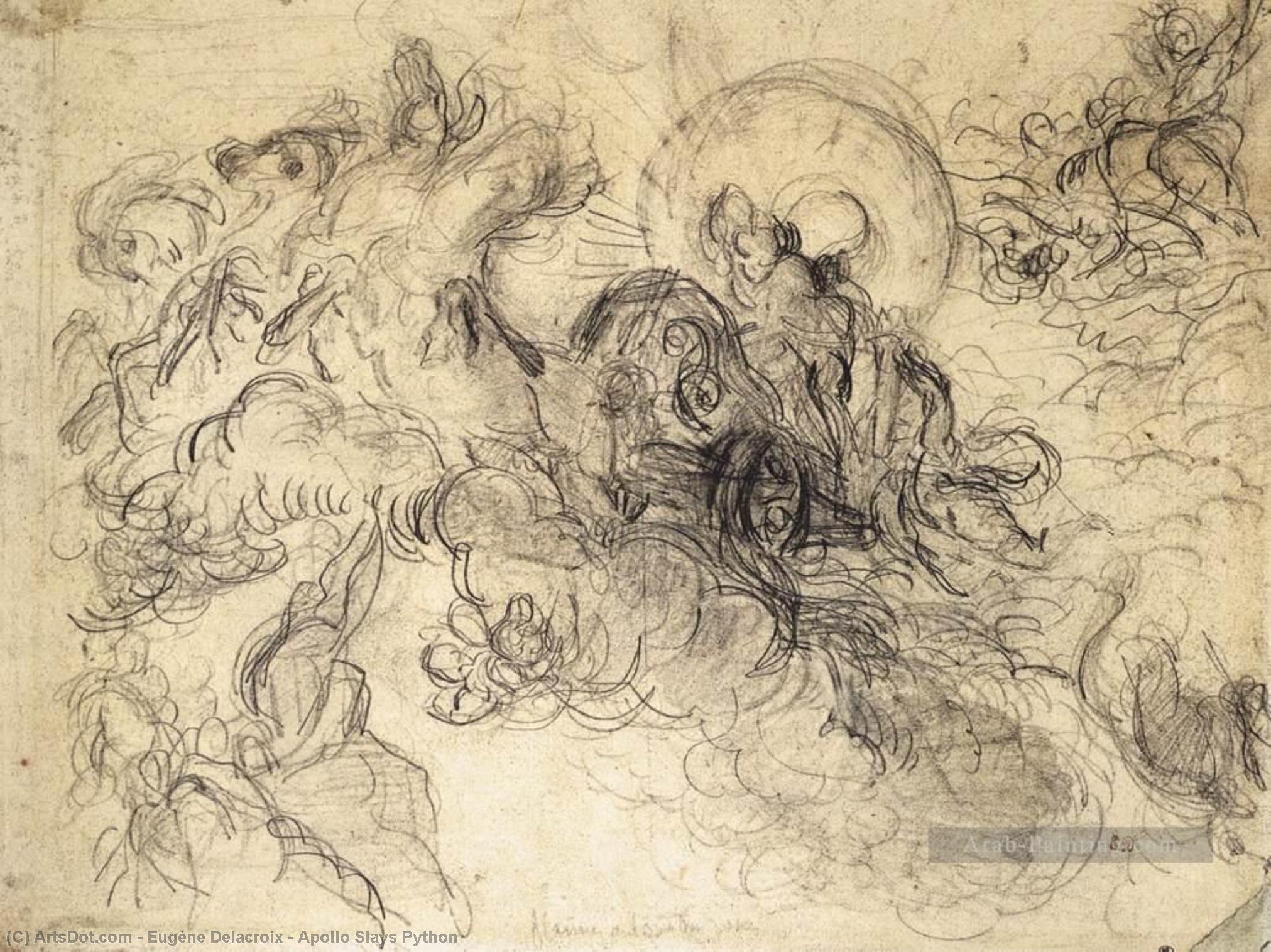
Apollo Slays Python
复制品尺寸
Eugène Delacroix’s “Apollo Slays Python” isn't merely a depiction of a classical legend; it’s an immersion into the heart of ancient Greek belief, a vibrant testament to the eternal struggle between order and chaos, light and darkness. Painted in 1850, this monumental canvas pulsates with the drama and emotional intensity characteristic of Romanticism – a movement that sought to capture not just external reality but also the inner turmoil and passionate spirit of humanity. Delacroix, deeply influenced by Rubens’ dynamic compositions and the Venetian masters' mastery of color, throws aside the rigid formality of Neoclassicism, embracing instead a visceral energy that immediately draws the viewer into the scene.
The composition itself is a carefully orchestrated ballet of movement. Apollo, rendered in luminous white robes, strides forward with decisive grace, his bow drawn taut – an arrow poised to deliver justice. He’s not a serene deity; he's a warrior, driven by purpose and radiating power. Beneath him writhes Python, the monstrous serpent, a creature born from the earth itself, its scales rendered in shades of deep green and black, creating a formidable contrast against Apollo’s radiant light. The surrounding figures – attendants, warriors, and even a fallen comrade – are caught mid-action, contributing to the overwhelming sense of dynamism. Note the meticulous detail in the rendering of their armor and weaponry, reflecting Delacroix's commitment to realism within his romantic vision.
Beyond the straightforward narrative of a god slaying a serpent lies a rich tapestry of symbolism. Python represents primordial chaos, the untamed forces that threaten to engulf civilization and order. Apollo’s victory signifies the triumph of reason, intellect, and divine authority over primal instincts. The setting – a rocky landscape reminiscent of Delphi, the sacred oracle of ancient Greece – reinforces this theme. The omphalos stone, the central point of the Delphic sanctuary, is subtly suggested in the background, anchoring the scene within its historical and religious context. The inclusion of the fallen warrior adds another layer of meaning, suggesting sacrifice and the cost of maintaining order.
Delacroix's masterful use of color is central to the painting’s impact. He employs a vibrant palette – intense blues, reds, and yellows – creating a dramatic interplay of light and shadow. The brushstrokes are loose and expressive, conveying movement and emotion with remarkable immediacy. The impasto technique—thickly applied paint—adds texture and depth, making the scene feel almost tactile. This departure from the smooth surfaces favored by Neoclassical painters demonstrates Delacroix’s commitment to capturing the raw energy of his subject matter. The painting's scale – a substantial 272 x 440 cm – further enhances its dramatic effect, enveloping the viewer in the heart of the action.
“Apollo Slays Python” remains one of Delacroix’s most celebrated works, embodying the spirit of Romanticism's fascination with mythology, heroism, and emotional intensity. It’s a painting that invites contemplation – prompting us to consider the timeless themes of conflict, sacrifice, and the enduring power of divine order. Reproductions capture much of this original impact, offering a window into a world where gods walked among mortals and legends were brought vividly to life on canvas. The piece continues to resonate with audiences today, serving as a powerful reminder of the enduring allure of ancient myths and the transformative potential of art.


费迪南·维克多·欧仁·德拉克洛瓦,1798年出生于巴黎附近的沙朗东圣莫里斯,不仅仅是一位画家,更是浪漫主义精神的化身。在社会动荡和审美理想转变的时代,德拉克洛瓦成为法国艺术界的重要人物,他摒弃了新古典主义的严谨形式,转而拥抱戏剧性、情感和充满活力的色彩,从而永远改变了绘画的进程。他的一生虽然充满了个人悲剧,却与他的艺术愿景密不可分——追求崇高,探索异域世界,表达人类经验的原始力量。
德拉克洛瓦的早期生活受到复杂的家庭历史和相对脆弱的健康状况的影响。十六岁时失去双亲后,他从有影响力的查理-莫里斯·德·塔列朗-佩里戈尔那里获得了指导,许多人认为他是他的亲生父亲。这种联系为他提供了重要的赞助和进入巴黎艺术世界的机会。他最初师从受人尊敬的学院派画家皮埃尔-纳西斯·盖兰,但真正点燃德拉克洛瓦艺术激情的却是西奥多·热里科的作品——特别是他那宏伟的《梅杜莎号之筏》。他甚至为热里科摆姿势,吸收了这位前辈艺术家对现实主义和情感强度的承诺。
1822年,德拉克洛瓦在沙龙展上首次亮相《但丁与维吉尔在地狱中》,这部作品立即预示了他与既定规范的决裂。受到但丁·阿利吉耶里的《地狱》的启发,这幅画展示了大胆的色彩运用、动态的构图和一种强烈的心理动荡感。这标志着他职业生涯的开始,致力于探索激情、冲突和人类状况的主题。尽管最初反应不一——一些评论家赞扬了他的独创性,另一些人则认为他的作品混乱且缺乏古典精致——德拉克洛瓦仍然坚持不懈,发展出一种以自由奔放的笔触、丰富的纹理和对运动的强调为特征的独特风格。
他对历史和文学主题之外的事物产生了浓厚的兴趣。1832年对北非的旅行深刻地影响了他的艺术轨迹。沉浸在摩洛哥充满活力的文化中,德拉克洛瓦被异域风光、阿拉伯部落游牧生活方式以及他们传统的热烈氛围所吸引。这种经历为他的绘画注入了新的色彩、光线和能量,如《阿拉伯马匹搏斗》和众多阿尔及利亚生活的研究中所见。他不仅仅是在记录这些场景;他试图理解与自己文化截然不同的文化的内在精神。
德拉克洛瓦对色彩的掌握是他最持久的遗产之一。他从鲁本斯巴洛克风格的奔放和威尼斯文艺复兴大师那里汲取灵感,优先考虑色度强度而不是精确的素描技巧。他理解色彩可以唤起情感、创造氛围并以线条无法表达的方式传达意义。这种创新的方法深刻地影响了后世艺术家,为印象派和后印象派铺平了道路。
除了他的审美创新之外,德拉克洛瓦还是一位积极参与政治的艺术家。他最著名的作品,《人民领导自由》(1830年)不仅仅是对七月革命的描绘;它更是对自由与反抗的有力象征。这幅画动态的构图、寓言人物和原始的情感力量使其在艺术史上确立了作为法国国家认同和革命理想象征的地位。它不仅仅是记录一个事件;而是捕捉一个为自由而战的国家的精神。
德拉克洛瓦一生都在不断创作,探索从莎士比亚悲剧到圣经叙事的各种主题。他还作为一位石版画家做出了重要贡献,为威廉·斯科特和约翰·沃尔夫冈·冯·歌德等文学巨匠的作品绘制插图。他的工作室成为艺术交流的中心,吸引了渴望学习他非常规方法的有抱负的画家。
到1863年去世时,德拉克洛瓦已经确立自己为法国最伟大的艺术家之一。他的影响远远超出了浪漫主义运动的范围,塑造了现代绘画的发展,并以其大胆的色彩运用、动态的构图和对情感表达的不懈承诺激励着无数艺术家。他仍然是艺术史上的一位重要人物——证明了个体愿景的力量和崇高的持久魅力。

1798 - 1863 , 法国
Explore the timeless beauty & profound themes of Classical art! Discover Greek & Roman masterpieces, Neoclassical revivals, and the enduring influence on artistic movements. Expert insights & high-quality reproductions at WahooArt.

Explore the enduring legacy of classical art! Discover ancient Greek & Roman influences, Renaissance masterpieces, and timeless techniques. Expert insights for collectors & enthusiasts at WahooArt.

Explore the revolutionary art of Eugène Delacroix, leader of French Romanticism. Discover his masterful use of color, political engagement, and lasting influence on modern painting. Learn about key works & history.

Explore the diverse world of 19th-century art! From Realism's rebellion to Impressionism’s light and beyond, discover key movements, artists & collecting tips. Expert insights for classic enthusiasts.

Explore 10 legendary 'Acrylic on Paper' masterpieces by artists like Helen Frankenthaler & Gerhard Richter. Discover abstract expressionism, color field painting & the evolution of modern art. Find museum-quality reproductions for your home at WahooArt.com.


第一时间获取最新的艺术新闻、独家优惠及装饰灵感。
向我们介绍您的项目需求,我们的艺术专家将为您提供 3 个个性化的艺术品推荐。
由我们的专家为您精选 3 款心仪之作 —— 完全免费!

 购买版画
购买版画 分享
分享 分享
分享
 详情
详情

 下载
下载
 相似作品
相似作品 X射线检测
X射线检测 幻灯片播放
幻灯片播放 展开详情
展开详情









 玻璃选项仅适用于110厘米以下的尺寸。