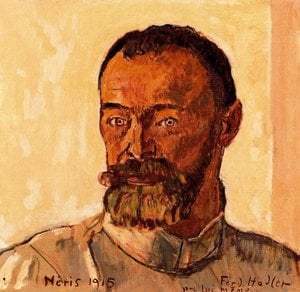
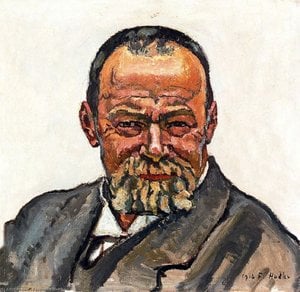
A Portrait of Quiet Dedication: Ferdinand Hodler’s “The Shoemaker”
Ferdinand Hodler's "The Shoemaker," painted in 1878, is more than just a depiction of a craftsman at work; it’s a poignant meditation on labor, mortality, and the enduring value of traditional skills. This oil-on-canvas artwork, measuring 46 x 38 cm, offers a glimpse into the heart of a Swiss workshop, rendered with Hodler's signature blend of realism and symbolic suggestion. The scene unfolds with a quiet intensity – a solitary shoemaker, positioned slightly off-center to the right, meticulously repairing a shoe. His focused expression and deliberate movements speak volumes about dedication and the satisfaction derived from skilled manual labor.
Decoding Symbolism Through Technique
Hodler’s masterful technique is immediately apparent in the rich textures he achieves through visible brushstrokes. The rough grain of the wooden workbench, the supple surface of the leather being worked upon, and the sheen of the metal tools are all rendered with a tactile quality that invites the viewer to almost reach out and touch the scene. Lines play a crucial role, defining not just the shapes of objects but also the contours of the man’s body and the folds in his clothing. Geometric forms – rectangular shelves, square tools, and rounded human forms – contribute to a carefully constructed composition that balances realism with an underlying symbolic intent. The use of light, emanating from a window on the left, casts dramatic shadows, further emphasizing the subject's face and hands, drawing our attention to the core of this quiet narrative.
Historical Context and Artistic Influences
Painted in 1878, “The Shoemaker” reflects the broader artistic currents of the late 19th century. Hodler was a key figure within the Symbolist movement, which sought to evoke emotions and ideas rather than simply represent reality. While rooted in realism, his work incorporates elements of Impressionism through its emphasis on light and brushwork, creating an atmosphere that is both tangible and imbued with feeling. The piece’s color palette – dominated by browns, greens, and muted yellows – contributes to a warm, nostalgic mood, reminiscent of the artisan's workshop and hinting at a connection to Switzerland’s rich tradition of craftsmanship.
A Legacy of Craftsmanship and Reflection
Beyond its aesthetic qualities, “The Shoemaker” carries a profound symbolic weight. It represents not only the practical skill of shoemaking but also the dignity of manual labor and the quiet dedication required for mastery. Given Hodler’s own life marked by early loss, the image can be interpreted as a reflection on mortality and the fleeting nature of existence – themes that resonate throughout his oeuvre. This artwork offers a compelling glimpse into a bygone era, inviting us to contemplate the value of tradition, skill, and the enduring human connection to the tangible world.
常见问题与解答
在家的哪个空间摆放 "The shoemaker" 的复制品最为合适?
"The shoemaker" 的复制品非常适合陈设于 Living Room 中。
费迪南·霍德勒 的作品《The shoemaker》是否属于公有领域?其原因是什么?
"The shoemaker" 的版权状态 —— 属于公有领域 —— 其版权已过期 —— 取决于艺术家于 1918 年逝世这一事实。
费迪南·霍德勒 的《The shoemaker》 中哪些颜色占据主导地位?
"The shoemaker" 的色彩基调由以 Walnut (#7b5e3c) 为主的 Earthy 色系构成。