Acrylic On CanvasWallArtSwiss Symbolism
 1908
1908 44.0 x 29.0 cm
 波斯尼亚和黑塞哥维那国家美术馆
博物馆级艺术微喷或帆布版画,制作高效,并提供多种饰面选择。 ( 订购纯手工绘制画作 切换至数字图像销售渠道)





























您可以从与原作比例一致的预设尺寸中进行选择。

请输入您所需的宽度和高度,以适配您的画框或墙面。由于印刷品只能进行裁剪,无法超出原图尺寸,因此若比例不一致,画面的一部分将会被裁切。在正式印刷之前,我们会为您发送一份数字效果图供您确认。本页面显示的图片并非最终裁剪后的效果——只有效果图才能展示真实的裁剪情况。
Infantry marcher
复刻品尺寸
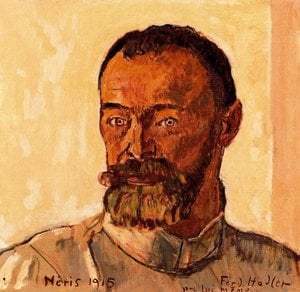
Ferdinand Hodler’s “Infantry Marcher,” completed in 1908, stands as a cornerstone of Swiss Symbolism and exemplifies Hodler's distinctive approach to capturing the human condition. More than just a depiction of a soldier on duty—though meticulously rendered with anatomical precision—the painting delves into profound themes of mortality, solitude, and the inescapable march toward oblivion, presented with an unsettling beauty that continues to resonate with viewers today.
Hodler’s stylistic hallmark was “parallelism,” a technique he pioneered whereby he juxtaposed two distinct planes of color – one luminous and vibrant, representing life's energy, and the other muted and shadowed, symbolizing death. In "Infantry Marcher," this duality is powerfully realized. The soldier’s torso glows with an ethereal luminescence, contrasting sharply with the dark, textured background that evokes a sense of oppressive stillness. This deliberate contrast isn’t merely aesthetic; it speaks to Hodler's preoccupation with confronting existential anxieties.
The painting’s composition contributes significantly to its emotional impact. The soldier is positioned in profile, facing away from the viewer, creating an immediate feeling of detachment and introspection. His gaze is averted, suggesting a preoccupation with internal thoughts rather than external surroundings. This posture reinforces the overarching theme of isolation—the individual confronting the vastness of existence alone.
Hodler’s masterful use of watercolor and ink lends itself to the painting's haunting atmosphere. The delicate washes of color capture the subtle nuances of light and shadow, while the precise linework defines the soldier’s form with remarkable accuracy. This combination of techniques allows Hodler to convey both visual beauty and psychological depth simultaneously.
Historically situated within the burgeoning Symbolist movement—which sought to express inner emotions and spiritual truths beyond rational representation—"Infantry Marcher" reflects a broader artistic preoccupation with confronting death and decay. Hodler’s exploration of these themes aligns with the philosophical currents of his time, mirroring anxieties about societal change and the fragility of human life. The painting serves as a poignant reminder that even amidst duty and responsibility, there exists an inescapable awareness of mortality.
“Infantry Marcher” transcends its subject matter to become a meditation on the human experience itself. Hodler’s ability to distill complex emotions into a single image—a quiet march toward an unknown horizon—solidifies his legacy as one of Switzerland's most influential artists and ensures that “Infantry Marcher” continues to captivate audiences with its timeless beauty and unsettling profundity.
"Infantry marcher" 描绘了 mortality, isolation, symbolism, landscape, soldier, uniform, darkness,而 费迪南·霍德勒 的创作主题则以 symbolist tradition, existential angst, death imagery, landscape reflection, artistic vision 见长。通过两者的对比,可以发现此作与艺术家惯用题材之间的内在联系。
"Infantry marcher" 在 Swiss Symbolism 运动中蕴含着 Reflective 的情感基调。
“Infantry marcher”是一件Swiss Symbolism时期的作品。该艺术流派体现了作品所属的艺术传统。


1853 - 1918 , 瑞士

Elevate your space with bespoke Gothic masterpieces. Using advanced AI and master oil painters, WahooArt transforms your photos into dark, Renaissance-style fine art. Experience museum-quality craftsmanship, personalized commissions, and a timeless legacy for your home.

Embark on a sophisticated exploration of art history, from the profound depths of the Dark Ages to the bold innovations of contemporary masterpieces. Discover the evolution of human creativity through an expert curator's lens, designed for discerning collectors and art enthusiasts.

Explore the profound impact of Tenebrism in Baroque art. Discover how masters like Caravaggio used dramatic shadows to evoke emotion, and learn the technical secrets behind this captivating style of light and darkness.


 实景预览
实景预览
 分享
分享 分享
分享
 详情
详情 指南
指南

 下载作品
下载作品
 相似作品
相似作品 X射线
X射线 幻灯片播放
幻灯片播放 Q&A
Q&A 统计数据
统计数据 展开全文
展开全文









 玻璃选项仅适用于110厘米以下的尺寸。