Ferdinand Hodler: Symbolism, Parallelism & The Quest For Universal Harmony
Ferdinand Hodler stands as an enigmatic figure in the annals of Swiss art history—a painter who wrestled with mortality, embraced profound symbolism, and forged a distinctive artistic vision that continues to captivate audiences today. Born in Bern in 1853 amidst devastating familial loss—the premature deaths of his father and two brothers—these formative experiences irrevocably shaped Hodler’s worldview and fueled his relentless pursuit of artistic expression beyond mere representation. This preoccupation with death, coupled with an unwavering fascination for the sublime beauty of Alpine landscapes, became central to his oeuvre, propelling him toward a revolutionary style he termed “parallelism.”
- Early Influences & Artistic Training: Hodler’s initial artistic endeavors centered on portraiture and genre paintings executed in a realist tradition. However, recognizing the limitations of conventional techniques, he sought formal training at the École des Beaux-Arts in Zurich, immersing himself in the study of Dürer’s engravings—particularly “Melancholia I”—which instilled within him an acute awareness of human vulnerability and the pervasive influence of psychological states.
- The Birth of Parallelism: Hodler's artistic breakthrough arrived in 1890 with “Night,” a monumental canvas depicting reclining figures bathed in ethereal luminescence. Rejecting traditional compositional conventions, he employed a radical technique—the “parallelism”—characterized by symmetrical groupings of figures arranged in poses suggestive of ritual or dance. This stylistic innovation aimed to capture the underlying harmony and rhythm governing human society, reflecting Hodler’s philosophical conviction that beauty resided not merely in visual splendor but also in intellectual coherence.
Symbolism & The Exploration of Death
Hodler's artistic explorations extended far beyond mere stylistic experimentation; he actively engaged with the profound symbolism inherent in his chosen subjects. Recurring motifs—such as skulls, draped figures, and desolate landscapes—served as potent emblems of mortality and decay—themes that resonated deeply within the broader Symbolist movement. His masterful depiction of “Dead Christ,” influenced by Hans Holbein’s iconic engraving, exemplifies Hodler's ability to convey complex emotions through restrained visual language—a testament to his artistic sensitivity and intellectual rigor. The artist sought to transcend superficial appearances, delving into the psychological depths of human experience and confronting existential anxieties with unflinching honesty.
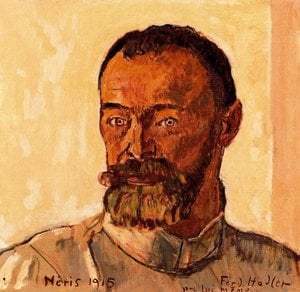
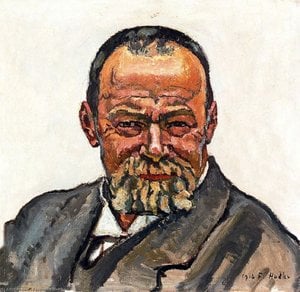
- Notable Works: Hodler’s prolific output encompassed a diverse range of paintings—including “The Emotion,” “Eurythmy,” and “Self-Portrait (The Angry One)”—each imbued with distinctive stylistic nuances and symbolic resonances. These canvases stand as enduring monuments to Hodler's artistic genius, demonstrating his unwavering commitment to pushing the boundaries of conventional painting practice.
- Legacy & Influence: Hodler’s pioneering approach to symbolism profoundly impacted subsequent generations of artists—particularly those associated with Expressionism—who embraced similar techniques for conveying emotional intensity and psychological complexity. His legacy continues to inspire contemporary creatives seeking to forge new artistic paths—a testament to the enduring power of his visionary aesthetic.
Hodler’s Technique & Artistic Vision
Hodler's distinctive technique—characterized by meticulous brushwork, subtle tonal gradations, and a masterful manipulation of color—served as an indispensable tool for achieving his artistic goals. He favored a palette dominated by muted hues—primarily ochre, umber, and Sienna—creating canvases imbued with atmospheric depth and textural richness. Hodler’s unwavering dedication to capturing the essence of his subjects—whether landscapes or human figures—reflected his profound belief that art possessed the capacity to illuminate hidden truths and evoke visceral emotional responses. Through painstaking observation and artistic innovation, Hodler transformed visual representation into a vehicle for conveying philosophical contemplation and existential awareness.
- Hodler’s Artistic Philosophy: Hodler's artistic philosophy centered on the conviction that beauty resided not merely in outward appearance but also in intellectual coherence—a concept encapsulated in his term “parallelism.” He sought to capture the underlying harmony and rhythm governing human society, mirroring his own spiritual quest for universal unity. This philosophical underpinning informed his stylistic choices—particularly his symmetrical compositions and evocative use of color—resulting in artworks that transcend mere visual spectacle.
Hodler’s enduring influence on art history testifies to the transformative power of artistic vision—a testament to his unwavering commitment to exploring profound themes with uncompromising honesty and stylistic innovation. His canvases continue to resonate with audiences today—inspiring contemplation and fostering appreciation for the sublime beauty of human experience. Owning a high-quality reproduction offers an opportunity to immerse oneself in Hodler’s captivating aesthetic universe—a journey into the heart of Symbolism and the quest for universal harmony.
问答详情
我可以在不同的光线下查看费迪南·霍德勒 的《Figure study》吗?
费迪南·霍德勒 的《Figure study》 的 X 光视图可在作品的 X射线检测 页面查看:通过十一层光学图层对图像进行交互式深度解析。
费迪南·霍德勒 的《Figure study》 使用了什么技法?
费迪南·霍德勒 在作品《Figure study》中运用了 Acrylic On Canvas 技法。该技法界定了原作的材质特性。
在费迪南·霍德勒反复探讨的主题中,"Figure study"处于怎样的地位?
费迪南·霍德勒 的创作主题常涉及 alpine landscape, symbolic imagery, mortality reflection, psychological depth, swiss artistic tradition;而《Figure study》则聚焦于 female figure, emotion, portrait study, symbolism, alpine landscape, psychological depth。