


x

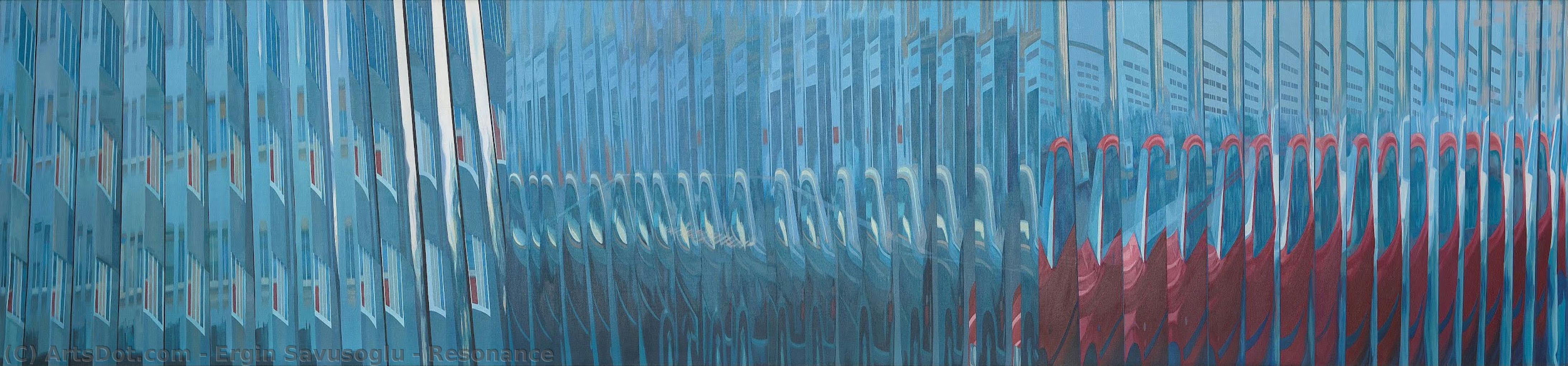
 Expressionism
 305.0 x 71.0 cm
 Elgiz Museum of Contemporary Art
从与原作比例一致的预设尺寸中进行选择。

您可以输入自定义尺寸,以适配特定的画框或空间。如果您选择的尺寸与原图比例不符,我们将对作品进行裁剪,或通过镜像填充/纯色填充边缘的方式来扩展图像。在开始制作之前,我们会向您发送一份数字效果图供您确认。
请注意,屏幕上的预览并不能反映实际的裁剪或扩展效果。只有效果图才能准确展示最终的构图。
虽然我们提供定制尺寸,但为了保持原图比例,我们建议您从预设列表中选择尺寸。

Resonance
复制品尺寸

Ergin Çavuşoğlu, a Turkish artist born in Targovishte, Bulgaria in 1968, embodies a fascinating intersection of cultural influences and geographical displacement that profoundly shapes his artistic vision. His early education at the National School of Fine Arts in Sofia laid a crucial foundation, instilling within him a classical understanding of form and technique. This initial training wasn’t merely about mastering skills; it was an immersion into a rich artistic heritage, a lineage he would later subtly deconstruct and reimagine through his multimedia explorations. Following his studies in Sofia, Çavuşoğlu pursued further education at Marmara University in Istanbul, broadening his perspective within the dynamic context of Turkish art and society. This period marked a shift towards conceptual thinking, prompting him to question established norms and explore new avenues of expression.
The artist’s intellectual journey continued with advanced studies at Goldsmiths College, London, and the University of Portsmouth, where he earned a Ph.D. These experiences were pivotal in solidifying his commitment to multimedia installations, animations, and drawings as primary modes of artistic communication. It was during this time that Çavuşoğlu began to articulate a unique aesthetic language—one characterized by layered narratives, subtle symbolism, and an acute sensitivity to the complexities of place, space, and cultural identity.
Çavuşoğlu’s breakthrough moment arrived in 2003 when he co-represented Turkey at the prestigious 50th Venice Biennale. This landmark participation catapulted him onto the international art scene, establishing him as a significant voice within contemporary art discourse. His work presented at the Biennale was not merely an exhibition; it was a statement—a nuanced exploration of Turkish identity in a globalized world, challenging conventional representations and inviting viewers to engage with complex socio-political realities.
The recognition didn’t stop there. In 2004, he was shortlisted for the Beck’s Futures Prize, further solidifying his reputation as an innovative artist pushing boundaries. His nomination for Artes Mundi 4 in 2010 underscored his growing international acclaim and demonstrated a consistent commitment to socially engaged art practices. These accolades weren't simply awards; they were validations of his artistic vision—a testament to the power of his work to provoke thought, inspire dialogue, and challenge perceptions.
At the heart of Çavuşoğlu’s practice lies a profound exploration of concepts surrounding place, space, liminality, mobility, and the very conditions of cultural production. He doesn't simply depict these themes; he *embodies* them through his diverse range of mediums. His video and sound installations are particularly compelling, often creating immersive environments that transport viewers to in-between spaces—airports, waterways, marketplaces, historical sites, national borders—locations where identities are fluid, boundaries are blurred, and narratives intersect.
His work frequently engages with the transient nature of urban life, examining how people navigate these spaces and how their experiences shape their understanding of the world. He masterfully weaves together classical, modern, and contemporary influences, creating a rich tapestry of references that resonate across time and cultures. The artist’s drawings and sculptures are not merely ancillary to his installations; they serve as extensions of his narratives—visual explorations of the same themes, offering alternative perspectives and deepening the viewer's engagement with his work.
Çavuşoğlu’s artistic lineage is complex and multifaceted. While rooted in classical training, he draws inspiration from a diverse range of sources, including literature, theatre, and the works of artists like Marcel Duchamp, Leo Tolstoy, Anton Chekhov, and Italo Calvino. These influences aren't simply stylistic; they inform his conceptual framework—his exploration of moral parables within contemporary art and the creative process itself.
He frequently incorporates fiction and non-fiction texts into his projects, using them as conceptual clarifications or as starting points for cinematographic adaptations. This interdisciplinary approach highlights his belief in art as a scholarly activity—a multi-layered experience that invites critical reflection on its systems and appreciation of its historical context. His work often alludes to geo-political realities, philosophical inquiries, and literary traditions, creating a rich tapestry of meaning that rewards careful observation and intellectual engagement.
Ergin Çavuşoğlu’s impact extends beyond his individual artworks; he has become an influential figure in contemporary art education as well. Currently serving as a Professor of Contemporary Art at Middlesex University in London, he continues to mentor emerging artists and shape the future of artistic discourse.
His exhibitions have graced numerous international museums and biennials, including the Solomon R. Guggenheim Museum in New York and the Istanbul Biennial, solidifying his position as a globally recognized artist. He currently resides and works in London, continuing to explore themes of displacement, identity, and cultural production through his compelling multimedia installations, animations, and drawings. His work serves as a powerful reminder of the complexities of our interconnected world—a testament to the enduring power of art to provoke thought, inspire dialogue, and challenge perceptions.

1968 - , Bulgaria

Explore the profound impact of illumination on contemporary abstract painting. Expert insights into perceptual psychology, key artists & collecting valuable art. WahooArt.

Explore the evolution of abstract painting with WahooArt. Discover key artists, historical context & investment insights. Find museum-quality reproductions and expert appraisal services.
探索马克·罗斯科25幅杰作,感受抽象表现主义的色彩力量与深刻情感。从经典色域绘画到无题系列,了解艺术史上的大师及其作品背后的故事。WahooArt.com提供博物馆级高质量复制品,为您的家居装饰带来艺术灵感!立即探索完整收藏。

探索卡济米尔·马列维奇25幅至上主义杰作!深入了解抽象艺术的起源、黑色正方形背后的故事,以及如何用现代艺术提升您的家居装饰。WahooArt.com提供博物馆级艺术复制品,点亮您的空间。立即在线探索完整系列!

探索米罗大师25幅经典画作,领略超现实主义的色彩与诗意。深入了解每件作品背后的故事、艺术技巧和文化意义。WahooArt.com提供高品质米罗油画复制品,为您的家居增添艺术灵感!立即在线探索完整系列。


第一时间获取最新的艺术新闻、独家优惠及装饰灵感。
向我们介绍您的项目需求,我们的艺术专家将为您提供 3 个个性化的艺术品推荐。
由我们的专家为您精选 3 款心仪之作 —— 完全免费!
 定制手绘复刻品
 分享
分享 分享
分享
 详情
详情

 下载
下载
 相似作品
相似作品 X射线
X射线 幻灯片播放
幻灯片播放 展开详情
展开详情






































 玻璃选项仅适用于110厘米以下的尺寸。


