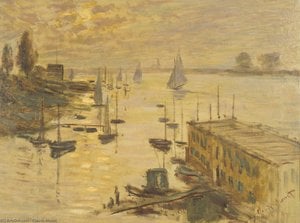
艺术家简介
Emily Murray Paterson: A Visionary of the Scottish Landscape
Emily Murray Paterson (1855 – 1934) was more than simply a painter; she was a keen observer, a meticulous recorder, and ultimately, a deeply evocative interpreter of the natural world. Born in Edinburgh to a solicitor father and a mother steeped in artistic sensibilities, her early life laid the foundation for a career dedicated to capturing the beauty – and often the melancholy – of Scotland’s landscapes and botanical wonders. Her journey, spanning from the bustling studios of Paris to the quiet contemplation of the Scottish Highlands, reveals an artist who evolved through rigorous study, personal experience, and a profound connection to her subject matter. Paterson's work is characterized by a distinctive blend of realism and impressionism, often imbued with a subtle sense of nostalgia and a deep appreciation for the ephemeral qualities of light and color.
Early Life and Artistic Training
Emily’s upbringing in Edinburgh provided access to both artistic instruction and a rich cultural environment. While details about her formal training are somewhat sparse – she studied at the Edinburgh College of Art, alongside exploring opportunities in Paris – it's clear that her foundation was built on a solid understanding of classical techniques. However, Paterson wasn’t content with simply replicating what she saw; she sought to capture the *feeling* of a place, the atmosphere and mood that lingered within its contours. This desire for emotional resonance is particularly evident in her later works, where brushstrokes become looser and colors more expressive. Her father's profession afforded her a comfortable life, allowing her to pursue her artistic passions without financial constraints – a rare privilege for women artists of the era.
The Highland Influence: Landscape and Botany
Following her move to London in 1917, Paterson’s artistic focus shifted decisively towards the Scottish Highlands. This period marked a significant turning point in her career, as she immersed herself in the rugged beauty of the region, documenting its dramatic landscapes and diverse flora. Her paintings of lochs, mountains, and heather-covered moorlands are imbued with a palpable sense of solitude and grandeur. Simultaneously, she developed a deep interest in botany, meticulously studying and illustrating wildflowers, ferns, and other plant life. This dual focus – landscape and botany – is strikingly evident in works like “Bowl of Fruit” (1908) and "Flower Piece" (1930), where the arrangement of fruit or blossoms becomes a microcosm of the natural world, reflecting both its beauty and its inherent fragility. The dark, textured surfaces of pieces like ‘Flower Piece’ suggest a deliberate exploration of shadow and light, adding depth and drama to her compositions.
A Northern Renaissance Style: Venetian Echoes
Paterson's artistic style evolved considerably throughout her career, influenced by the diverse landscapes she encountered. Her early works often reflected a classical realism, reminiscent of the Dutch Masters – particularly in her still lifes. However, as she journeyed to Venice and other European locations, her style began to incorporate elements of Northern Renaissance painting, characterized by dramatic lighting, rich colors, and an emphasis on atmosphere. The “Cortile, Doge’s Palace, Venice” (1911) exemplifies this shift, capturing the city's grandeur with a muted palette and a sense of timelessness. Her Venetian paintings are particularly notable for their atmospheric perspective and skillful use of light to evoke the mood of the city.
Legacy and Recognition
Emily Murray Paterson’s contribution to Scottish art is often understated, yet her work possesses a quiet strength and enduring appeal. While she never achieved widespread fame during her lifetime, her paintings are now recognized for their technical skill, emotional depth, and unique perspective on the natural world. Her membership in prestigious organizations such as the Royal Scottish Watercolour Society and the Society of Women Artists speaks to her artistic merit and standing within the art community. Today, her works can be found in public collections across Scotland and beyond, offering viewers a glimpse into the vision of an artist who dedicated her life to capturing the beauty and spirit of her homeland. Her legacy continues to inspire artists seeking to translate their observations of nature into powerful and evocative paintings.

 25.0 x 33.0 cm
 Bolton Museum And Art Gallery
 切换至版画销售渠道


 效果预览
效果预览
 分享
分享 分享
分享
 详情
详情 指南
指南

 下载
下载
 相似作品
相似作品 X射线
X射线 幻灯片播放
幻灯片播放 统计数据
统计数据 展开详情
展开详情






































 玻璃选项仅适用于110厘米以下的尺寸。