
 Oil On CanvasWallArtPost-Impressionism
 1911
1911 35.0 x 45.0 cm
 McMichael Canadian Art Collection
博物馆级艺术微喷或帆布版画,制作高效,并提供多种饰面选择。 ( 购买手绘画作 切换至数字图像销售渠道)





























从与原作比例一致的预设尺寸中进行选择。

您可以输入自定义尺寸,以适配特定的画框或空间。如果您选择的尺寸与原图比例不符,我们将对作品进行裁剪,或通过镜像填充/纯色填充边缘的方式来扩展图像。在开始制作之前,我们会向您发送一份数字效果图供您确认。
请注意,屏幕上的预览并不能反映实际的裁剪或扩展效果。只有效果图才能准确展示最终的构图。
虽然我们提供定制尺寸,但为了保持原图比例,我们建议您从预设列表中选择尺寸。

Trees in France
复制品尺寸
Emily Carr (1871-1945), a Canadian Modernist pioneer, stands apart from her contemporaries not merely for her prolific output but for the singular vision that fueled her artistic endeavors. Born December 13, 1871, in Victoria, British Columbia, she navigated a transformative period of Canadian history—a nation grappling with identity and forging connections to its Indigenous heritage—through the lens of an unwavering devotion to the landscape.
Carr’s formative years were steeped in the traditions of her English immigrant parents who sought opportunity in the burgeoning colony. This duality profoundly influenced her artistic sensibility, shaping her understanding of beauty as both rooted in history and responsive to the dynamism of the natural world. From a young age, encouraged by her father, Carr demonstrated exceptional talent for art, nurtured through formal instruction and an intrinsic fascination with the surrounding forests of Vancouver Island.
“Trees in France,” painted in 1911 during her Parisian studies under Harry Phelan Gibb—a British expatriate who championed a more expressive approach to painting—represents a pivotal moment in Carr’s artistic evolution. Gibb recognized Carr's innate ability and urged her to push boundaries, stating, “That’s why I like teaching you! You’ll risk ruining your best in order to find something better.” This encouragement exemplifies Gibb’s belief that true artistic growth demanded embracing experimentation and discarding preconceived notions.
The painting itself is a masterful distillation of Impressionistic principles blended with Carr's distinctive stylistic flourishes. Gibb’s influence instilled in her the conviction that “Your silent Indian will teach you more than all the art jargon,” highlighting his belief in the power of direct observation and emotional resonance.
Carr’s technique—characterized by loose brushstrokes, layering of paint, and a deliberate use of color—captures the essence of Brittany's landscape with remarkable immediacy. Thick impasto creates textural richness, emphasizing the contours of the trees and conveying their palpable presence. The muted background tones serve as foils to the vibrant hues of the foliage, enhancing depth and atmospheric perspective.
More than just a depiction of trees; “Trees in France” embodies Carr’s broader artistic philosophy—a celebration of nature's beauty and an exploration of its symbolic significance. The upward thrust of the branches symbolizes resilience and aspiration, mirroring Carr’s own unwavering determination to forge her path as an artist amidst societal expectations.
The painting’s enduring appeal lies in its ability to evoke a profound sense of tranquility and wonder—a testament to Carr's skill in translating emotion onto canvas. It remains a cornerstone of Canadian Modernism, securing its place within the canon of landscape art and inspiring generations of artists to embrace bold experimentation and unwavering devotion to their artistic vision.


1871 - 1945

Explore the vibrant evolution of Post-Impressionism. From Seurat's revolutionary Pointillism to the emotional depth of masters, discover how this movement redefined modern art history through color, structure, and unparalleled creative expression.

Master the nuances of Impressionism vs. Post-Impressionism with our expert guide. Explore the revolutionary shift from Monet’s fleeting light to Van Gogh’s emotional depth. Discover how these iconic movements continue to inspire fine art collectors and modern interiors today.
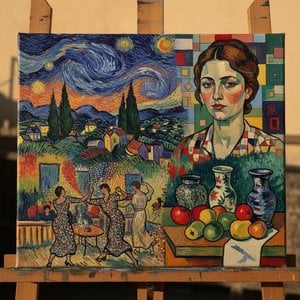
Unveil the profound revolution of Post-Impressionism. Explore how masters like Van Gogh and Cézanne utilized bold colors and emotional depth to transcend mere representation, laying the foundation for modern art. A sophisticated journey through history's most emotive brushstrokes.

Explore the transformative era of Post-Impressionism. Discover how masters like Cézanne and Matisse revolutionized color and form, moving beyond Impressionism to shape modern art history through structural innovation and expressive emotion.


 效果预览
效果预览
 分享
分享 分享
分享
 详情
详情 Guide
Guide

 下载
下载
 相似作品
相似作品 X射线
X射线 幻灯片播放
幻灯片播放 统计数据
统计数据 展开详情
展开详情









 玻璃选项仅适用于110厘米以下的尺寸。


