
 Acrylic On CanvasWallArtPost-Impressionism
 61.0 x 110.0 cm
 Royal BC Museum
博物馆级艺术微喷或帆布版画,制作高效,并提供多种饰面选择。 ( 订购此收藏品的纯手工复刻画作 切换至数字图像销售渠道)





























您可以从与原作比例一致的预设尺寸中进行选择。

请输入您所需的宽度和高度,以适配您的画框或墙面。由于印刷品只能进行裁剪,无法超出原图尺寸,因此若比例不一致,画面的一部分将会被裁切。在正式印刷之前,我们会为您发送一份数字效果图供您确认。本页面显示的图片并非最终裁剪后的效果——只有效果图才能展示真实的裁剪情况。
Roots
复刻品尺寸说明
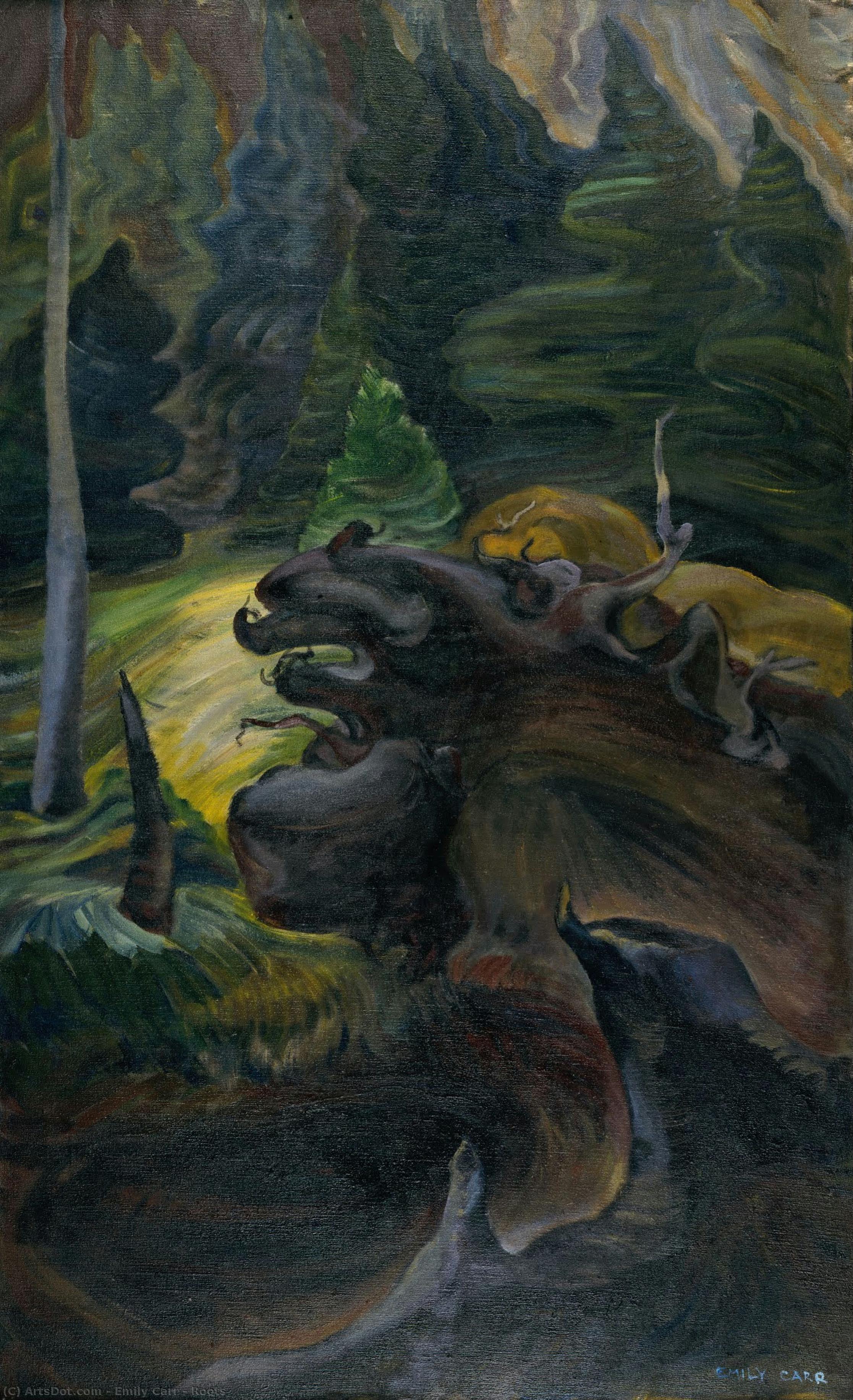
Emily Carr's "Roots," painted circa 1929, isn’t merely a depiction of two magnificent horned creatures amidst the dense foliage of British Columbia; it’s a profound meditation on connection – to the land, to ancient spirits, and perhaps, to something deeply within ourselves. The painting immediately draws the viewer into a shadowed realm, a twilight forest where light filters through the canopy in dappled patterns, creating an atmosphere thick with mystery and reverence. Carr masterfully employs a muted palette of browns, greens, and greys, punctuated by flashes of ochre and umber, lending the scene a timeless quality that transcends its specific time and place. The composition is deliberately unbalanced, drawing our eye to the central figures – these imposing beasts – while the human element, partially obscured on the right, feels almost secondary, an observer rather than a participant in this primal drama.
Carr’s style firmly resides within the realm of Post-Impressionism, yet she transcends simple imitation. She builds upon the Impressionists' focus on capturing fleeting moments of light and color, but imbues her work with a heightened sense of emotional intensity and symbolic weight. The brushstrokes are thick and expressive, particularly evident in the rendering of the animals’ fur – each strand meticulously applied to convey texture and movement. Carr utilizes a technique reminiscent of Japanese woodblock prints, employing strong outlines and flattened planes of color to define the forms against the richly textured background. This deliberate simplification allows her to focus on conveying mood and atmosphere rather than photographic realism. The layering of paint creates an almost sculptural quality, giving the canvas a tangible presence that invites close examination.
“Roots” is deeply rooted in Carr's lifelong fascination with First Nations culture and spirituality. The horned creatures themselves are often interpreted as representations of Thunderbird, powerful spirits associated with storms, rain, and protection within Nuu-chah-nulth cosmology. Their presence evokes a sense of ancient power and the enduring connection between humanity and the natural world. The partially visible human figure suggests an attempt to understand or perhaps appease these forces – a recognition of our place within this intricate web of life. Carr’s meticulous documentation of totem poles, as evidenced in her extensive writings and other paintings, reveals a profound respect for Indigenous traditions and a desire to bridge the gap between Western art and First Nations storytelling. The painting can be seen as an attempt to capture not just the visual appearance of these creatures but also the spiritual significance they held for the people who revered them.
Beyond its immediate visual appeal, “Roots” resonates with a profound emotional depth. The darkened forest creates a sense of both vulnerability and awe, inviting us to contemplate our own relationship to nature and the mysteries that lie hidden within it. The animals’ gaze – directed off-camera – suggests a narrative beyond what is immediately visible, prompting questions about their purpose and their connection to the human observer. Carr's work consistently explores themes of isolation, spirituality, and the search for meaning in a rapidly changing world. “Roots” serves as a poignant reminder of the enduring power of the natural landscape and the importance of preserving its cultural heritage. It’s a painting that stays with you long after you’ve turned away, prompting reflection on our place within the grand scheme of things.

1871 - 1945

Explore the profound legacy of the Barbizon School. Discover how masters like Corot and Monet revolutionized landscape painting through plein air techniques and the soulful depiction of nature's light and shadow in this expert art history guide.

Explore the profound beauty of indigenous heritage through fine art. From Karl Bodmer’s ethnographic precision to vibrant Gond traditions, discover how collectors preserve cultural legacies through museum-quality masterpieces and soulful portraiture.

 实景预览
实景预览
 发送
发送 分享
分享
 详情
详情 指南
指南

 下载图片
下载图片
 相似作品
相似作品 X射线
X射线 幻灯片播放
幻灯片播放 统计数据
统计数据 阅读全文
阅读全文









 玻璃选项仅适用于110厘米以下的尺寸。


