
博物馆级艺术微喷或帆布版画,制作高效,并提供多种饰面选择。 ( 订购此收藏品的纯手工复刻画作 切换至数字图像销售渠道)





























您可以从与原作比例一致的预设尺寸中进行选择。

请输入您所需的宽度和高度,以适配您的画框或墙面。由于印刷品只能进行裁剪,无法超出原图尺寸,因此若比例不一致,画面的一部分将会被裁切。在正式印刷之前,我们会为您发送一份数字效果图供您确认。本页面显示的图片并非最终裁剪后的效果——只有效果图才能展示真实的裁剪情况。
The Resurrection
复刻品尺寸说明
Doménikos Theotokópoulos, universally known as El Greco, remains one of the most singularly captivating figures in Western art history. His work transcends mere representation, plunging viewers into a realm of intense emotion and spiritual dynamism. “The Resurrection,” painted between 1596 and 1600 for what is believed to be the Colegio de Doña Maria in Madrid, stands as a monumental testament to his unique vision – a dramatic interpretation of one of Christianity’s most profound narratives. More than just a depiction of Christ's triumph over death, it’s an exploration of faith, movement, and the very essence of human experience.
El Greco’s style is instantly recognizable: elongated figures that seem to defy gravity, vibrant colors often applied in bold, contrasting blocks, and a masterful manipulation of light. “The Resurrection” exemplifies these hallmarks perfectly. The scene unfolds with an almost frenetic energy, capturing the moment of Christ's resurrection with breathtaking intensity. He abandons traditional Renaissance perspective, opting instead for a flattened space where figures surge forward, propelled by an unseen force. This deliberate distortion creates a sense of immediacy and urgency, drawing the viewer directly into the heart of the event.
Understanding “The Resurrection” requires considering its relationship to another equally significant work by El Greco – “The Pentecost.” These two paintings were likely intended as a pair, forming a powerful visual statement within the chapel’s design. The similarities in size and shape suggest they were positioned on opposite sides, creating a unified narrative of faith and redemption. While the exact placement remains debated, scholars believe they were situated flanking the Nativity and Baptism scenes, establishing a chronological sequence of salvation history.
Notably, El Greco deliberately stripped the scene of any conventional historical context. He eliminates the tomb itself, the landscape surrounding Jerusalem, and even any explicit references to earthly reality. This deliberate abstraction elevates the image beyond a mere historical record; instead, it becomes a universal symbol of resurrection and hope. The focus is entirely on the figures – nine in total – caught within a whirlwind of movement and light.
El Greco’s technical skill is immediately apparent in his masterful use of foreshortening, particularly evident in the figure of the soldier wearing a yellow cuirass. This dramatically elongated form not only creates visual interest but also contributes to the painting's overall sense of dynamism. The other soldiers, rendered in shades of green and brown, further emphasize this movement, their bodies contorted in reactions to the radiant light emanating from Christ.
The color palette is equally striking. El Greco employs a vibrant range of hues – brilliant yellows, deep reds, and intense blues – creating a luminous effect that seems to emanate from within the canvas. The use of chiaroscuro—the dramatic contrast between light and shadow—further intensifies the emotional impact of the scene, highlighting Christ’s divine presence while simultaneously underscoring the terror and awe experienced by those witnessing his resurrection.
Today, “The Resurrection” resides within the esteemed Museo del Prado in Madrid, a testament to its enduring artistic value. The Prado, one of the world’s premier art museums, houses an unparalleled collection spanning centuries of European art, with a particular emphasis on Spanish masters like El Greco. His work profoundly influenced generations of artists, bridging the gap between the Byzantine and Renaissance traditions while forging his own distinctive style.
El Greco's influence extends far beyond the confines of the Prado. His innovative approach to composition, color, and emotional expression continues to inspire artists and captivate audiences worldwide. “The Resurrection” stands as a powerful reminder of the enduring power of art to convey spiritual depth and universal themes – a timeless masterpiece that transcends its historical context.
“The Resurrection” by El Greco is more than just a painting; it's an experience. It’s a visceral encounter with faith, hope, and the transformative power of divine grace. For those seeking to delve deeper into the world of this extraordinary artist, we invite you to explore other notable works such as “The Pentecost,” “St. John the Evangelist,” and “The Trinity” – all available for high-quality reproduction on WahooArt.com. Discover the captivating artistry of El Greco and bring a piece of his visionary spirit into your own space.
Further Exploration: El Greco (Doménikos Theotokopoulos) and his other notable paintings like the Pentecost can be found on WahooArt. Painting by 'El Greco (Doménikos Theotokopoulos)' | El Greco (Doménikos Theotokopoulos):The Resurrection, Painting by 'El Greco (Doménikos Theotokopoulos)' | El Greco (Doménikos Theotokopoulos):Pentecost, Painting by 'El Greco (Doménikos Theotokopoulos)' | El Greco (Doménikos Theotokopoulos):St John the Evangelist, Painting by 'El Greco (Doménikos Theotokopoulos)' | El Greco (Doménikos Theotokopoulos):The Trinity, The Museum Prado (Madrid, Spain)
埃尔·格列柯 的《The Resurrection》 的色彩呈现出 色彩柔和 的饱和度与 单色调 的强度。
考虑到其大地色系的色调,建议将“The Resurrection”布置于起居空间中。
埃尔·格列柯 在 Mannerism 运动时期创作了《The Resurrection》。

1541 - 1614 , 希腊

Unveil the captivating world of Mannerism. Our expert analysis explores the transition from Renaissance harmony to the profound, elegant distortions of masters like El Greco, offering deep insights into one of art history's most influential and enigmatic eras.
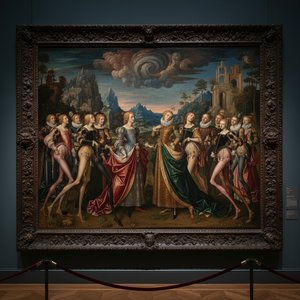
Explore the dramatic evolution of Northern Mannerism. Discover how masters like Bosch and Grünewald transitioned from Renaissance harmony to profound, elegant distortion through an expert analysis of symbolism, emotional intensity, and artistic innovation.


 实景预览
实景预览
 发送
发送 分享
分享
 详情
详情 指南
指南

 下载图片
下载图片
 相似作品
相似作品 X射线
X射线 幻灯片播放
幻灯片播放 统计数据
统计数据

 阅读全文
阅读全文









 玻璃选项仅适用于110厘米以下的尺寸。


