
由我们的艺术家按需定制,为您提供您所选尺寸及画框的布面手工油画。 ( 切换至版画销售渠道 切换至数字图像销售渠道)





























您可以从与原作比例一致的预设尺寸中进行选择。

请输入您需要的宽度和高度,以适配您的画框或墙面。由于作品为手工绘制,若您选择不同的尺寸比例,艺术家可能会在画面边缘多画一些或稍作裁剪 —— 由您决定。在开始绘画之前,我们会为您发送一份数字效果图供您确认。本页面上展示的图片并非最终实物 —— 只有效果图才能反映真实结果。
untitled (8945)
复刻品尺寸说明
Edvard Munch’s “Untitled (8945),” a captivating portrait rendered in oil on cardboard, isn't merely a depiction of two women; it’s a profound exploration of human vulnerability and the quiet anxieties that simmer beneath the surface of everyday life. Painted around 1900, during a period of intense personal reflection for Munch, this work stands as a cornerstone of his mature style – a synthesis of Symbolism and nascent Expressionism, reflecting a world grappling with rapid change and burgeoning psychological awareness.
The painting immediately draws the eye to its central figures. Two women, seated in what appears to be a domestic interior, gaze out a window towards an unseen landscape. Their postures are subtly poised, yet there’s an undeniable sense of detachment, as if observing life from a distance rather than actively participating in it. The lighting is diffused and melancholic, casting long shadows that contribute to the overall atmosphere of subdued sadness. The composition itself feels deliberately unbalanced, mirroring the emotional instability at play.
Munch's technique in “Untitled (8945)” is instantly recognizable—a deliberate departure from academic realism. He employs a broken, almost mosaic-like application of paint, layering thin washes of color over each other to create an effect of shimmering instability. The palette is dominated by muted blues and greens, punctuated by flashes of ochre and crimson, colors often associated with illness, decay, and emotional turmoil – elements deeply rooted in Munch’s own life experiences.
Notice the way he builds up texture through repeated strokes, particularly around the faces and hands. These aren't smooth, idealized forms; they are rough-hewn, almost skeletal, hinting at a fragility beneath the surface. The use of dry brushwork adds to this sense of unease, creating a palpable feeling of movement and restlessness within the scene.
Beyond its immediate visual appeal, “Untitled (8945)” is laden with symbolic meaning. The window itself acts as a portal—a barrier between the interior world of the women and the external reality they observe. It suggests a longing for something beyond their current circumstances, perhaps a yearning for escape or connection. The potted plant in the upper right corner could represent life and growth, yet its placement feels somewhat isolated, mirroring the emotional distance between the figures.
The bottles scattered around the room are particularly intriguing. They might symbolize fleeting pleasures or distractions—attempts to momentarily alleviate the underlying sadness. The chair and book further reinforce the theme of domesticity, but also hint at a lack of engagement, suggesting that even within this familiar setting, there’s a profound sense of isolation.
“Untitled (8945)” is more than just a portrait; it’s a window into the soul of an artist wrestling with his own demons. It resonates deeply because it captures a universal human experience—the quiet awareness of our own vulnerability and the persistent feeling that something essential is missing. Munch's work, particularly this piece, paved the way for Expressionism, influencing generations of artists who sought to convey inner emotions rather than simply representing external reality.
Today, reproductions of “Untitled (8945)” continue to captivate viewers with their haunting beauty and emotional depth. It’s a powerful reminder that art can not only reflect the world around us but also delve into the darkest corners of the human psyche – offering solace and understanding through shared experience.
爱德华·蒙克 的创作主题常涉及 symbolism, anxiety, modernity, expressionism, loneliness, norse, folklore, death;而《untitled (8945)》则聚焦于 women, window, interior, figures, landscape, anxiety, reflection。
在目录中,"untitled (8945)" 在 Expressionism 作品中的流行程度被记录为 Iconic。
"untitled (8945)" 的明暗对比度记录为 Bold。对比度描述了明亮区域与阴影区域之间的差异强度。

1863 - 1944 , 瑞典
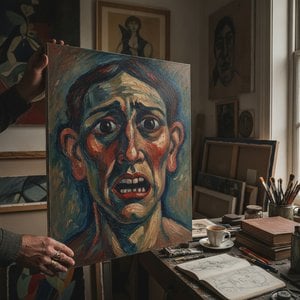
Discover the profound power of Expressionist art. From the raw intensity of Edvard Munch to the visceral textures of Neo-Expressionism, explore how subjective emotion and distorted reality define this movement. An expert guide for discerning collectors seeking depth and soul in fine art.

Explore the profound psychological depths of Symbolic Expressionism. From Edvard Munch’s visceral landscapes to the emotive power of color, discover how art unveils hidden human emotions through a sophisticated lens of art history and mastery.


 实景预览
实景预览
 发送
发送 分享
分享
 详情
详情 指南
指南

 下载图片
下载图片
 相似作品
相似作品 X射线
X射线 幻灯片播放
幻灯片播放 统计数据
统计数据
 阅读全文
阅读全文









 玻璃选项仅适用于110厘米以下的尺寸。


