
博物馆级艺术微喷或帆布版画,制作高效,并提供多种饰面选择。 ( 订购此收藏品的纯手工复刻画作 切换至数字图像销售渠道)





























您可以从与原作比例一致的预设尺寸中进行选择。

请输入您所需的宽度和高度,以适配您的画框或墙面。由于印刷品只能进行裁剪,无法超出原图尺寸,因此若比例不一致,画面的一部分将会被裁切。在正式印刷之前,我们会为您发送一份数字效果图供您确认。本页面显示的图片并非最终裁剪后的效果——只有效果图才能展示真实的裁剪情况。
untitled (6625)
复刻品尺寸说明
Edvard Munch’s untitled work, cataloged as (6625), presents a deceptively simple scene – a large red house with crisp white trim standing beside a road. Yet, within this seemingly straightforward depiction lies the potent emotional undercurrent characteristic of Munch's oeuvre. The painting isn’t merely a representation of architecture; it is an evocation of atmosphere, a quiet narrative steeped in the anxieties and introspections that defined the artist’s life and work. The house itself dominates the composition, its numerous windows hinting at lives unfolding within, some open as if inviting observation, others closed, guarding secrets. A solitary tree stands sentinel before it, grounding the scene while simultaneously adding a touch of melancholy. The presence of two figures, one positioned to the left and another to the right, introduces a human element, suggesting movement and perhaps even a sense of passing time or fleeting encounters.
To understand this painting, we must consider the biographical context that so profoundly shaped Munch’s artistic vision. Born in 1863, his childhood was marked by tragedy – the early loss of his mother and sister to tuberculosis cast a long shadow over his life, instilling within him a deep preoccupation with mortality, illness, and psychological distress. These themes would become central to his art, manifesting not as explicit depictions of suffering but rather as subtle expressions of anxiety and existential unease. While this particular work doesn’t possess the overt emotional intensity of *The Scream*, it shares that painting's underlying sense of isolation and vulnerability. The red house, a symbol often associated with warmth and domesticity, feels strangely detached, almost spectral in its stillness. Munch’s exposure to nihilist philosophy through Hans Jæger further encouraged him to explore his inner turmoil, rejecting conventional artistic norms in favor of expressing raw emotional truth.
Though details regarding the specific technique employed in this painting remain unknown due to its lack of detailed documentation, we can infer certain aspects based on Munch’s established practices. He was a master of manipulating color to convey emotion, often employing bold, non-naturalistic hues to create a sense of psychological tension. The dominant red of the house is particularly significant; it's a color that evokes passion, danger, and even violence – emotions that frequently simmer beneath the surface of Munch’s work. The contrast with the stark white trim heightens this effect, creating a visual dynamic that draws the eye and amplifies the painting’s emotional impact. The brushwork is likely loose and expressive, characteristic of his style, prioritizing feeling over precise representation. It's a technique designed to bypass intellectual analysis and speak directly to the viewer’s subconscious.
Edvard Munch stands as a pivotal figure in the development of Expressionism, an artistic movement that sought to convey subjective experience rather than objective reality. His work anticipated many of the anxieties and uncertainties of the 20th century, reflecting a growing sense of alienation and disillusionment in the face of rapid social change. While *untitled (6625)* may not be as immediately recognizable as some of his more famous works, it embodies the same core principles – a focus on inner emotional states, a rejection of traditional artistic conventions, and a willingness to confront difficult truths about the human condition. This painting offers a quiet moment for contemplation, inviting viewers to project their own feelings onto the scene and find resonance within its subtle yet powerful imagery. It is a testament to Munch’s ability to transform an ordinary subject into a profound exploration of the modern psyche.
"untitled (6625)" 描绘了 landscape, architecture, human figures, atmosphere, melancholy, isolation, symbolism,而 爱德华·蒙克 记录在案的主题则是 psychological anxiety, existential dread, symbolic representation, personal trauma reflection, expressionist legacy。通过两者的对比,可以看出此作与艺术家惯用题材之间的关联。
爱德华·蒙克 的《untitled (6625)》 传达出一种 Melancholic 的情感基调。
在爱德华·蒙克的艺术生涯中,"untitled (6625)"创作于Mature Period时期。这一阶段有助于将其与艺术家的其他作品进行比较。

1863 - 1944 , 瑞典

探索浪漫主义风景画的巅峰!本文精选十部经典名作,带您领略莫奈、库尔贝等大师的艺术魅力。感受色彩与光影的诗意,重温自然风光的震撼。WahooArt.com为您提供博物馆级别的艺术复制品和个性化家居装饰方案。尽在WahooArt.com!

探索康斯塔布尔的25幅传世杰作!沉浸于英国田园风光,感受浪漫主义绘画大师的光影与色彩。高清油画复制、艺术品购买尽在WahooArt.com,为您的家居增添经典之美。立即在线探索完整系列!
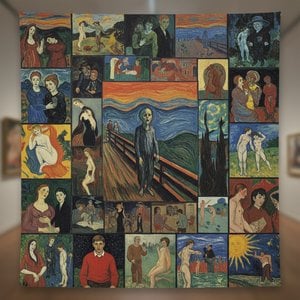
探索爱德华·蒙克25幅传世杰作,感受表现主义大师笔下的焦虑与灵魂深处。高清油画复制、艺术品购买及室内装饰灵感尽在WahooArt.com!发现更多经典名画。
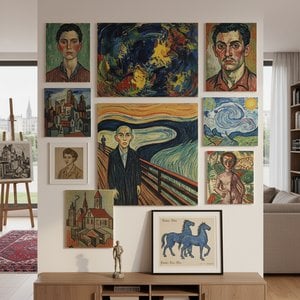
探索表现主义的灵魂!本文精选十幅名作,从莫迪里亚尼到夏加尔,揭秘大师背后的故事与艺术魅力。感受色彩的力量,重塑您的家居空间。WahooArt.com 提供博物馆品质的艺术复制品和个性化装饰方案。立即在线探索全系列!

Explore the profound world of Edvard Munch, pioneer of Expressionism. Discover the origins of 'The Scream' & his haunting depictions of anxiety, mortality, and love. Expert analysis & high-quality reproductions at WahooArt.


 实景预览
实景预览
 发送
发送 分享
分享
 详情
详情 指南
指南

 下载图片
下载图片
 相似作品
相似作品 X射线
X射线 幻灯片播放
幻灯片播放 统计数据
统计数据
 阅读全文
阅读全文









 玻璃选项仅适用于110厘米以下的尺寸。


