
由我们的艺术家按需定制,为您提供您所选尺寸及画框的布面手工油画。 ( 切换至版画销售渠道 切换至数字图像销售渠道)





























您可以从与原作比例一致的预设尺寸中进行选择。

请输入您需要的宽度和高度,以适配您的画框或墙面。由于作品为手工绘制,若您选择不同的尺寸比例,艺术家可能会在画面边缘多画一些或稍作裁剪 —— 由您决定。在开始绘画之前,我们会为您发送一份数字效果图供您确认。本页面上展示的图片并非最终实物 —— 只有效果图才能反映真实结果。
untitled (4865)
复刻品尺寸说明
In the quiet, turbulent corridors of early 20th-century art, few works possess the haunting, psychological depth found in Edvard Munch’s untitled (4865). Painted around 1902, this enigmatic masterpiece serves as a profound window into the soul, capturing much more than a mere likeness of its subjects. It is an evocative landscape of the human psyche, where the boundaries between reality and memory, or presence and absence, begin to dissolve. The painting presents us with a formally dressed man, anchored in the frame, yet he is shadowed by the spectral, semi-transparent presence of a female figure. This deliberate ambiguity creates a sense of profound vulnerability, inviting the viewer to step into a world where emotions are not merely felt but are visually manifested through color and form.
The composition is masterfully structured around a vertical axis that lends the piece both stability and a certain claustrophobic intensity. Munch utilizes a palette dominated by warm, earthy ochre and hazy yellow tones, which seem to vibrate with an inner light. This background does not merely serve as a setting; it acts as a living, breathing entity that merges with the ethereal woman, making her appear as much a projection of the man’s subconscious as a physical being. For the discerning collector or interior designer, this piece offers a sophisticated focal point—a work that commands attention through its subtle contrasts and its ability to anchor a room with its heavy, atmospheric presence.
To understand untitled (4865), one must look toward the heart of the Symbolist movement. Moving away from the objective observations of Impressionism, Munch embraced a style that prioritized subjective experience and emotional resonance. Influenced by the burgeoning field of psychoanalysis and the philosophical shifts of his era, he sought to paint "soul paintings"—works that captured the invisible tremors of fear, grief, and longing. The female figure in this work, appearing as a ghostly reflection, serves as a powerful symbol of the ephemeral nature of life and the persistence of memory, themes that were deeply personal to Munch following the tragic losses of his mother and sister.
The technical execution of the painting is nothing short of visceral. Employing oil on canvas, Munch utilized an impasto technique, where thick, deliberate brushstrokes create a palpable texture on the surface. These gestural lines and fluid forms reject anatomical precision in favor of movement and dynamism. The way the paint is layered allows light to catch the ridges of the strokes, adding a tactile dimension that enhances the painting's dreamlike quality. This expressive approach is a cornerstone of Expressionism, ensuring that every movement of the brush contributes to the overall mood of existential reflection.
For those looking to curate an environment of intellectual depth and emotional sophistication, this reproduction of Munch’s work offers unparalleled inspiration. The painting’s ability to evoke a sense of mystery makes it an ideal centerpiece for spaces dedicated to contemplation, such as private libraries, study halls, or avant-garde living areas. It does not merely decorate a wall; it initiates a dialogue with the viewer. The juxtaposition of the man's solid, formal presence against the fluid, translucent woman creates a tension that is both intellectually stimulating and aesthetically pleasing.
Investing in a high-quality reproduction of such a significant work allows for the preservation of its most vital element: its atmosphere. Whether placed in a contemporary setting to provide a striking historical contrast or integrated into a more classical interior to add layers of texture, untitled (4865) remains a timeless testament to the beauty found within human struggle. It is a piece that rewards repeated viewing, revealing new nuances of color and shadow each time the eye wanders across its expressive, textured surface.
爱德华·蒙克 的《untitled (4865)》 的版权说明:该作品属于 属于公有领域 —— 其版权已过期。这决定了是否可以自由进行图像复制。
爱德华·蒙克 的《untitled (4865)》 在整体 Dramatic 的氛围中,传达出一种 Reflective 的情感。
在爱德华·蒙克的艺术生涯中,"untitled (4865)"创作于Early 20th Century时期。这一阶段有助于将其与艺术家的其他作品进行比较。

1863 - 1944 , 瑞典

Journey through 10 iconic paintings bathed in 'sand' tones – from Van Gogh to Monet. Explore the stories, techniques & warm palettes of these timeless masterpieces. Find museum-quality art reproductions at and bring classic beauty home.

Explore 10 iconic paintings with captivating 'mushroom' tones! Discover Van Gogh, Monet & Rembrandt’s masterpieces—earthy palettes, rich history & artistic techniques. Find museum-quality art reproductions and curated decor ideas at

Explore the captivating world of earth tones! Discover their historical significance, psychological impact & artistic techniques. Find inspiration for your home decor and museum-quality reproductions at WahooArt.
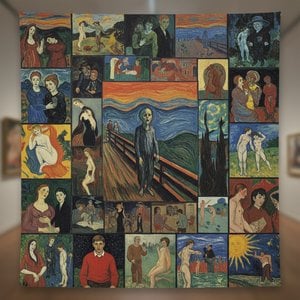
探索爱德华·蒙克25幅传世杰作,感受表现主义大师笔下的焦虑与灵魂深处。高清油画复制、艺术品购买及室内装饰灵感尽在WahooArt.com!发现更多经典名画。

Explore the captivating world of earth tones in art! Discover historical context, emotional resonance & artistic techniques behind these timeless colors. Find inspiration for your home decor and museum-quality reproductions.


 实景预览
实景预览
 发送
发送 分享
分享
 详情
详情 指南
指南

 下载图片
下载图片
 相似作品
相似作品 X射线
X射线 幻灯片播放
幻灯片播放 统计数据
统计数据

 阅读全文
阅读全文









 玻璃选项仅适用于110厘米以下的尺寸。


