A Window into the Soul: The Haunting Presence of untitled (1942)
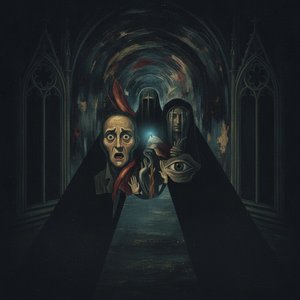
In the quiet, evocative realm of Edvard Munch’s untitled (1942), we encounter a profound meditation on the human psyche. This work serves as a haunting testament to the burgeoning Expressionist movement, capturing much more than a mere moment in time. The painting presents a woman seated upon a veranda, her figure caught in a state of quiet stillness that belies an underlying tension. As she gazes out toward the distant landscape, there is a palpable sense of contemplation, as if she is lost within the labyrinth of her own thoughts. This composition does not merely depict a scene; it embodies a complex tapestry of emotion—fear, vulnerability, and an unsettling awareness of mortality that resonates deeply with the viewer.
Technique and the Language of Expressionism
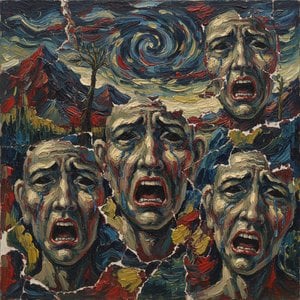
Munch’s mastery is evident in his deliberate rejection of Impressionistic realism in favor of a style that prioritizes subjective experience. Through the use of bold brushstrokes and a flattened color palette, he creates a visual language capable of conveying intense psychological depth. The technique involves a thick impasto that lends a textural richness to the surface, amplifying the emotional weight of the scene. This tactile quality mirrors the turbulent psychological state depicted within the frame, where every stroke feels like an externalization of an internal struggle. For the collector or interior designer, this piece offers a commanding presence, bringing a sophisticated layer of texture and raw, emotive power to any curated space.
Symbolism and the Weight of Existence
Beyond its formal beauty, untitled (1942) is laden with symbolic significance. The woman's outward gaze toward the horizon represents a yearning for transcendence, yet her stillness simultaneously conveys a profound sense of isolation. This duality reflects the broader intellectual currents of the era, where artists wrestled with questions of identity and the existential anxieties inherent in modern life. The muted palette contributes to an atmosphere of melancholy and dread, inviting those who view the work to contemplate the darker, more introspective aspects of the human condition. To possess a high-quality reproduction of this piece is to bring home a fragment of art history—a timeless window into the essence of feeling and the enduring mystery of existence.
常见问题与解答
爱德华·蒙克 的《untitled (1942)》 的版权情况是如何界定的?
"untitled (1942)" 的版权状态 —— 属于公有领域 —— 其版权已过期 —— 取决于艺术家于 1944 年逝世这一事实。
爱德华·蒙克 的《untitled (1942)》 在艺术史中处于怎样的地位?
爱德华·蒙克 的《untitled (1942)》 在艺术史上的分类属于 Expressionism 运动,创作于 19th Century 时期。
"untitled (1942)" 属于哪种艺术风格?
爱德华·蒙克 的《untitled (1942)》 属于 Expressionism 流派,该流派为这件作品提供了风格背景。