Introduction to Edvard Munch
Edvard Munch, a pivotal figure in modern art, was born on 12 December 1863 in Norway. He is globally renowned for his iconic 1893 masterpiece,
The Scream. His childhood was marred by personal tragedies and a fear of inheriting a familial mental illness. Munch's experiences significantly influenced his art, which often delved into themes of anxiety, loneliness, and existential dread.
Expressionism: A Movement Defined by Emotion
The Vampire is an exemplary piece of the Expressionist movement, which emerged in the late 19th century as a reaction to Impressionism's emphasis on objective reality. Expressionists sought to convey their inner worlds and emotions through bold colors, distorted forms, and exaggerated features.
The Vampire: A Study of Desire and Longing
Painted in 1893,
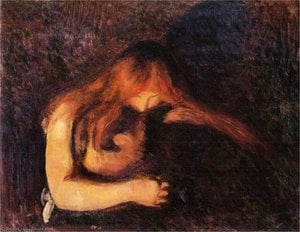
The Vampire is a striking depiction of desire and longing. The painting portrays a woman with her face buried in the neck of a man, who appears to be in a state of ecstasy or despair. Munch's use of red and black conveys a sense of urgency and passion, while the dimly lit background adds an air of mystery and intrigue.
Historical Context: The Decadent Movement
The Vampire can be seen in the context of the Decadent movement, which emerged in Europe during the late 19th century. This movement celebrated artifice, artificiality, and decadence, often exploring themes of sexuality, morbidity, and the perverse. The vampire figure was a popular motif within this movement, symbolizing the allure of the forbidden and the dangers of unchecked desire.
Conclusion
The Vampire by Edvard Munch is a powerful exploration of emotion and desire, executed with masterful skill and intensity. As an exemplary piece of Expressionism, it embodies the movement's emphasis on subjective experience and emotional resonance. To learn more about this painting or to acquire a hand-made oil reproduction, visit our dedicated page at
The Vampire by Edvard Munch.
Discover more about Expressionism and other art movements in our comprehensive article, "The Emotional Impact of Art: How Different Styles Evoke Different Feelings." Additionally, explore our collection of
hand-made oil paintings reproductions to find the perfect addition to your art collection.
问答详情
在家的哪个空间摆放 "The Vampire" 的复制品最为合适?
爱德华·蒙克 的《The Vampire》 推荐陈列于 Living Room。此建议是基于作品的主题、色彩与意境而定。
如何预览爱德华·蒙克 的《The Vampire》的复制品?
通过“The Vampire”的预览页面,您可以在下单前预览艺术品。
"The Vampire" 与 爱德华·蒙克 的其他作品有何共通之处?
在爱德华·蒙克的作品集中,"The Vampire" 呈现出Expressionism风格,并贯穿着symbolism, expressionism, post-impressionism, gauguin, psychological realism, frieze of life series, exploring inner turmoil, key expressionist work的主题。

 切换至版画销售渠道


 实景预览
实景预览
 发送
发送 分享
分享
 详情
详情 指南
指南

 下载图片
下载图片
 相似作品
相似作品 X射线
X射线 幻灯片播放
幻灯片播放 统计数据
统计数据

 阅读全文
阅读全文