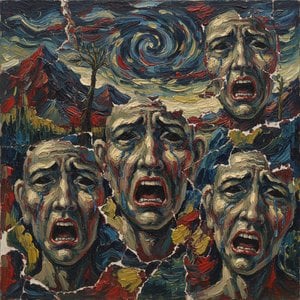
Madonna (Munch) – A Symphony of Anxiety and Divine Grace
Edvard Munch’s “Madonna” isn't merely a depiction of the Virgin Mary; it’s a profound meditation on femininity, mortality, and the unsettling beauty found within existential dread. Created in 1895 during Munch’s formative years as an Expressionist artist—a movement characterized by prioritizing subjective emotion over objective representation—the painting embodies the core tenets of this artistic philosophy. It stands apart from traditional religious iconography, rejecting idealized serenity for a visceral portrayal of vulnerability and psychological turmoil.
- Style: Munch’s Madonna exemplifies Expressionism's distinctive aesthetic. Bold colors clash jarringly – crimson dominates against muted blues and yellows—creating an atmosphere of tension and unease. Distortion is paramount; figures are rendered with elongated limbs and flattened planes, mirroring the artist’s internal struggles.
- Technique: Munch employed tempera on canvas, a medium known for its luminosity and permanence. However, he applied it in a manner that prioritized textural richness and expressive brushstrokes. Thick impasto—heavy layering of paint—emphasizes the physicality of the image and contributes to its unsettling quality.
- Historical Context: Munch’s artistic output coincided with a period of intense intellectual ferment in Europe. Nietzsche's proclamation of “God is dead” challenged established moral frameworks, fueling anxieties about meaninglessness and fragmentation. Munch wrestled with personal demons—including unresolved trauma from his childhood—and channeled these experiences into his art.
Symbolism – Layers of Meaning Beyond the Surface
The painting’s symbolism operates on multiple levels, inviting viewers to contemplate profound questions about life, death, and spirituality. The central figure is positioned in repose, her eyes closed, suggesting a state of meditative contemplation—yet this serenity is undermined by the pervasive sense of dread conveyed through Munch's masterful use of color and form.
The Halo: Unlike conventional depictions of Mary, Munch abandons the golden halo symbolizing divine grace for a crimson hue—a deliberate choice that underscores the painting’s preoccupation with pain and suffering. This jarring contrast highlights the duality inherent in human experience.
The Embryo: Positioned at the bottom left corner, the embryonic figure represents both life and death—the promise of regeneration juxtaposed against the inevitability of decay. Munch uses this motif to explore themes of vulnerability and transcendence.
Color Palette: The dominant crimson hue is countered by muted blues and yellows, creating a visual dissonance that mirrors the psychological complexity of the scene. Munch’s color choices are not merely decorative; they serve as conduits for emotional expression.
Emotional Resonance – A Portrait of Inner Turmoil
“Madonna” transcends mere representation to become an embodiment of Munch's own anxieties and obsessions. The artist sought to capture not just what he saw but how he *felt*, conveying a sense of profound unease and vulnerability. As Werner Hofmann aptly describes it, “The painting glorifies decadent love,” reflecting Munch’s preoccupation with the darker aspects of human desire.
Gestural Language: Munch's expressive brushstrokes—characterized by swirling lines and dynamic textures—communicate a palpable emotional intensity. The artist deliberately eschews conventional artistic conventions to prioritize authenticity and immediacy.
Spatial Composition: The flattened perspective contributes to the painting’s claustrophobic atmosphere, emphasizing the figure’s isolation and vulnerability. Munch utilizes spatial relationships to heighten the dramatic impact of his imagery.
The Munch Museum – Experiencing Madonna's Genius
If you wish to delve deeper into Edvard Munch’s artistic vision—and witness “Madonna” alongside other masterpieces—a visit to The Munch Museum in Oslo is indispensable. Located on Bjørvika waterfront, this museum houses a comprehensive collection of Munch’s paintings, prints, and drawings, offering visitors an unparalleled opportunity to engage with his groundbreaking oeuvre. Explore the museum's immersive exhibitions and discover how Munch’s Madonna continues to resonate with audiences worldwide.
The Munch Museum (Oslo, Norway) provides a captivating glimpse into Munch’s artistic legacy—a testament to his ability to transform personal trauma into enduring works of art. Consider purchasing a high-quality reproduction to bring the haunting beauty of “Madonna” into your home and appreciate its profound symbolic depth.
The Munch Museum (Oslo, Norway),
Edvard Munch:Taking Tea (Expressionism), and other works by this renowned artist are also available at WahooArt. Browse our collection today to discover the beauty of Expressionist art!
问答详情
爱德华·蒙克 的《Madonna》 的版权情况是如何界定的?
爱德华·蒙克 的作品《Madonna》已进入 属于公有领域 —— 其版权已过期。版权期限自艺术家逝世之日起计算,爱德华·蒙克 于 1944 年逝世。
"Madonna" 是否体现了 爱德华·蒙克 一贯的创作风格?
在爱德华·蒙克已记录的主题——expressionist style, symbolic representation, existential anxiety, religious imagery, memento mori motif, exploring inner turmoil, iconic munch masterpiece——之中,"Madonna" 则将焦点转向了psychological, female figure, symbolism, mortality, emotion, red halo, nude woman。
"Madonna" 的创作年份 1895 对应于 爱德华·蒙克 艺术生涯中的哪个阶段?
1895 年的创作日期将《Madonna》置于 爱德华·蒙克 艺术发展的 Mature Period 时期。
"Madonna"创作于哪一年,属于哪种艺术流派?
"Madonna"创作于1895年,属于Expressionism运动时期的作品。其创作年代与艺术流派确立了该作品在艺术史上的地位。
爱德华·蒙克 的《Madonna》 的色彩构图是如何构建的?
在“Madonna”中,Serene的对比与Unified Palette的和谐相得益彰。
在 1895 年创作“Madonna”时,爱德华·蒙克 的年龄是多少?
爱德华·蒙克 在 32 岁时创作了《Madonna》。艺术家出生于 1863,该作品创作于 1895 年。
“Madonna”整体色调是偏明亮还是偏暗?
爱德华·蒙克 的《Madonna》 的亮度记录为 brilliant,亮度值为 Luminous。
Expressionism 流派的作品 "Madonna" 源自哪个国家?
这件Expressionism风格的作品《Madonna》出自一位出生于瑞典的艺术家之手。