Introduction to Edvard Munch and Expressionism
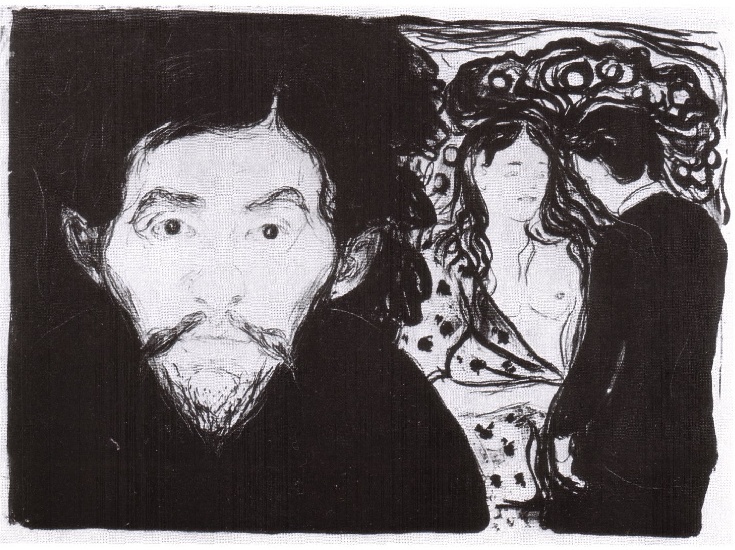
Edvard Munch, a Norwegian painter, is renowned for his significant contributions to the Expressionist movement. His works often delve into the depths of human emotion, revealing raw feelings through distorted forms and vivid colors. One such masterpiece is 'Jealousy I' (1895), which exemplifies Munch's unique style and emotional intensity.
Understanding 'Jealousy I': Context and Analysis
'Jealousy I' is a powerful exploration of the green-eyed monster that consumes the human heart. Painted in 1895, this piece captures the anguish and despair of jealousy through its use of color, form, and composition. The painting features two figures: a man and a woman, locked in a tumultuous embrace, with a third figure—a spectral apparition—looming behind them. The vibrant reds and yellows that saturate the canvas evoke feelings of passion, anger, and fear. These intense colors draw the viewer into the emotional vortex of jealousy, creating a sense of unease and discomfort. The distorted forms further emphasize the turmoil of emotion, as the figures become entangled in a twisted dance of desire and betrayal.
The Emotional Impact of 'Jealousy I'
Munch's 'Jealousy I' is a profound exploration of human emotion, tapping into the deepest fears and desires that lie within us all. The painting's raw emotional power resonates with viewers, evoking feelings of anxiety, melancholy, or even empathy for the figures depicted.
Munch's Legacy: Expressionism and Beyond
Edvard Munch's 'Jealousy I' is a seminal work in the Expressionist movement, paving the way for future artists to explore the depths of human emotion through their art. At WahooArt.com, we offer high-quality handmade oil painting reproductions that capture the essence of Munch's masterpiece, allowing you to experience the emotional impact of this extraordinary work in your own home or office.
Conclusion: The Enduring Power of Emotion in Art
Edvard Munch's 'Jealousy I' stands as a testament to the enduring power of emotion in art. Through its vivid colors, distorted forms, and raw emotional intensity, this painting continues to captivate audiences more than a century after its creation. By exploring the complexities of human emotion, Munch has left an indelible mark on the world of art, inspiring generations of artists and collectors alike.
Discover the beauty and emotional depth of 'Jealousy I' and other masterpieces at WahooArt.com.



 效果预览
效果预览
 购买手绘画作
 分享
分享 分享
分享
 详情
详情

 下载
下载
 相似作品
相似作品 X射线
X射线 幻灯片播放
幻灯片播放

 展开详情
展开详情






































 玻璃选项仅适用于110厘米以下的尺寸。