
博物馆级艺术微喷或帆布版画,制作高效,并提供多种饰面选择。 ( 订购纯手工绘制画作 切换至数字图像销售渠道)





























您可以从与原作比例一致的预设尺寸中进行选择。

请输入您所需的宽度和高度,以适配您的画框或墙面。由于印刷品只能进行裁剪,无法超出原图尺寸,因此若比例不一致,画面的一部分将会被裁切。在正式印刷之前,我们会为您发送一份数字效果图供您确认。本页面显示的图片并非最终裁剪后的效果——只有效果图才能展示真实的裁剪情况。
Anxiety, because
复刻品尺寸
Edvard Munch's "Anxiety, because," created in 1915, isn’t merely a drawing; it’s a raw, visceral embodiment of the psychological landscape of its time. The image depicts a group of figures perched precariously on the edge of a cliff, their faces turned towards an unseen horizon – a posture that immediately speaks to vulnerability and a profound sense of unease. The stark black and white palette amplifies this feeling, stripping away any potential distraction and forcing the viewer to confront the unsettling reality presented before them. It’s a work born from Munch's deeply personal struggles with loss, illness, and an enduring awareness of mortality, themes that relentlessly informed his artistic output.
Munch’s technique here is deliberately loose and expressive, prioritizing emotional impact over meticulous detail. The figures are rendered with broad, gestural strokes, their forms dissolving into the surrounding rock formation. This blurring of boundaries – between individual and environment, self and landscape – reflects a key aspect of Munch's artistic philosophy: the interconnectedness of human experience and the natural world. He wasn’t interested in creating realistic representations; instead, he sought to capture the *feeling* of an emotion, translating internal turmoil into visible form. The lack of shading and precise lines contributes to the drawing’s unsettling quality, lending it a dreamlike, almost hallucinatory atmosphere.
To understand “Anxiety, because,” one must delve into the context of Munch's life. His childhood was profoundly shaped by tragedy – the deaths of his mother and sister from tuberculosis at young ages instilled in him a lifelong preoccupation with illness, death, and the fragility of human existence. His father, a devout Lutheran, fostered a sense of religious anxiety that further complicated Munch’s emotional landscape. These experiences weren't simply biographical details; they became the bedrock upon which he built his artistic language, informing his recurring motifs of sickness, despair, and isolation. The drawing can be interpreted as a visual manifestation of this inherited trauma, a collective expression of grief and fear passed down through generations.
Furthermore, Munch’s own struggles with mental illness – including periods of intense anxiety and depression – undoubtedly influenced the work's somber tone. He famously described his creative process as “a battle against life,” suggesting that art was not merely a means of expression but also a form of survival. "Anxiety, because" embodies this struggle; it’s a testament to the artist’s ability to transform personal suffering into a universally resonant image.
The cliff itself is a potent symbol within the drawing. It represents not just a physical location but also a metaphorical precipice – a point of no return, a threshold between life and death, sanity and madness. The figures’ unified gaze towards the horizon suggests a shared experience of dread, as if they are all contemplating an impending doom. The fact that we cannot see what lies beyond the cliff face further intensifies the sense of mystery and uncertainty. It's a deliberate withholding of information, forcing the viewer to project their own anxieties onto the scene.
The composition’s asymmetry – with the large rock formation dominating the left side of the image – creates a feeling of imbalance and instability. This visual disruption mirrors the emotional turmoil depicted within the drawing, reinforcing its overall sense of unease. The figures themselves are rendered in varying states of distress: some appear frozen in silent contemplation, while others seem to be actively struggling against an unseen force.
"Anxiety, because" remains a powerfully evocative work of art over a century after its creation. It’s not a comfortable image; it confronts us with the darker aspects of human experience – fear, grief, and the awareness of our own mortality. Yet, it is precisely this unflinching honesty that makes it so compelling. Munch's ability to translate these complex emotions into a single, arresting drawing speaks to his genius as an artist and his profound understanding of the human psyche. A reproduction of this piece offers a unique opportunity to engage with one of the most significant works in modern art history, inviting contemplation on the enduring nature of anxiety and the search for meaning in a world often fraught with uncertainty.
建议为 爱德华·蒙克 的《Anxiety, because》 制作 Large 的复制品。尺寸可以在保持比例不变的情况下进行调整。
对于“Anxiety, because”,建议的打印设置尺寸为 Large,方向为 Landscape。
爱德华·蒙克 在作品《Anxiety, because》中运用了 Acrylic On Canvas 技法。该技法界定了原作的材质特性。

1863 - 1944 , 瑞典

探索爱德华·蒙克25幅传世杰作,感受表现主义大师笔下的焦虑与灵魂深处。高清油画复制、艺术品购买及室内装饰灵感尽在WahooArt.com!发现更多经典名画。

Explore the profound world of Edvard Munch, pioneer of Expressionism. Discover the origins of 'The Scream' & his haunting depictions of anxiety, mortality, and love. Expert analysis & high-quality reproductions at WahooArt.
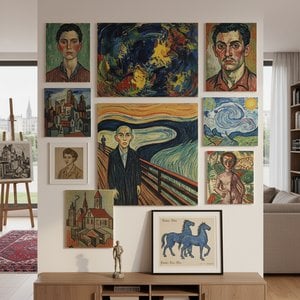
探索表现主义的灵魂!本文精选十幅名作,从莫迪里亚尼到夏加尔,揭秘大师背后的故事与艺术魅力。感受色彩的力量,重塑您的家居空间。WahooArt.com 提供博物馆品质的艺术复制品和个性化装饰方案。立即在线探索全系列!
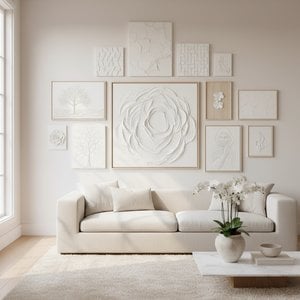
Explore 10 iconic white paintings by Monet, Whistler & Rothko! Discover the stories behind these serene masterpieces and their impact on art history. Find museum-quality reproductions for your home decor at .

Explore 10 iconic paintings dominated by black tones, from Rembrandt’s chiaroscuro to Goya's dark expressions. Discover the stories behind these masterpieces & find museum-quality art reproductions for your home at .

 实景预览
实景预览
 分享
分享 分享
分享
 详情
详情 指南
指南

 下载作品
下载作品
 相似作品
相似作品 X射线
X射线 幻灯片播放
幻灯片播放 问答
问答
 统计数据
统计数据

 展开全文
展开全文









 玻璃选项仅适用于110厘米以下的尺寸。


