
博物馆级艺术微喷或帆布版画,制作高效,并提供多种饰面选择。 ( 订购此收藏品的纯手工复刻画作 切换至数字图像销售渠道)





























您可以从与原作比例一致的预设尺寸中进行选择。

您可以输入自定义尺寸,以适配特定的画框或空间。如果您选择的尺寸与原图比例不符,我们将对作品进行裁剪,或通过镜像填充/纯色填充边缘的方式来扩展图像。在开始制作之前,我们会向您发送一份数字效果图供您确认。
请注意,屏幕上的预览并不能反映实际的裁剪或扩展效果。只有效果图才能准确展示最终的构图。
虽然我们提供定制尺寸,但为了保持原图比例,我们建议您从预设列表中选择尺寸。

Angel
复刻品尺寸说明

Dmitry Gennadyevich Gutov, born in Moscow in 1960, is more than just an artist; he’s a pivotal figure in understanding the complex narrative of Russian contemporary art. His journey reflects not only personal artistic evolution but also the shifting ideological landscapes of his homeland. From early studies at the Moscow Pedagogical State Institute (1978-1980) to his formal training at the Academy of Arts in St. Petersburg, graduating in 1992, Gutov’s education laid a foundation for an intellectually rigorous and conceptually driven practice.
Gutov didn't emerge into a vacuum; he arrived on the scene during a period of profound change. The late Soviet era and the subsequent collapse of the USSR created a fertile ground for artistic experimentation—and questioning. He quickly became central to this dialogue, not merely as a creator of objects but as a theorist, critic, and ideologue. This multifaceted role is crucial to understanding his work; Gutov doesn’t simply *show* art, he actively deconstructs its meaning, its history, and its place within society.
While proficient in painting and installation, Gutov is perhaps most recognized for his sculptures. These aren't monumental declarations but rather intimate assemblages—often constructed from found objects imbued with the weight of personal and collective memory. A recurring motif is the reclamation of discarded items from the Soviet past: bicycles, radios, vacuum cleaners, remnants of a bygone era. These are not presented as nostalgic relics, however. Gutov welds them onto metal grids resembling window guards, transforming them into poignant symbols of containment and loss. The act of preservation becomes an interrogation—what do we choose to remember, and what gets left behind?
His work frequently engages with the legacy of Marxist philosophy, particularly the writings of Mikhail Lifshitz, a controversial Soviet art historian. Gutov founded the Lifshitz Institute, dedicated to re-examining his ideas, demonstrating a commitment to intellectual exploration that permeates all aspects of his practice. This isn’t about blind adherence to ideology; it's about critically analyzing its impact and finding relevance in its complexities.
Beyond the historical and political commentary, Gutov’s work often delves into deeply spiritual themes. His black and white paintings, such as “Angel,” are hauntingly evocative, featuring winged figures set against stark backgrounds. These images aren't necessarily religious in a traditional sense; they represent a broader search for meaning and transcendence in a world grappling with uncertainty. The use of monochrome amplifies the emotional intensity, stripping away distractions to focus on the essential forms and symbols.
The “Gondola” series exemplifies this exploration. While seemingly depicting a Venetian gondola—a symbol of romance and beauty—Gutov imbues it with a sense of melancholy and isolation. The black and white palette again contributes to the somber mood, suggesting a deeper contemplation on themes of life, death, and the passage of time.
Dmitry Gutov’s contributions have not gone unnoticed. He has exhibited extensively both nationally and internationally, including participation in prestigious events like the Venice Biennale. In 2012, he received the Kandinsky Prize—a significant honor recognizing his achievements in contemporary art. He is also a member of the Academy of Arts of the USSR, further solidifying his position within the artistic establishment.
However, Gutov’s true legacy lies not just in awards and accolades but in his ability to provoke thought and challenge conventional perspectives. He has created a unique aesthetic fusion—blending pure painting with graphic design, Eastern calligraphy, and conceptual tradition. His work continues to resonate with audiences because it speaks to universal themes of memory, identity, and the search for meaning in an ever-changing world.
Currently residing and working in Moscow, Dmitry Gutov remains a vital force in contemporary art. He is not merely an artist reflecting his time; he’s actively shaping it—through his creations, his writings, and his unwavering commitment to intellectual inquiry. His work serves as a powerful reminder that art can be both beautiful and unsettling, personal and political, historical and profoundly relevant.

1960 - , Russia

Elevate your most cherished memories with WahooArt’s bespoke service. We transform your personal photos into breathtaking, hand-painted black & white oil masterpieces. Experience museum-quality craftsmanship and timeless elegance for your private collection. Discover the art of legacy.
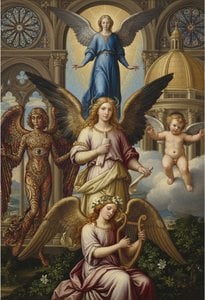
Explore the profound beauty of angelic figures in art history. From Renaissance masterpieces to celestial symbolism, our expert guide offers a sophisticated journey through the divine imagery of the Old Masters for discerning collectors and art enthusiasts.

Explore the profound artistry of black and white photography. From historical mastery to the interplay of light and shadow, discover how monochrome captures timeless emotion and form through a sophisticated lens of art history.


 实景预览
实景预览
 发送
发送 分享
分享
 详情
详情 指南
指南

 下载图片
下载图片
 相似作品
相似作品 X射线
X射线 幻灯片播放
幻灯片播放 统计数据
统计数据

 阅读全文
阅读全文









 玻璃选项仅适用于110厘米以下的尺寸。


