获取远超网页预览效果的印刷级文件。我们销售的每一张数字图像均源自库存数据库中的高分辨率母版——宽度通常在 5,000 至 15,000 像素之间——因此您可以放心地进行大幅打印、局部裁剪或还原细腻的细节。
每一件作品在离开我们的工作室前都经过了精心的处理。数字影像专家会对照原作核对色彩,并在必要时进行校正,随后利用专业修图工具提升清晰度与细节表现——且始终忠实于艺术家的笔触与风格。最终呈现的图像宛如原作本身,而非仅仅是一张加了滤镜的扫描件。
您可以在最终定稿前进行审核:我们的专家将在 72 小时内通过电子邮件向您发送图像以供审阅。如果不满意?您可以要求改进或修正;若质量未达预期,亦可申请退款。
这也是出版商、设计工作室、画廊及印刷厂所信赖的品质。
选择 WahooArt.com,您获得的不仅仅是一张图像——您收到的是经过专业级增强、精雕细琢的数字艺术作品,并享有满意保证。以下是您的订单中自动包含的所有内容:
您的高分辨率数字图像文件将在下单后 72 小时内通过电子邮件发送给您 —— 即可立即使用。
您的艺术品经过专业优化,结合先进的 AI 技术与人工修饰,确保呈现极致的细节、清晰度与色彩准确度。
不小心删除了文件或找不到了?没关系——我们将随时为您免费重发。
即刻拥有您的艺术作品,无需支付任何关税、税费或运费——数字下载始终免税。
我们通过专业工具与色彩管理技术,确保您的数字图像尽可能真实地还原原作色彩。
如果您对所购数字图像不满意,我们将在100天内为您进行修改或提供100%的全额退款——无需任何理由。
不满意?在收到数字文件后的100天内,您可以申请全额退款——无需任何理由。
购买 3 张享 10% 折扣 - 购买 5 张享 15% 折扣 - 购买 10 张以上享 20% 折扣。非常适合创意项目、画廊及机构使用。
To gaze upon this tabletop is to encounter a frozen moment of exquisite human dedication—a surface that speaks volumes through its meticulous ornamentation. This octagonal piece, rendered in what appears to be a deep, lustrous black stone or metal, serves as a breathtaking testament to the pinnacle of decorative arts from the mid-seventeenth century. The composition immediately draws the eye inward, guided by radiating patterns of inlaid brilliance. It is not merely a functional object; it is a miniature landscape of luxury, where every curve and every embedded gleam tells a story of skilled hands and refined taste.
The artistry here lies in the breathtaking contrast achieved through inlay work. Against the profound depth of the dark base material—perhaps slate or highly polished marble—the decorative elements burst forth in luminous accents of gold, silver, and warm amber tones. These materials have been painstakingly set into the surface, creating a visual dialogue between the solid and the ethereal. The motifs are overwhelmingly organic: delicate blossoms unfurl alongside gracefully winding vines, while geometric precision is maintained by the very structure of the octagon itself. One can almost feel the cool, smooth polish under the fingertips, juxtaposed with the slight, raised texture of the embedded precious metals. This level of detail suggests a mastery akin to pietra dura, elevating the object from mere furniture to wearable art for the room.
Dating to 1650, this piece firmly anchors itself within the rich tapestry of 17th-century European decorative trends. While the artist associated with the era, Dirck van Rijswijck, is known for his intimate genre scenes of domestic life, this tabletop speaks to a broader cultural milieu—one where opulence and natural beauty were celebrated in material form. The aesthetic echoes the grandeur of Baroque ornamentation, an era that reveled in dramatic flourish and elaborate surface decoration. It suggests a setting of considerable wealth, where even everyday objects were expected to participate in a grand visual narrative.
The symbolism woven into these floral and stellar patterns is deeply resonant. Flowers, universally symbols of life's cycle, are rendered here in perpetual bloom, suggesting enduring beauty and renewal. The inclusion of motifs like the dragonfly—often associated with transformation and agility—adds a layer of delicate natural magic. The interplay between the dark background and the shining inlays can be interpreted as the contrast between mystery and revelation, or shadow giving way to brilliant understanding. It is an object that captures light, both literally through its polished surfaces and figuratively through its enduring elegance.
For the collector or designer, this reproduction offers more than just decoration; it offers a curated piece of history imbued with palpable luxury. Imagine this tabletop anchoring a grand hall or serving as a focal point in an exquisitely appointed drawing-room. It invites contemplation, demanding that one slow down and appreciate the thousands of hours of labor embedded within its flawless symmetry. Owning such a reproduction allows one to incorporate the sophisticated drama and timeless grace of Baroque craftsmanship into the modern domestic sphere.
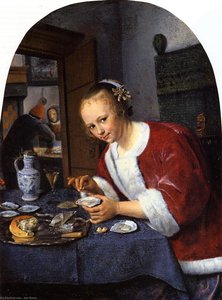
Dirck Van Rijswijck 的《Tabletop》 中呈现的主题包括 floral ornamentation, domestic interior, tabletop sculpture, dutch golden age, decorative arts, mother-of-pearl inlay, insect motif,这些主题共同构成了该艺术作品的主旨。
《Tabletop》采用Metal创作。
在Baroque Aesthetic运动中,"Tabletop"以Calm的基调被记录下来。

To step into the world of Dirck van Rijswijck is to enter a realm where the mundane is elevated to the magnificent. A master of the Dutch Golden Age, Rijswijck possessed a rare ability to find profound beauty within the quiet corners of domesticity. While many of his contemporaries sought the grandeur of epic battles or the drama of mythological deities, Rijswijck turned his gaze inward, toward the soft light filtering through a kitchen window or the meticulous arrangement of a household task. His work serves as a luminous window into the 17th-century Dutch soul, capturing the rhythms of daily life with an intimacy that feels both timeless and deeply personal.
Born in 1596 in Kleve, Germany—a region then under the influence of the Spanish Netherlands—Rijswijck’s early years were steeped in the rich traditions of Flemish Mannerism. This formative period provided him with a foundational understanding of intricate detail and structured composition. The son of a painter and engraver, his apprenticeship was almost predestined, allowing him to absorb the technical rigors of his craft from a young age. As he moved toward the artistic epicenter of Haarlem around 1620, he began to synthesize these early influences with the burgeoning Dutch style, eventually settling in Amsterdam, where he would spend much of his prolific life.
Rijswijck’s artistry was uniquely shaped by a dual identity: he was both a painter and a highly skilled goldsmith. This rare intersection of disciplines allowed him to approach the canvas—and other media—with a jeweler's precision. He was celebrated during his lifetime for his extraordinary ability to execute delicate inlaywork, often utilizing mother-of-pearl set against deep ebony or polished black marble. This technique, which blurred the line between fine art and decorative craft, resulted in breathtaking objects such as his famous tabletops, where organic floral motifs seemed to bloom from dark, lustrous surfaces.
In his paintings, this same obsession with texture and light manifests through a remarkable realism. Whether he was depicting the glint of a pewter plate or the soft translucency of a kitchen vegetable, his brushwork conveyed a tactile reality that invited the viewer to reach out and touch the scene. His style was heavily influenced by the dynamic energy of Peter Paul Rubens, yet Rijswijck tempered this Flemish exuberance with a uniquely Dutch restraint. He utilized rich, warm color palettes and carefully orchestrated compositions to guide the eye through his genre scenes, ensuring that even the smallest detail contributed to the overall narrative of domestic prosperity.
The historical significance of Dirck van Rijswijck lies in his role as a chronicler of the ordinary. His oeuvre, consisting of approximately 150 known works, remains a vital record of the social and material culture of the Dutch Golden Age. Through masterpieces such as “The Kitchen Maid” and “Kitchen Scene with the Supper at Emmaus,” he documented the rituals of a rising merchant class, celebrating the dignity found in labor and the quiet luxury of a well-ordered home.
His contributions to art history can be summarized through several enduring impacts:
Ultimately, Rijswijck’s legacy is one of empathy. He did not merely observe his subjects; he understood them. By imbuing domestic interiors with such profound care and aesthetic splendor, he reminded the world that there is a sacredness to be found in the simplest of human moments.

1596 - 1679 , Germany

 切换至版画销售渠道
 分享
分享 分享
分享
 详情
详情 指南
指南

 下载作品
下载作品
 相似作品
相似作品 幻灯片播放
幻灯片播放 问答
问答
 统计数据
统计数据


 展开全文
展开全文