艺术家简介
The Clay and the Craft: The Birth of Anna Pottery
In the fertile landscape of late 19th-century Illinois, a unique artistic legacy began to take shape through the hands of Cornwall Kirkpatrick and his brother, W. Wallace Kirkpatrick. Driven by the rich, abundant clay deposits found near Anna, the brothers established what would become known as Anna Pottery during the late 1850s. Their journey was far more than a mere entrepreneurial venture; it was an immersion into the heart of the burgeoning American Arts and Crafts movement. Influenced by the profound ethos of figures like William Morris, the Kirkpatricks sought to marry the rugged utility of stoneware with a meticulous, handcrafted beauty that stood in stark opposition to the rising tide of industrial mass production. Their work was fueled by an unwavering dedication to traditional techniques, ensuring that every piece emerged from the kiln imbued with a sense of permanence and profound symbolic meaning.
The brothers honed their craft initially in Mound City and Washington, Pennsylvania, before finding their true home in Illinois. This relocation allowed them to capitalize on the region's natural resources, shaping an aesthetic that was both deeply rooted in the American soil and intellectually connected to the broader artistic movements of the era. Their commitment to handcrafted beauty and ethical production became the cornerstone of their identity, creating a style characterized by meticulous detail and bold, geometric forms.
Vessels of Narrative: Symbolism and Social Commentary
The ceramics produced at Anna Pottery were far more than simple household wares; they were vibrant vessels of storytelling and political critique. Through the use of salt-glazed stoneware and striking cobalt decorations, the brothers infused their work with deep narrative layers, often confronting the societal anxieties of their time. Their pieces frequently addressed themes such as temperance and moral reform, transforming functional objects into instruments of social commentary.
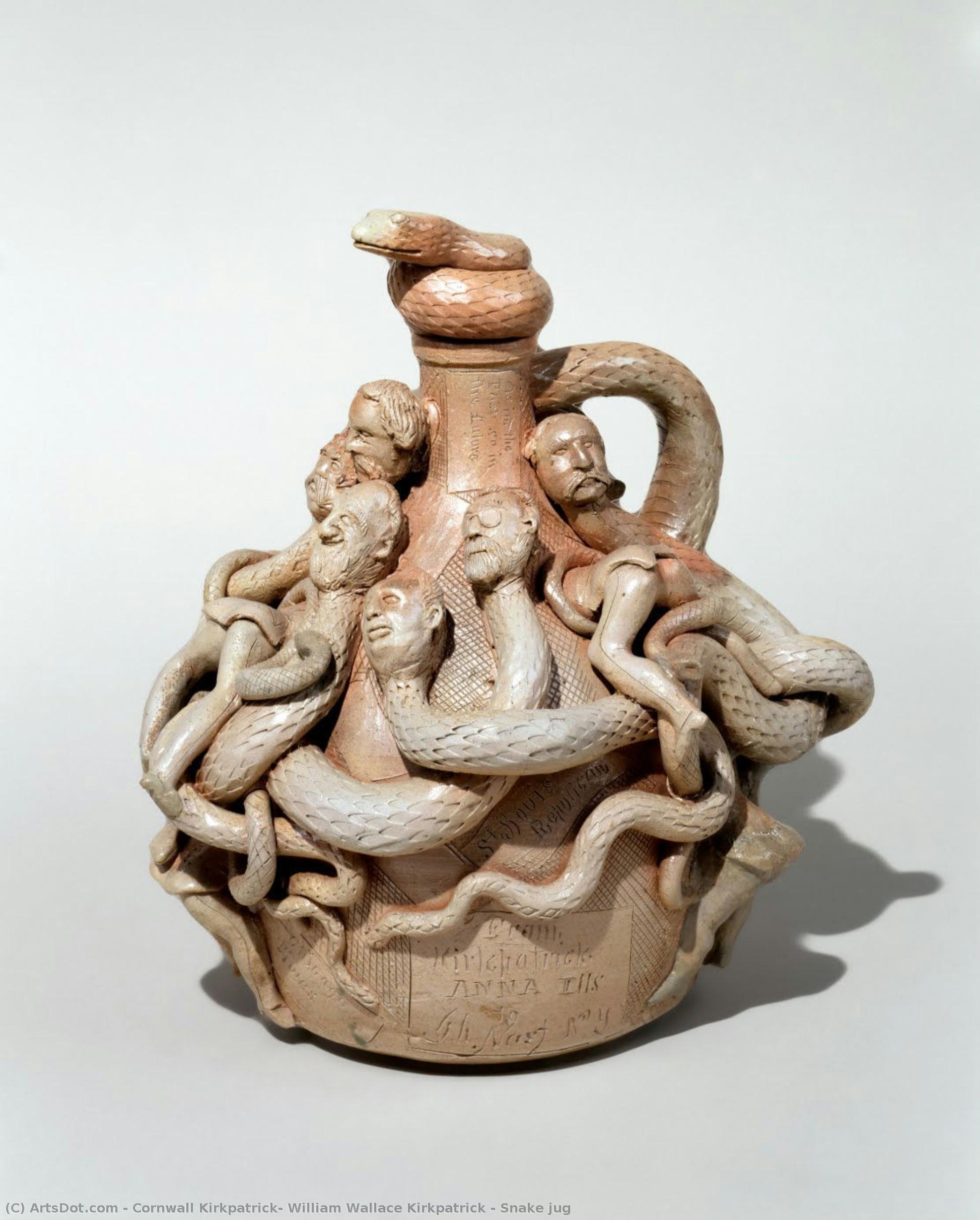
Perhaps their most legendary creation is the Snake Jug, a piece that serves as a masterclass in this expressive technique. The jug features a swirling mass of snakes and heads, a visual metaphor representing the notorious Boss Tweed ring—a corrupt group of New York City politicians. Created as a profound gesture of gratitude for the renowned political cartoonist Thomas Nast, the jug captures the intense political upheaval of the 1860s and 70s. By weaving contemporary history into the very texture of their clay, the Kirkpatricks ensured that their pottery functioned as a living record of the American spirit, blending folklore with the pressing realities of political life.
A Celebrated Legacy in American Art
The recognition of Anna Pottery’s excellence was not confined to the local Illinois community but reached the grandest stages of the world. The brothers' commitment to artistic excellence was validated by their appearances at prestigious international expositions, including the 1876 Philadelphia Centennial and the 1893 World’s Columbian Exposition in Chicago. These events allowed their distinctive stoneware to stand alongside the most significant works of the age, cementing Anna Pottery's place in the annals of American folk art.
Today, the enduring significance of their craft is preserved in the permanent collections of esteemed institutions such as The Metropolitan Museum of Art. The work of Cornwall and Wallace Kirkpatrick remains a vital chapter in the history of American ceramics, celebrated for its ability to marry the ruggedness of stoneware with the sophisticated complexity of social narrative. Their legacy continues to inspire collectors and historians alike, serving as a testament to the power of art to reflect, critique, and endure through the ages.



 效果预览
效果预览
 购买印刷品
购买印刷品 分享
分享 分享
分享
 详情
详情

 下载
下载
 相似作品
相似作品 X射线
X射线 幻灯片播放
幻灯片播放


 展开详情
展开详情






































 玻璃选项仅适用于110厘米以下的尺寸。





