
博物馆级艺术微喷或帆布版画,制作高效,并提供多种饰面选择。 ( 订购纯手工绘制画作 切换至数字图像销售渠道)
您可以从与原作比例一致的预设尺寸中进行选择。

请输入您所需的宽度和高度,以适配您的画框或墙面。由于印刷品只能进行裁剪,无法超出原图尺寸,因此若比例不一致,画面的一部分将会被裁切。在正式印刷之前,我们会为您发送一份数字效果图供您确认。本页面显示的图片并非最终裁剪后的效果——只有效果图才能展示真实的裁剪情况。
Vid Kvarnbäcken
复刻品尺寸

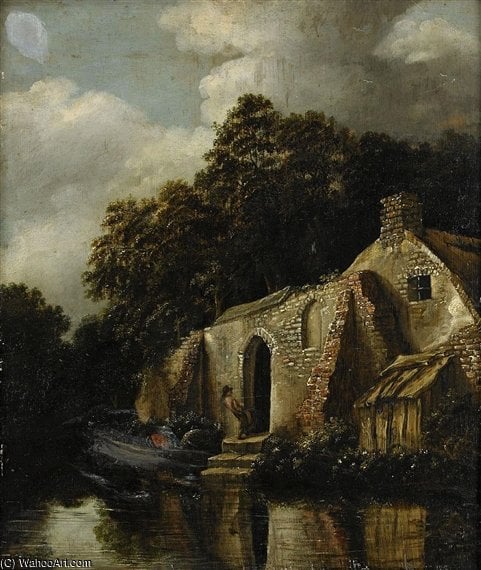
In the golden light of the seventeenth century, amidst the bustling artistic fervor of Haarlem, the works of Cornelius Gerritsz. Decker emerged as a quiet sanctuary for the soul. A master of the Dutch Golden Age, Decker possessed a rare ability to capture the profound stillness of the natural world, transforming simple river landscapes and rural vistas into poetic meditations on tranquility. While the biographical shadows surrounding his early years remain somewhat elusive, we know him to have been a vital presence in the Haarlem artistic community, a painter whose brushstrokes breathed life into the atmospheric textures of the Dutch countryside.
Decker’s artistic journey was deeply rooted in the prestigious traditions of his era. He sought mastery under the guidance of Gerrit Claesz Bleker, a respected figure who passed down the stylistic legacies of landscape giants like Jacob van Ruisdael and Salomon van Ruysdael. This lineage is evident in Decker’s sophisticated use of pyramidal compositions and his command over muted, earthy palettes that evoke the soft, shifting light of the Low Countries. His entry into the Haarlem Guild of St. Luke in 1643 marked his formal ascent into the professional elite, a milestone that allowed him to engage with the most significant artistic currents of his time.
To gaze upon a Decker landscape is to enter a world where time seems to decelerate. His canvases often feature winding rivers, sturdy bridges, and humble cottages, all rendered with an exquisite attention to atmospheric perspective. He did not merely paint scenery; he painted the very air that hangs over a summer meadow or a misty riverbank. Through meticulous detail and a harmonious blend of observation and imagination, Decker achieved a sense of grandeur within the seemingly ordinary. His work often serves as a window into the pastoral rhythms of Dutch life, where the movement of a small boat or the presence of distant figures adds a layer of human narrative to the vastness of nature.
The brilliance of his compositions was frequently enhanced through the art of collaboration. Decker had the remarkable ability to integrate staffage—the small, lively figures that populate his scenes—into his landscapes with seamless grace. He worked alongside contemporaries such as Adriaen van Ostade, Philips Wouwerman, and Johannes Lingelbach, whose contributions of peasants, travelers, or animals provided a dynamic counterpoint to his serene environments. These collaborations highlight the interconnectedness of the Haarlem school, where individual talents merged to create a collective vision of Dutch prosperity and natural beauty.
Though history occasionally overlooks the more subtle masters in favor of the more dramatic, the significance of Cornelius Decker remains undiminished for those who seek the quietude of the Dutch tradition. His ability to imitate and evolve from the styles of Jan Wynants and Wouwerman while maintaining his own distinctive, tranquil voice allowed him to leave an indelible mark on the landscape genre. He captured a specific moment in history—a period of profound stability and aesthetic refinement—ensuring that the peaceful essence of the seventeenth-century Dutch landscape would endure through the centuries.
Today, Decker’s legacy lives on in the museums and collections that house his masterpieces, where his river scenes continue to offer a sense of peace to the modern viewer. His work stands as a testament to the power of the landscape to convey complex human emotions, from the humble contentment of rural life to the sublime majesty of the natural world. Through his eyes, we are reminded of the beauty found in the stillness, and the enduring strength of the Dutch Golden Age spirit.

1623 - 1678

 实景预览
实景预览
 分享
分享 分享
分享
 详情
详情 指南
指南

 下载作品
下载作品
 相似作品
相似作品 X射线
X射线 幻灯片播放
幻灯片播放 Q&A
Q&A 统计数据
统计数据 展开全文
展开全文






































 玻璃选项仅适用于110厘米以下的尺寸。


