
博物馆级艺术微喷或帆布版画,制作高效,并提供多种饰面选择。 ( 购买手绘画作 切换至数字图像销售渠道)





























从与原作比例一致的预设尺寸中进行选择。

您可以输入自定义尺寸,以适配特定的画框或空间。如果您选择的尺寸与原图比例不符,我们将对作品进行裁剪,或通过镜像填充/纯色填充边缘的方式来扩展图像。在开始制作之前,我们会向您发送一份数字效果图供您确认。
请注意,屏幕上的预览并不能反映实际的裁剪或扩展效果。只有效果图才能准确展示最终的构图。
虽然我们提供定制尺寸,但为了保持原图比例,我们建议您从预设列表中选择尺寸。

Alaïa Fashion Drawing
复制品尺寸
Claude Parent, a figure both revered and fiercely debated within the architectural landscape of the 20th century, possessed an artistic sensibility that extended far beyond blueprints and building facades. His work, often characterized by its radical disruption of established norms and a profound engagement with the human body in motion, reveals a deep fascination with form, balance, and the inherent dynamism of space. This particular sketch – a study of an Alaïa fashion drawing – offers a compelling glimpse into this unique perspective, revealing Parent’s ability to distill complex ideas into strikingly reductive visual statements.
Created in 2016, shortly before his passing, the piece is not merely a depiction of clothing; it's a carefully constructed exploration of geometric relationships and spatial tension. The stark simplicity of black and white immediately commands attention, forcing the viewer to focus on the essential elements: the powerful diagonal line that bisects the composition, anchoring the garment within a deliberately unbalanced frame, and the meticulously rendered silhouette itself. This isn’t a celebration of detail or texture; rather, it's an exercise in pure form – a distilled essence of shape and movement.
Parent’s philosophy, encapsulated by his concept of the “Oblique Function,” sought to move away from the rigid geometries of Modernism towards a more fluid and responsive architecture. He envisioned spaces that embraced asymmetry, instability, and a sense of perpetual motion – qualities vividly reflected in this sketch. The diagonal line isn't simply a compositional device; it represents Parent’s core architectural principle: the deliberate disruption of static forms to create dynamic tension. It suggests an underlying force, a shifting weight, mirroring the way his buildings interacted with their surroundings.
The choice of Alaïa as the subject is significant. The couturier's designs, known for their sharp tailoring and architectural precision, provided Parent with a perfect vehicle to explore his ideas about form and movement. Alaïa’s garments, like those depicted here, are not static objects; they possess an inherent dynamism, suggesting a sense of action and potential energy. This connection between fashion and architecture highlights Parent's belief that both disciplines share a fundamental concern for the human experience – how we move through space, how we perceive form, and how we interact with our environment.
The execution of this sketch is remarkably precise. Parent employed a dry medium—likely charcoal or graphite—to create strong, defined lines that delineate the garment’s shape with remarkable clarity. The subtle gradations of tone within the fabric suggest a sophisticated understanding of shading and volume, hinting at the texture and materiality of the material without resorting to detailed rendering. The stark contrast between black and white further emphasizes these linear elements, creating a graphic intensity that is both arresting and elegant.
Notably, the piece feels almost deliberately unfinished – the silver line, intended to accentuate the oblique dynamic, is incomplete in places. This imperfection adds a layer of intimacy and immediacy, suggesting that this was not a final product but rather a work in progress, capturing Parent’s thought process as he wrestled with his ideas. The simplicity of the materials—paper and dry medium—underscores the focus on concept over technique, reflecting Parent's commitment to radical innovation.
Beyond its technical merits, this sketch carries a powerful symbolic weight. The starkness of the composition evokes a sense of modernity and sophistication – a deliberate rejection of sentimentality or ornamentation. The diagonal line, acting as both a compositional device and a symbol of disruption, suggests a challenge to established norms and a celebration of dynamism. It’s a visual articulation of Parent's belief that architecture should be provocative, challenging, and ultimately transformative.
Ultimately, Claude Parent’s Alaïa fashion drawing is more than just a study in form; it’s a testament to his radical vision – a bold assertion of the power of geometry, movement, and disruption. It invites us to reconsider our assumptions about architecture and design, and to embrace the beauty of asymmetry and instability.


1923 - 2016 , 法国

Elevate your artistic practice with this expert guide to mastering the line. Discover advanced techniques in graphite, charcoal, and contour drawing designed for art students seeking technical precision and expressive depth in their fine art studies.
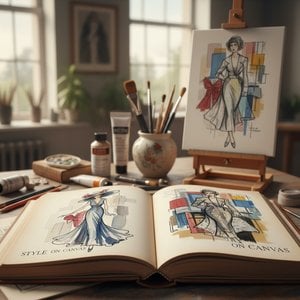
Discover the exquisite world of fashion illustration art. From Art Deco elegance to bespoke oil reproductions, explore how timeless sartorial beauty transforms luxury interiors through masterfully crafted canvas works and curated historical masterpieces.
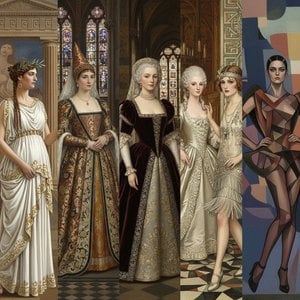
Explore the breathtaking intersection of fine art and high fashion. Discover how iconic masterpieces from Art Deco to Impressionism have shaped the world of luxury couture and timeless design in this curated visual journey.

Embark on a sophisticated journey through the history of line drawing. From classical mastery to modern minimalism, explore how the power of the line shapes emotion and space in fine art. Discover expert insights for collectors and enthusiasts of graphic elegance.

Embark on a visual journey through the evolution of fashion photography. Discover how masters like Gianfranco Ferré blended geometry, surrealism, and texture to redefine high-fashion art for collectors and connoisseurs of luxury imagery.


 效果预览
效果预览
 分享
分享 分享
分享
 详情
详情

 下载
下载
 相似作品
相似作品 X射线
X射线 幻灯片播放
幻灯片播放 统计数据
统计数据


 展开详情
展开详情









 玻璃选项仅适用于110厘米以下的尺寸。


