
由我们的艺术家按需定制,为您提供您所选尺寸及画框的布面手工油画。 ( 切换至版画销售渠道 切换至数字图像销售渠道)





























从与原作比例一致的预设尺寸中进行选择。

您可以输入自定义尺寸,以适配特定的画框或空间。如果所选尺寸与原图比例不符,我们将通过裁剪作品或添加手绘元素来扩展画面。数字样稿将在制作开始前发送给您确认。
请注意,屏幕预览无法准确反映实际的裁剪或扩展效果,只有样稿才能真实呈现最终的构图。
虽然我们提供定制尺寸服务,但为了保留原作比例,建议您从预设列表中选择尺寸。

Alaïa Fashion Drawing
复制品尺寸
Claude Parent’s 2016 “Alaïa Fashion Drawing” isn't merely a depiction of a dress; it’s a distilled essence of modernism, a geometric meditation on form and movement. The drawing immediately commands attention with its stark simplicity – a grayscale world dominated by the assertive presence of Alaïa’s design. It feels both intensely contemporary and deeply rooted in Parent’s pioneering architectural philosophy, particularly his concept of the “Oblique Function,” which sought to liberate architecture from rigid right angles and embrace dynamic, flowing spaces. The image isn't about replicating a photograph; it’s an interpretation, a reduction to its most essential elements – line, shape, and contrast – mirroring Parent’s approach to designing buildings that responded intuitively to the human body in motion.
Understanding this drawing requires acknowledging Claude Parent's broader artistic vision. He wasn’t simply an architect; he was a theorist who questioned conventional design principles, advocating for architecture that anticipated and accommodated human movement. This philosophy is powerfully reflected in the “Alaïa Fashion Drawing.” The dress isn’t just clothing; it’s a study in dynamic form – a visual representation of how a garment can interact with the body in motion. The diagonal line, a recurring motif in Parent's architectural work, symbolizes this fluidity and suggests a continuous, flowing movement.
His background as an apprentice under Ionel Schein, coupled with his early involvement in the Espace group – a collective of artists exploring radical new ideas about space and form – profoundly shaped his approach to design. Parent’s work consistently challenged established norms, pushing boundaries and seeking innovative solutions that prioritized human experience. The drawing embodies this spirit of experimentation and intellectual rigor.
The deliberate use of the diagonal line carries a potent symbolic weight. It can be interpreted as representing disruption, fragmentation, or even a sense of instability – mirroring Parent’s critique of rigid architectural forms. However, it also suggests dynamism and forward momentum, reflecting his belief that architecture should respond to human movement. The simplified representation of the figure itself contributes to this emotional resonance; by stripping away extraneous details, Parent focuses on the essential form, inviting viewers to contemplate the underlying structure and principles at play.
The drawing’s overall effect is one of quiet intensity – a powerful statement about design, movement, and the relationship between form and function. It's not an invitation to romanticize fashion; rather, it’s a rigorous exploration of geometric principles and their application to visual representation.
Created in 2016, this drawing represents a late-career work for Claude Parent, building upon his decades of architectural innovation. It's significant not just as a standalone piece but as a testament to his enduring influence on modern design. Parent’s legacy extends far beyond architecture; his ideas have resonated with artists and designers across various disciplines. The “Alaïa Fashion Drawing” serves as a compelling example of how his principles – emphasizing dynamism, geometric precision, and a critical engagement with established norms – can be applied to seemingly disparate fields.
Further research into Parent’s work reveals a consistent thread of intellectual curiosity and a relentless pursuit of innovative design solutions. The drawing stands as a powerful reminder of his unique vision and its lasting impact on the world of art and architecture.


1923 - 2016 , 法国
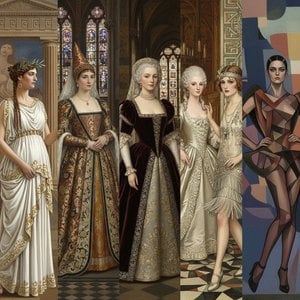
Explore the breathtaking intersection of fine art and high fashion. Discover how iconic masterpieces from Art Deco to Impressionism have shaped the world of luxury couture and timeless design in this curated visual journey.

Elevate your artistic practice with this expert guide to mastering the line. Discover advanced techniques in graphite, charcoal, and contour drawing designed for art students seeking technical precision and expressive depth in their fine art studies.

Embark on a visual journey through the evolution of fashion photography. Discover how masters like Gianfranco Ferré blended geometry, surrealism, and texture to redefine high-fashion art for collectors and connoisseurs of luxury imagery.

Explore the profound elegance of minimalist art. Discover how the precision of a single line transforms simple geometry into timeless masterpieces for the discerning collector seeking sophistication and depth in fine art acquisitions.


 效果预览
效果预览
 分享
分享 分享
分享
 详情
详情

 下载
下载
 相似作品
相似作品 X射线
X射线 幻灯片播放
幻灯片播放 统计数据
统计数据


 展开详情
展开详情









 玻璃选项仅适用于110厘米以下的尺寸。


