A Symphony of Light and Water: Claude Monet’s “Receding Waves”
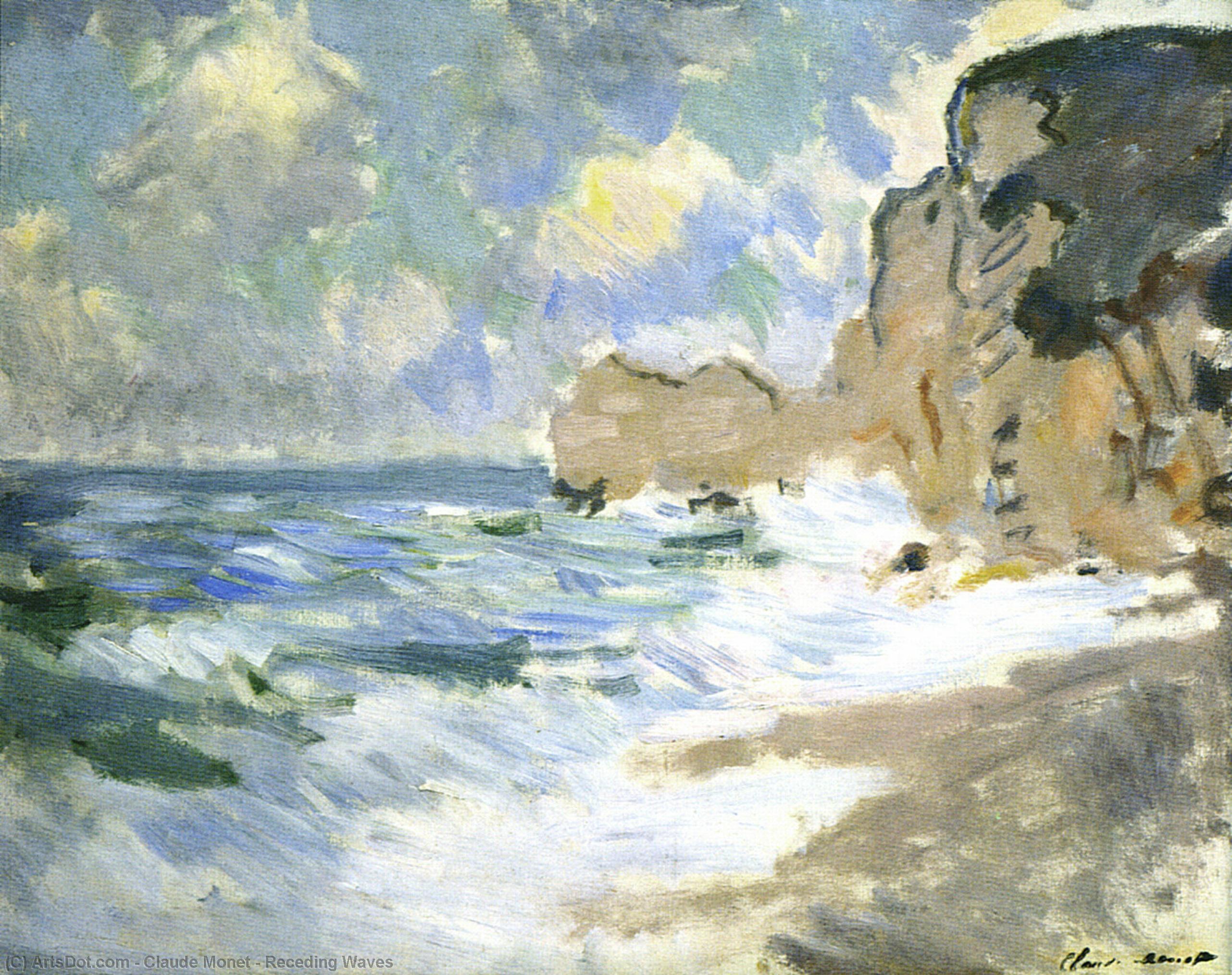
Claude Monet's "Receding Waves," painted in 1883, isn’t merely a depiction of the ocean; it’s an immersion into a fleeting moment of sublime beauty. This Impressionistic masterpiece captures the essence of a coastal scene – the relentless push and pull of the tide, the dance of light on water, and the quiet majesty of a weathered cliff face – all rendered with a sensitivity that speaks to Monet's profound connection with nature. The painting immediately draws the viewer in, inviting them to lose themselves within its hazy, atmospheric depths.
Monet’s technique is central to the work’s captivating quality. Executed in oil on canvas, “Receding Waves” exemplifies his signature Impressionistic style. He abandons precise detail and instead focuses on capturing the *impression* of light and color. Short, broken brushstrokes – a hallmark of his approach – create a shimmering effect across the water’s surface, mimicking the movement of the waves. These strokes aren't blended smoothly; rather, they retain their individual character, contributing to the painting’s vibrant energy. The colors themselves are remarkably luminous, achieved through careful layering and an understanding of how light interacts with different surfaces. Notice particularly the subtle shifts in blue and green as the water recedes, creating a sense of depth and distance that is both realistic and dreamlike.
The Essence of *Plein Air* and Normandy’s Influence
“Receding Waves” was born from Monet's dedication to plein air painting – working directly outdoors. This practice, championed by his mentor Eugène Boudin, allowed him to observe and record the ever-changing effects of light with unparalleled accuracy. The rugged coastline of Normandy, where Monet spent much of his life, provided a constant source of inspiration. The weathered cliffs, the turbulent sea, and the shifting skies all found their way onto his canvases. This connection to the natural world is palpable in the painting; it feels as though you could step right into the scene and feel the salty spray on your face.
The rocky cliff near the water’s edge isn't simply a backdrop but an integral part of the composition. It provides a sense of stability and grounding amidst the fluidity of the waves, while also reflecting the light in a way that enhances the overall luminosity of the painting. The placement of this element subtly guides the viewer’s eye across the scene, leading them on a visual journey through the receding water.
A Moment Frozen in Time: Symbolism and Emotional Resonance
Beyond its technical brilliance, “Receding Waves” possesses a quiet emotional resonance. It evokes feelings of tranquility, serenity, and perhaps even a touch of melancholy. The vastness of the ocean, combined with the subtle shifts in color and light, creates a sense of awe and wonder. There’s an inherent beauty in the painting's depiction of nature’s power – a reminder of our own smallness within the grand scheme of things. The title itself, “Receding Waves,” subtly hints at themes of impermanence and the passage of time, mirroring the artist’s own fascination with capturing fleeting moments.
Monet's work during this period was deeply influenced by the burgeoning field of proto-Cubism, a movement that explored the fragmentation of form and the simultaneous representation of multiple viewpoints. While not overtly Cubist, “Receding Waves” demonstrates a similar interest in breaking down the subject into its constituent elements and presenting them in a way that captures their essence rather than simply replicating reality. It’s a testament to Monet's innovative approach to painting and his ability to translate complex visual experiences onto canvas.
A Legacy of Light: Claude Monet and Beyond
Claude Monet, born Oscar-Claude Monet on November 14, 1840, in Paris, France, left an indelible mark on the history of art. His dedication to capturing light and color revolutionized painting, paving the way for modern Impressionism. His influence extends far beyond this single masterpiece; works like “The Seine at Port-Villez” (available for viewing at /art/list/?Filter=8XXRBV-Claude-Monet-The-Seine-at-Port-Villez) further demonstrate his mastery of capturing atmospheric effects and the beauty of everyday life. For those seeking to delve deeper into Monet’s artistic journey, a visit to the Staatliche Museen zu Berlin offers a comprehensive exploration of his life and work.



 效果预览
效果预览
 购买手绘画作
 分享
分享 分享
分享
 详情
详情

 下载
下载
 相似作品
相似作品 X射线
X射线 幻灯片播放
幻灯片播放

 展开详情
展开详情






































 玻璃选项仅适用于110厘米以下的尺寸。