Claude Monet: A Life in Light and Color
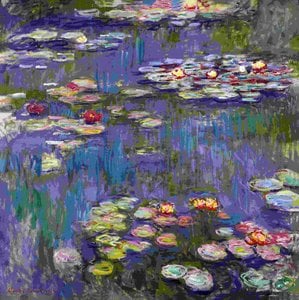
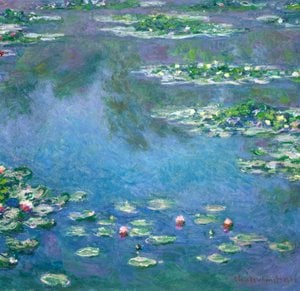
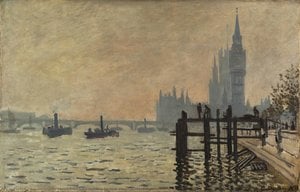
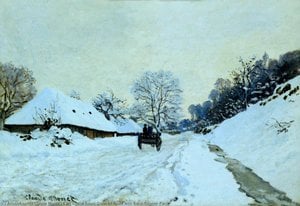
Claude Monet (1840-1926) was a French painter and founder of Impressionism painting who is seen as a key precursor to modernism, especially in his attempts to paint nature as he perceived it. During his long career, he was the most consistent and prolific practitioner of Impressionism's philosophy of expressing one’s perceptions of nature, particularly as applied to plein air (outdoor) landscape painting. The term “Impressionism” is derived from the title of his painting Impression, Sunrise (Impression, soleil levant), which was exhibited in 1874 at the First Impressionist Exhibition, initiated by Monet and a number of like-minded artists as an alternative to the Salon.
Monet was born Oscar-Claude Monet on November 14, 1840, in Paris, France. His family moved to Le Havre, Normandy when he was five years old. Initially intended for a business career by his father, but displayed an early talent for drawing. Crucially influenced by Eugène Boudin, who introduced him to plein air painting – capturing scenes directly from nature. Also created caricatures for local businesses, demonstrating entrepreneurial spirit. He entered Le Havre secondary school of the arts in 1859 and was a classmate of Auguste Renoir. His father disapproved of Monet’s artistic ambitions but supported his desire for a career in art. Louise-Justine Aubrée Monet, his mother, died in January 1857 when he was sixteen years old, and he was sent to live with his childless, widowed but wealthy aunt, Marie-Jeanne Lecadre. He enrolled at the Académie Suisse and studied under Charles Gleyre, where he met artists like Auguste Renoir. Monet’s early works included landscapes and seascapes, developing his skills but lacking a distinctive style.
The Franco-Prussian War (1870–1871) profoundly impacted Monet's artistic trajectory. Amidst the upheaval of the conflict, he embraced plein air painting with renewed fervor, driven by Boudin’s encouragement and fueled by a desire to capture the immediacy of the natural world amidst turbulent times. This commitment to observing light and color directly from nature would become the cornerstone of his Impressionist style—a stylistic revolution that challenged academic conventions and paved the way for modern art. Monet's artistic vision was shaped by this pivotal experience, propelling him toward groundbreaking explorations of perception and representation.
- Early Influences: Eugène Boudin’s advocacy of plein air painting instilled in Monet a fundamental belief in capturing nature as it appeared to the eye—a departure from traditional studio-based techniques that prioritized idealized representations.
- Formal Training: Despite his father's reservations, Monet pursued artistic studies at the Académie Suisse and under Charles Gleyre, fostering connections with fellow artists like Auguste Renoir who would become collaborators in shaping Impressionist aesthetics.
- The Franco-Prussian War Catalyst: The war galvanized Monet’s dedication to plein air painting, prompting him to immerse himself in capturing the atmospheric conditions of Normandy—a decisive moment that solidified his artistic identity and propelled him toward revolutionary explorations of light and color.
Impressionism's Aesthetic Revolution
Impressionist artists rejected academic conventions by prioritizing sensory experience over meticulous detail—focusing instead on conveying the fleeting effects of light and color as perceived by the artist’s eye. Monet epitomized this approach, employing loose brushstrokes and vibrant hues to evoke a sense of movement and life—a stylistic hallmark that distinguished Impressionism from its predecessors. His canvases shimmer with luminosity, capturing the ephemeral beauty of landscapes bathed in sunlight—a testament to his unwavering commitment to portraying nature as it truly appeared. This revolutionary aesthetic challenged established artistic norms, ushering in an era of unprecedented experimentation and innovation within the art world.
Étretat: Inspiration from Normandy’s Dramatic Coastline
Monet's fascination with Étretat—a picturesque fishing village nestled along the Normandy coast—fueled a prolific outpouring of artistic creativity. Drawn to the region’s towering chalk cliffs and mesmerizing seascape, Monet embarked on a series of expeditions to capture the ever-changing moods of the sea and sky—resulting in approximately fifty paintings that exemplify his Impressionist style. The monumental rock formations—the Porte d’Aval, Manneporte, and Aiguille—served as focal points for his artistic endeavors, inspiring him to translate their grandeur onto canvas with remarkable precision and sensitivity. Étretat became a crucible of artistic inspiration, shaping Monet's vision and propelling him toward groundbreaking explorations of perception and representation.
Technique and Style: Capturing Light’s Dance
Monet’s Impressionist technique—characterized by rapid brushstrokes and the layering of complementary colors—allowed him to convey the dynamism of light and atmosphere with unparalleled effectiveness. He meticulously observed how sunlight transformed throughout the day, adapting his palette accordingly—resulting in canvases that pulsate with luminosity and imbue viewers with a sense of immediacy. His approach mirrored the broader artistic currents of the era—a rejection of academic conventions in favor of subjective experience and an embrace of innovative methods for representing visual reality. Monet’s mastery of Impressionist technique cemented his legacy as one of the most influential painters of the 19th century—inspiring generations of artists to pursue similar explorations of perception and representation.



 效果预览
效果预览
 购买手绘画作
 分享
分享 分享
分享
 详情
详情

 下载
下载
 相似作品
相似作品 X射线
X射线 幻灯片播放
幻灯片播放

 展开详情
展开详情






































 玻璃选项仅适用于110厘米以下的尺寸。