


 Oil On CanvasWallArtBaroque
 1707
1707 127.0 x 160.0 cm
 卢浮宫
卢浮宫




























从与原作比例一致的预设尺寸中进行选择。

您可以输入自定义尺寸,以适配特定的画框或空间。如果您选择的尺寸与原图比例不符,我们将对作品进行裁剪,或通过镜像填充/纯色填充边缘的方式来扩展图像。在开始制作之前,我们会向您发送一份数字效果图供您确认。
请注意,屏幕上的预览并不能反映实际的裁剪或扩展效果。只有效果图才能准确展示最终的构图。
虽然我们提供定制尺寸,但为了保持原图比例,我们建议您从预设列表中选择尺寸。

The Two Coaches
复制品尺寸
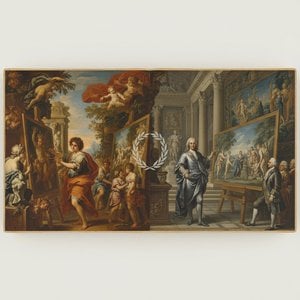
Claude Gillot’s “The Two Coaches,” painted in 1707, is more than just a depiction of a Parisian street scene; it's a vibrant snapshot of an era, brimming with the energy and social dynamics of 18th-century France. This oil on canvas, currently residing within the hallowed halls of the Louvre Museum, immediately draws the viewer into a bustling tableau – a chaotic yet meticulously rendered representation of public life unfolding amidst the city’s cobblestone streets. Gillot masterfully captures not just what was seen, but also the feeling—the movement, the noise, and the underlying tension inherent in a crowded urban space. The painting isn't merely illustrating an event; it’s conveying a mood, a sense of immediacy that transcends its historical context.
The composition itself is a key element of the work’s impact. Gillot employs a dynamic diagonal thrust created by the central cart and the figures pulling it, propelling the eye across the canvas with remarkable force. This movement is counterbalanced by the triangular arrangement of the principal figures – the executed man at the center and the executioners surrounding him – creating a compelling visual rhythm. The artist’s use of perspective subtly flattens the scene, emphasizing the action and drawing attention to the drama unfolding before us. It's a deliberate choice that prioritizes the narrative over strict realism, aligning with the theatrical sensibilities prevalent in Gillot’s work.
Gillot’s skill as an artist is immediately apparent in his masterful handling of oil paint. The texture is rich and impastoed – thick layers of pigment applied directly to the canvas, creating a palpable sense of physicality. Notice particularly the rough surface of the executed man's skin, rendered with expressive brushstrokes that convey both vulnerability and brutality. The clothing of the executioners is equally detailed, showcasing the artist’s ability to capture the folds and textures of fabric with remarkable precision. The color palette leans heavily into warm tones – deep reds, browns, and golds—contrasted by the cooler shadows, creating a dramatic interplay of light and dark that intensifies the scene's emotional impact.
The use of line is equally significant. Gillot employs both thick, expressive lines to define the figures’ musculature and clothing, and thinner, more delicate lines to delineate architectural details in the background. This combination creates a sense of depth and dimensionality, while simultaneously emphasizing the key elements of the composition. The overall effect is one of controlled chaos—a carefully orchestrated scene that nevertheless feels utterly authentic.
“The Two Coaches” depicts a public execution – a grim but not uncommon occurrence in 18th-century France. These executions served as stark reminders of the power of the monarchy and the consequences of defying its authority. Gillot’s painting isn't simply documenting an event; it’s engaging with the complex social and political realities of the time. The scene speaks to themes of justice, mortality, and the precariousness of life under a strict regime.
Furthermore, the inclusion of figures engaged in a quarrel – the “Two Coaches” themselves – suggests a broader commentary on social conflict and the tensions that simmered beneath the surface of Parisian society. The painting’s theatricality—its dramatic lighting, dynamic composition, and heightened emotional intensity—reflects the influence of the burgeoning opera and theatre scene of the period. Gillot was not only a painter but also a designer for the stage, bringing his artistic sensibilities to both visual and performing arts.
Reproducing “The Two Coaches” today offers a unique opportunity to experience the power and artistry of this remarkable Baroque masterpiece. Whether as a large-scale canvas or a smaller print, the painting’s dramatic composition and evocative imagery continue to captivate viewers centuries after its creation. The rich textures and vibrant colors are faithfully recreated in high-quality reproductions, allowing art lovers to appreciate Gillot's skill and vision from the comfort of their own homes. Consider framing this piece within your interior design—its dynamic energy will add a touch of historical drama and artistic sophistication to any space.

Claude Gillot (1673–1722) remains a luminous figure in the tapestry of late Baroque France, an artist whose versatile hand touched nearly every facet of the visual culture of his era. Born in the historic town of Langres, north of Dijon, Gillot’s early creative impulses were nurtured by his father before he ventured to Paris to refine his craft. His artistic journey was far from linear; he was a true polymath of the arts, moving with ease between the delicate precision of printmaking, the structural demands of metalworking, and the grand-scale imagination required for theatrical design. This multidisciplinary foundation allowed him to approach the canvas not merely as a surface for pigment, and but as a stage where light, movement, and drama could converge.
The trajectory of Gillot’s career was profoundly shaped by his apprenticeship under the legendary Jean Watteau around 1703. From Watteau, he absorbed the ethereal qualities of the emerging fête champêtre style—a genre characterized by pastoral elegance and aristocratic leisure. Yet, while he inherited this delicate sensibility, Gillot infused it with a unique vigor derived from his work in the Parisian theater. His extensive collaborations with playwrights and composers to design elaborate sets and costumes for operas and comedies instilled in him a mastery of visual storytelling. He understood how to direct the viewer's eye through composition, using the theatricality of costume and scenery to breathe life into mythological and contemporary narratives alike.
Gillot’s ascent within the prestigious Académie Royale de peinture et de sculpture in 1715 marked a definitive moment in his professional life, signaling his recognition as a master of monumental composition. His breakthrough was anchored by works that celebrated the grandeur of classical antiquity through a contemporary lens. In masterpieces such as “Feast of Pan” and “Feast of Bacchus,” Gillot demonstrated an extraordinary ability to blend the divine with the terrestrial. These canvases were not merely depictions of myth; they were sensory experiences, where the lushness of the landscape met the exuberant energy of mythological revelry.
His technique was characterized by a sophisticated use of color and form that could shift from the soft, dreamlike textures reminiscent of his mentor to a more robust, dramatic Baroque intensity. This versatility allowed him to capture the very essence of the commedia dell’arte, bringing the wit and character of masked performers to life with a sense of spontaneous motion. Through his engravings and paintings, he documented the social graces and theatrical whimsies of the French court, creating a visual record that was as much about the spirit of the age as it was about the subjects themselves.
As the art world began to transition from the heavy grandeur of the Baroque toward the lighter, more intimate aesthetics of the Rococo, Gillot’s influence remained foundational. He served as a vital bridge between generations, influencing later masters such as Lancret by refining the vocabulary of pastoral scenes and theatrical character studies. His ability to marry the structural discipline of classical painting with the whimsical charm of the stage helped define the aesthetic sensibilities of the early 18th century.
Today, the significance of Claude Gillot lies in his role as a creator of atmosphere. Whether through the intricate lines of a print or the sweeping vistas of a mythological feast, his work continues to evoke the vibrant, theatrical pulse of pre-revolutionary France. He remains an artist whose legacy is found not just in individual masterpieces, but in the very way we perceive the intersection of art, theater, and the beautiful artifice of life.

1673 - 1722 , France
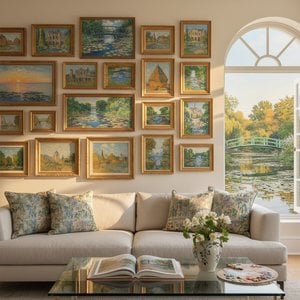
探索克劳德·莫奈25幅杰作,沉浸于印象派大师的光影世界。从《睡莲》到《日出·印象》,感受色彩与情感的完美交融。WahooArt.com提供博物馆级艺术复制品,为您的家居带来臻选装饰灵感!立即探索完整系列。
Explore the life & art of Simon Vouet, a pivotal French Baroque painter who introduced Italian styles to France. Discover his masterpieces and lasting influence on 17th-century art.

探索巴洛克艺术的辉煌与奢华!WahooArt提供精湛的手工油画复制、定制服务和专业艺术咨询,助您将经典作品融入当代室内设计,提升家居品味。投资艺术,传承价值。

Explore the life & art of Charles Le Brun, master of French Baroque Classicism. Discover his royal commissions, influence on Versailles, and enduring legacy through detailed analysis & stunning artworks.

深入探索巴洛克艺术的辉煌历史、独特风格与持久影响。了解卡拉瓦乔、贝尼尼等大师的作品,洞悉反宗教改革运动下的艺术变革。WahooArt.com为您提供专业的艺术解读与高清画作欣赏。


 效果预览
效果预览
 购买手绘画作
 分享
分享 分享
分享
 详情
详情

 下载
下载
 相似作品
相似作品 X射线
X射线 幻灯片播放
幻灯片播放 展开详情
展开详情









 玻璃选项仅适用于110厘米以下的尺寸。


