Acrylic On CanvasWallArtAmerican Regionalism
 1901
1901 35.0 x 25.0 cm
 阿蒙·卡特美国艺术博物馆
购买高分辨率增强版数字图像,其品质远超在线预览。
每一份文件都由我们的内部专家使用先进工具与专业的后期润色技术精心打造。我们确保每一张图像都具备卓越的清晰度、精准的色彩还原度以及细腻的细节表现。
最终文件将在 72 小时内通过电子邮件交付,并针对专业、编辑及印刷用途进行了优化。其品质与顶级设计工作室、出版社和画廊所信赖的标准完全一致。
选择 WahooArt.com,您获得的不仅仅是一张图像——您收到的是经过专业级增强、精雕细琢的数字艺术作品,并享有满意保证。以下是您的订单中自动包含的所有内容:

您的高分辨率数字图像文件将在下单后 72 小时内通过电子邮件发送给您 —— 即可立即使用。

您的艺术品经过专业优化,结合先进的 AI 技术与人工修饰,确保呈现极致的细节、清晰度与色彩准确度。

不小心删除了文件或找不到了?没关系——我们将随时为您免费重发。

即刻拥有您的艺术作品,无需支付任何关税、税费或运费——数字下载始终免税。

我们通过专业工具与色彩管理技术,确保您的数字图像尽可能真实地还原原作色彩。

如果您对所购数字图像不满意,我们将在100天内为您进行修改或提供100%的全额退款——无需任何理由。

不满意?在收到数字文件后的100天内,您可以申请全额退款——无需任何理由。

购买 3 张图片可享 10% 折扣 - 购买 5 张可享 15% 折扣 - 购买 10+ 张可享 20% 折扣。非常适合创意项目、画廊和机构使用。
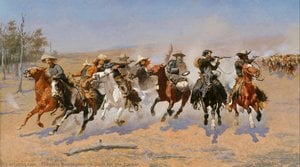
Charles Marion Russell's "Roping a Wolf," painted in 1901, isn’t merely a depiction of a Western scene; it’s a vibrant distillation of the American spirit – a potent blend of rugged individualism, frontier adventure, and a deep respect for the untamed wilderness. This watercolor masterpiece captures a fleeting moment of intense action, a cowboy skillfully maneuvering his horse to corral a wolf in the vast expanse of Montana's landscape. The painting immediately draws the viewer into its dynamic composition, dominated by diagonal lines created by the galloping horse and rider, guiding our eye through the scene with an undeniable sense of momentum.
Russell’s genius lies not just in his technical skill but in his profound understanding of the West – a realm he experienced firsthand as a working cowboy for over a decade. He didn't simply paint what he *saw*; he painted what he *felt*, imbuing each brushstroke with the dust, the heat, and the spirit of the frontier. The muted earth tones—ochres, browns, and blues—evoke the arid landscape, while subtle variations in color suggest atmospheric haze and the play of light on the rough terrain. The painting’s flattened perspective, a hallmark of watercolor techniques, lends it an almost dreamlike quality, transporting us to this specific moment in time.
Charles Marion Russell (1864-1926) was more than just an artist; he was a quintessential embodiment of the Western myth. Born in St. Louis, his early life was far removed from the landscapes he would later immortalize. He abandoned formal schooling at sixteen to become a cowboy, immersing himself fully in the life and culture of the American West. This experience profoundly shaped his artistic vision, informing his depictions of Native Americans, cowboys, wildlife, and the dramatic beauty of the frontier. Russell’s work is deeply rooted in observation and storytelling, often drawing upon Native American folklore and legends.
Russell's commitment extended beyond painting; he was a passionate advocate for Native American rights and worked tirelessly to preserve their culture and traditions. His art served as a powerful voice for the West’s indigenous peoples, offering a nuanced perspective that challenged prevailing stereotypes. His legacy is one of artistic integrity, cultural sensitivity, and a profound connection to the land.
“Roping a Wolf” exemplifies Russell's mastery of watercolor techniques. The artist skillfully employs wet-on-wet washes to create soft edges and blended colors, lending the scene an ethereal quality. The loose brushstrokes are visible throughout the painting, adding to its sense of immediacy and authenticity—a testament to Russell’s direct approach to his craft. Note the careful attention to detail in rendering the textures of the horse's coat, the rider's clothing, and the ruggedness of the landscape. The use of light is particularly effective, creating a dramatic contrast between the bright sunlight illuminating the foreground and the hazy atmosphere in the background.
The painting’s composition—a dynamic interplay of diagonals and curves—further enhances its visual impact. The central figure of the cowboy, poised with determination, anchors the scene while the movement of the horse and wolf creates a sense of thrilling action. The subtle integration of Native American elements – the wolf itself – speaks to Russell's deep respect for the land and its inhabitants.
Beyond its surface depiction, “Roping a Wolf” is rich in symbolism. The act of roping represents control over nature, a fundamental theme in Western art and literature. However, Russell doesn’t portray this as a simple conquest; the cowboy's skill is tempered by respect for the animal, suggesting a more nuanced relationship between humans and the wilderness. The wolf itself can be interpreted as a symbol of both danger and beauty, embodying the untamed spirit of the West. The painting evokes feelings of adventure, resilience, and the enduring allure of the frontier—a timeless reminder of America’s pioneering past.


1864 - 1926 , 美国


 效果预览
效果预览
 切换至版画销售渠道
 分享
分享 分享
分享
 详情
详情 指南
指南

 下载
下载
 相似作品
相似作品 X射线
X射线 幻灯片播放
幻灯片播放 统计数据
统计数据 展开详情
展开详情