
 Acrylic On PaperAmerican West Painting
 1922
1922 56.0 x 35.0 cm
 阿蒙·卡特美国艺术博物馆
博物馆级艺术微喷或帆布版画,制作高效,并提供多种饰面选择。 ( 购买手绘画作 切换至数字图像销售渠道)





























从与原作比例一致的预设尺寸中进行选择。

您可以输入自定义尺寸,以适配特定的画框或空间。如果您选择的尺寸与原图比例不符,我们将对作品进行裁剪,或通过镜像填充/纯色填充边缘的方式来扩展图像。在开始制作之前,我们会向您发送一份数字效果图供您确认。
请注意,屏幕上的预览并不能反映实际的裁剪或扩展效果。只有效果图才能准确展示最终的构图。
虽然我们提供定制尺寸,但为了保持原图比例,我们建议您从预设列表中选择尺寸。

Bent
复制品尺寸
Charles Marion Russell's "Bent," painted in 1922, isn’t merely a depiction of the American West; it’s a visceral embodiment of its rugged spirit. Born and raised on the fringes of society, Russell dedicated his life to capturing the essence of cowboys, Native Americans, and the untamed landscapes of Montana and Alberta. This particular piece, rendered in a masterful monochrome study using pencil or charcoal on paper, speaks volumes about the stoicism, resilience, and profound connection between man and nature that defined this era. The artwork’s power lies not just in its technical skill but also in its ability to evoke a deep sense of place and experience.
The composition of “Bent” is strikingly direct, utilizing a horizontal format that emphasizes the vastness of the Western terrain. The central focus immediately draws the eye to a group of soldiers on horseback traversing an arched gateway – a deliberate choice that anchors the scene within a military context. Russell’s technique is characterized by a remarkable attention to detail and a masterful manipulation of line. Hatching and cross-hatching are employed extensively, building up tonal values with meticulous precision. Loose, gestural lines capture the movement of the horses and riders, while more defined strokes delineate architectural elements like the gateway itself. This combination creates a rich tapestry of texture, simulating the roughness of weathered stone, the sheen of leather saddles, and the flowing motion of the horses’ manes.
The arched gateway serves as more than just a structural element; it functions as a potent symbol of transition and passage. It suggests a journey – not necessarily towards a specific destination, but rather through a period of hardship and uncertainty. The soldiers themselves embody the spirit of duty and responsibility, representing the expansion of American influence into the West. Considering the historical context—the early 20th century—Russell’s work reflects a complex relationship between settlers and Native Americans, capturing both the promise of opportunity and the realities of displacement. The artwork subtly hints at the challenges faced by those traversing this frontier landscape, inviting contemplation on themes of exploration, conflict, and cultural exchange.
Despite its subject matter—a military scene—“Bent” possesses a remarkable quiet intensity. The monochromatic palette contributes to a sense of seriousness and realism, while the restrained use of line avoids melodrama. There’s an underlying stoicism in the figures' postures and expressions, reflecting the hardships inherent in frontier life. Russell doesn’t glorify warfare; instead, he presents it with a measured dignity, capturing a fleeting moment of transit within a larger narrative. The artwork ultimately evokes a feeling of profound connection to the land—a sense that one is witnessing a timeless scene played out against the backdrop of an enduring landscape. It's a testament to Russell’s ability to imbue his subjects with both strength and vulnerability.
Additional Research:


1864 - 1926 , 美国

Discover the sophisticated mastery of graphite drawing. Explore expert techniques for achieving profound depth, intricate texture, and hyper-realistic detail through the alchemy of carbon, curated for the discerning art enthusiast and professional collector.

Elevate your artistic practice with this expert guide to mastering the line. Discover advanced techniques in graphite, charcoal, and contour drawing designed for art students seeking technical precision and expressive depth in their fine art studies.
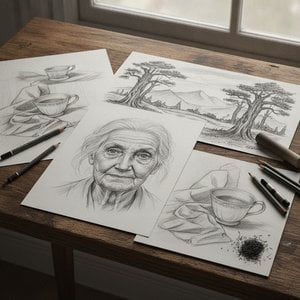
Explore the profound elegance of pencil and charcoal sketching. Discover how masters use line, shadow, and chiaroscuro to capture light and texture, bridging the gap between preparatory studies and timeless fine art masterpieces.

Explore the profound artistry of graphite drawing. Discover professional techniques for mastering depth, texture, and detail through a lens of art history, from classical sketches to modern masterpieces. Elevate your understanding of the pencil medium with our expert guide.


 效果预览
效果预览
 分享
分享 分享
分享
 详情
详情

 下载
下载
 相似作品
相似作品 X射线
X射线 幻灯片播放
幻灯片播放 统计数据
统计数据 展开详情
展开详情









 玻璃选项仅适用于110厘米以下的尺寸。


