
由我们的艺术家按需定制,为您提供您所选尺寸及画框的布面手工油画。 ( 切换至版画销售渠道 切换至数字图像销售渠道)





























从与原作比例一致的预设尺寸中进行选择。

您可以输入自定义尺寸,以适配特定的画框或空间。如果所选尺寸与原图比例不符,我们将通过裁剪作品或添加手绘元素来扩展画面。数字样稿将在制作开始前发送给您确认。
请注意,屏幕预览无法准确反映实际的裁剪或扩展效果,只有样稿才能真实呈现最终的构图。
虽然我们提供定制尺寸服务,但为了保留原作比例,建议您从预设列表中选择尺寸。

The Voyagers
复制品尺寸
In the mid-19th century, as the American landscape beckoned with the promise of untold discovery, Charles Deas captured a moment of profound transition in his 1845 masterpiece, “The Voyagers.” This evocative oil on canvas is far more than a mere maritime scene; it is an immersive window into the Romantic era’s fascination with exploration and the human spirit. As a sailboat glides across serene, shimmering waters, we find ourselves transported to a time when every horizon held the potential for both peril and glory. Deas, a painter whose career was as intense and brief as the frontier life he depicted, utilizes this scene to weave a narrative of movement and destiny, inviting the viewer to join the travelers on their quest into the unknown.
The composition is masterfully balanced, blending the stillness of the water with the dynamic energy of those aboard. Within the vessel, a diverse group of individuals is engaged in the quiet labor of exploration—some seated in contemplation, others standing as sentinels of the voyage. This human element provides a grounded, psychological depth to the work, reflecting Deas’s unique ability to move beyond simple documentation toward an exploration of character. Above this terrestrial drama, the sky comes alive with the presence of soaring birds, their wings cutting through the atmosphere to create a sense of boundless freedom. These avian figures act as a celestial chorus, reinforcing the themes of aspiration and the transcendence of the human will against the vastness of nature.
Technically, “The Voyagers” stands as a testament to Deas’s command over the Romantic style. He employs a sophisticated approach to tonal gradation, using layers of oil paint to build a luminous surface that seems to catch the very light of a departing sun. The brushwork is expressive and deliberate, creating textures that allow the water to ripple with life and the sky to swell with soft, atmospheric clouds. This mastery of light and shadow—the classic chiaroscroll effect—imbues the canvas with a palpable sense of atmosphere, making the air itself feel heavy with the scent of salt and the weight of anticipation.
For the discerning collector or interior designer, this painting offers an unparalleled emotional resonance. It is a piece that commands attention through its quiet strength rather than through jarring colors. The subtle interplay of light across the water creates a soothing yet stimulating visual rhythm, making it an ideal centerpiece for a room designed to inspire reflection and grandeur. Whether placed in a sophisticated study or a contemporary living space, “The Voyagers” brings with it a sense of historical gravity and a timeless connection to the concept of the American Dream—a dream defined by courage, ambition, and the eternal yearning for discovery.


1818 - 1867 , 美国

Explore the breathtaking world of the Pre-Raphaelite Brotherhood. Discover how this movement redefined Victorian art through vivid detail, mythological depth, and romanticism. An expert guide for classic art enthusiasts seeking to rediscover these timeless masterpieces.
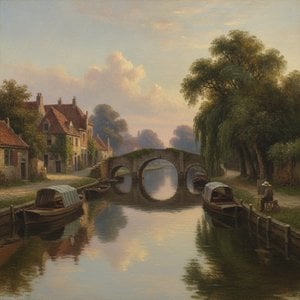
Embark on a visual journey through the tranquil beauty of canal scenes in fine art. Discover how master painters capture light, reflection, and serenity through impressionistic landscapes and timeless maritime masterpieces.

Explore the profound beauty of American Romanticism. Discover how the Hudson River School captured the wild frontier through masterful landscapes, exploring the legacy of legends like Thomas Cole and Asher Durand in this deep dive into art history.

Embark on a visual journey through the serene mastery of lake scene landscapes. Explore the profound beauty of Impressionist, Romantic, and Luminist oil paintings, curated for the sophisticated collector seeking timeless tranquility and artistic excellence.

Embark on a visual journey through Claude Monet's most iconic water lily masterpieces. Discover the profound beauty of Impressionism, explore the evolution of Giverny's light, and learn how to bring these serene, museum-quality landscapes into your private collection.


 效果预览
效果预览
 分享
分享 分享
分享
 详情
详情 指南
指南

 下载
下载
 相似作品
相似作品 X射线
X射线 幻灯片播放
幻灯片播放 统计数据
统计数据


 展开详情
展开详情









 玻璃选项仅适用于110厘米以下的尺寸。


