
博物馆级艺术微喷或帆布版画,制作高效,并提供多种饰面选择。 ( 购买手绘画作 切换至数字图像销售渠道)
从与原作比例一致的预设尺寸中进行选择。

您可以输入自定义尺寸,以适配特定的画框或空间。如果您选择的尺寸与原图比例不符,我们将对作品进行裁剪,或通过镜像填充/纯色填充边缘的方式来扩展图像。在开始制作之前,我们会向您发送一份数字效果图供您确认。
请注意,屏幕上的预览并不能反映实际的裁剪或扩展效果。只有效果图才能准确展示最终的构图。
虽然我们提供定制尺寸,但为了保持原图比例,我们建议您从预设列表中选择尺寸。

Sir William Crookes
复制品尺寸

In the golden age of Victorian portraiture, few artists captured the quiet dignity and social complexity of the era as masterfully as Charles Albert Ludovici. Born in 1820 into a lineage of creative distinction—his father being a noted sculptor—Ludovici was destined for a life steeped in the fine arts. His journey was one of international refinement, bridging the artistic traditions of the Continent with the prestigious academic circles of London. This unique heritage allowed him to infuse his work with a cosmopolitan elegance that set him apart from many of his British contemporaries, establishing him as a painter capable of translating both physical likeness and psychological depth onto the canvas.
Ludovici’s formal education at the Royal Academy in London served as the bedrock of his technical prowess. Under the guidance of luminaries such as Sir George Watts and Frederic Leighton, he mastered the rigorous academic conventions of his time. Yet, even within these structured boundaries, a restless, emotive spirit began to emerge. Influenced by the sweeping drama of the Romantic movement and the evocative lighting of artists like Eugène Delacroix, Ludovici developed a style that moved beyond mere documentation. He sought to capture the very soul of his subjects, utilizing subtle nuances in gesture and expression to tell stories that resided beneath the surface of silk and lace.
The true magic of a Ludovici portrait lies in its luminous execution. A devotee of oil on canvas, he employed a sophisticated glazing method, layering thin, translucent coats of pigment to achieve a breathtaking depth of tone. This technique allowed light to penetrate the paint layers and reflect back, giving skin a lifelike radiance and fabrics a tactile, shimmering quality. His ability to manipulate light was not merely a technical feat but a narrative tool; he used theatrical shadows and soft highlights to direct the viewer's eye and evoke specific moods, ranging from the somber gravity of a scholar to the delicate innocence of a child.
His repertoire of subjects reflected the stratified elegance of 19th-century society. Ludovici became a sought-after portraitist for the era's most influential figures, including:
As the 19th century progressed, Ludovici’s work remained a steadfast pillar of realism amidst changing artistic tides. While later movements would push toward abstraction and impressionism, Ludovici stayed true to the power of the human form and the importance of meticulous detail. His legacy is not merely found in the museums that house his works, but in the way he documented a vanishing world—a period of profound transition where tradition met modernity. Through his brush, the faces of the past continue to gaze upon us with an unmistakable vitality, reminding us of the enduring human connection that fine art provides across the centuries.

1820 - 1894

Explore the captivating world of Benjamin Williams Leader's Victorian genre paintings. Discover his mastery of naturalism, social commentary & lasting influence on British art. Expert insights at WahooArt.
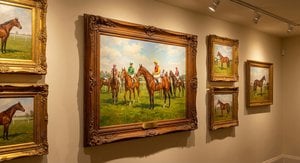
Explore 25 iconic Sir Alfred Munnings paintings! Discover the beauty of British Impressionism, equine art & rural England. Find museum-quality reproductions and elevate your home decor with WahooArt. Explore the full collection online.

Explore the life & works of William Powell Frith, the 'greatest British painter of social scenes.' Discover his iconic Victorian genre paintings and learn about his lasting impact on realist art. Hand-painted reproductions available.
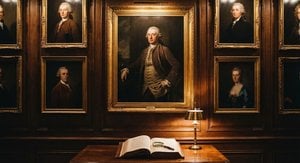
Explore 25 captivating portraits by Sir Joshua Reynolds, a master of British art. Discover stories behind his iconic paintings, elegant style & historical influence. Find museum-quality reproductions and elevate your home decor on WahooArt.com.

Explore the life & art of Sir William Blake Richmond, a pivotal figure bridging Pre-Raphaelitism and Aestheticism. Discover his stunning portraits, mosaics at St Paul's Cathedral, and lasting influence on Victorian art.


 效果预览
效果预览
 分享
分享 分享
分享
 详情
详情

 下载
下载
 相似作品
相似作品 X射线
X射线 幻灯片播放
幻灯片播放 统计数据
统计数据


 展开详情
展开详情






































 玻璃选项仅适用于110厘米以下的尺寸。


