
由我们的艺术家按需定制,为您提供您所选尺寸及画框的布面手工油画。 ( 切换至版画销售渠道 切换至数字图像销售渠道)





























您可以从与原作比例一致的预设尺寸中进行选择。

您可以输入自定义尺寸,以适配特定的画框或空间。如果所选尺寸与原图比例不符,我们将通过裁剪作品或添加手绘元素来扩展画面。数字样稿将在制作开始前发送给您确认。
请注意,屏幕预览无法准确反映实际的裁剪或扩展效果,只有样稿才能真实呈现最终的构图。
虽然我们提供定制尺寸服务,但为了保留原作比例,建议您从预设列表中选择尺寸。
André Le Nôtre
复刻品尺寸说明
André Le Nôtre’s portrait, painted in 1681 by Carlo Maratta, offers a glimpse into the mind of a man who fundamentally reshaped the landscape of Europe. More than simply a gardener, Le Nôtre was the “King of Gardeners,” Controller General of Buildings, Arts and Manufactures for France, and, crucially, Gardener to the King – a position that afforded him unparalleled influence over the aesthetic sensibilities of his era. The painting itself is a study in restrained elegance; a man of considerable age, yet radiating an aura of quiet authority and intellectual depth. Maratta’s masterful use of light and shadow emphasizes Le Nôtre's dignified presence, while the subtle details – the meticulously arranged books, the gesture of his hand – hint at the profound knowledge and considered artistry that underpinned his remarkable achievements.
Born in Paris in 1613, Le Nôtre’s early life was steeped in the world of horticulture. His father, Jean Le Nôtre, oversaw the gardens of the Tuileries Palace, providing young André with a foundational understanding of plant selection, design principles, and the practicalities of garden management. However, it wasn't merely experience that shaped him; Le Nôtre’s artistic training under Andrea Sacchi, a key figure in the Roman Baroque movement, instilled within him a deep appreciation for classical forms, perspective, and the harmonious balance between nature and architecture. This grounding in classical ideals would prove crucial as he embarked on his most ambitious project: transforming the sprawling grounds of Versailles into a breathtaking demonstration of French garden design.
Prior to Le Nôtre’s intervention, Versailles was a collection of disparate spaces, largely dictated by the needs of hunting and defense. It was Le Nôtre who conceived of a unified landscape – a meticulously planned series of geometric parterres, flowing water features, strategically placed groves of trees, and grand vistas designed to impress and inspire awe. His approach wasn’t simply about creating beautiful gardens; it was about crafting an illusion of infinite space, utilizing techniques like forced perspective and carefully calibrated scale to manipulate the viewer's perception. The vastness of the grounds, achieved through a masterful orchestration of elements, mirrored the power and grandeur of the French monarchy.
The influence of Italian Renaissance garden design is undeniable in Le Nôtre’s work, particularly the gardens of Villa Aldobrandini at Tivoli, which he likely studied extensively. However, Le Nôtre adapted these principles to suit the specific climate and topography of France, creating a distinctly “French Garden” characterized by its formal symmetry, clipped hedges, gravel paths, and an emphasis on water as a unifying element. The carefully controlled chaos – the seemingly random arrangement of plants within defined geometric patterns – created a sense of both order and natural beauty.
The inclusion of books in the portrait is particularly significant. Le Nôtre was not merely a craftsman; he was a scholar, deeply versed in mathematics, botany, and classical literature – all disciplines essential to his work. The gesture of his hand resting on the volumes suggests contemplation, study, and a profound understanding of the principles underlying both art and nature. The blue background further enhances this sense of intellectual depth, evoking the vastness of the sky and hinting at the limitless possibilities inherent in design.
Maratta’s depiction captures Le Nôtre not as a flamboyant figure of power, but as a man of quiet dignity and profound intellect. The portrait serves as a testament to his enduring legacy – a legacy that continues to inspire landscape architects and designers today. Reproductions of this artwork offer a unique opportunity to bring the spirit of this remarkable visionary into any space, reminding us of the transformative power of art and design.
如需获取 卡洛·马拉塔 的《André Le Nôtre》 的数字文件,请在 本页 上订购 高分辨率数字图像下载。
卡洛·马拉塔 的《André Le Nôtre》 的视觉亮度为 deep_shadow。它可以与目标空间的灯光完美匹配。
“André Le Nôtre”的色彩饱和度为Monochromatic。饱和度描述了色彩呈现的浓郁程度。
"André Le Nôtre"创作于1681年,采用了Acrylic On Canvas技法。材质与日期说明了原作的创作方式及时间。
卡洛·马拉塔 的《André Le Nôtre》 的色彩饱和度记录为 Muted。
"André Le Nôtre" 由 卡洛·马拉塔 以 Baroque Classicizing Style 流派风格创作而成。艺术家与艺术流派共同定义了作品的传承。
卡洛·马拉塔 的《André Le Nôtre》 在明暗区域之间呈现出 Gentle 的对比度。
“André Le Nôtre”倾向于Green to Violet Spectrum色调。


1625 - 1713 , 意大利
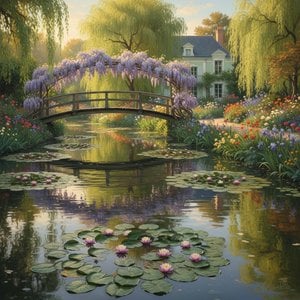
Embark on a visual journey through Claude Monet's Giverny. Discover the enchanting light, vibrant colors, and breathtaking landscapes of his legendary gardens through an expert exploration of Impressionist mastery and timeless beauty.
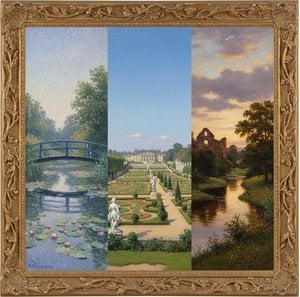
Embark on a visual journey through the serene beauty of gardens and parks in fine art. Discover how master artists capture nature's tranquility through impressionistic blooms and classical landscapes to bring timeless elegance into your home collection.


 实景预览
实景预览
 发送
发送 分享
分享
 详情
详情 指南
指南

 下载图片
下载图片
 相似作品
相似作品 X射线
X射线 幻灯片播放
幻灯片播放 统计数据
统计数据


 阅读全文
阅读全文









 玻璃选项仅适用于110厘米以下的尺寸。


