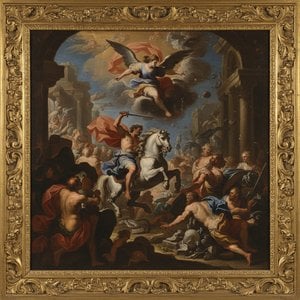
Michelangelo Merisi da Caravaggio’s St John The Baptist: A Symphony of Light and Shadow
Caravaggio’s “St John the Baptist” stands as a cornerstone of Baroque art, an arresting tableau that transcends mere depiction to embody the very spirit of its era. Painted circa 1604-1605 in Valletta, Malta, this monumental canvas—now housed within St John's Co-Cathedral—captures not just Saint John’s physical form but also his profound psychological state: contemplation mingled with vulnerability beneath an overwhelming celestial luminescence. The painting’s immediate impact stems from Caravaggio’s revolutionary approach to illumination – a technique known as chiaroscuro – which plunges the scene into dramatic darkness punctuated by shafts of radiant light, creating an illusionistic depth that draws the viewer irresistibly inward.
- Technical Mastery: Caravaggio employed oil paint on canvas with meticulous detail, layering pigments to achieve astonishing realism. The subtle gradations of tone convey a palpable sense of texture and volume, mirroring the contours of John’s flesh and clothing with breathtaking accuracy.
- Compositional Drama: The artist skillfully arranges elements within the frame—the youthful Saint John seated on rough stone, clutching a lamb—to maximize visual tension. This deliberate positioning directs the eye upwards towards the divine light emanating from above, symbolizing spiritual enlightenment and foreshadowing Christ’s arrival.
The Historical Context illuminates the painting's significance. Caravaggio operated during a period of fervent religious fervor in Rome and Malta, where papal patronage fueled artistic innovation. Yet, his unconventional style—characterized by unflinching realism and emotionally charged depictions—challenged prevailing aesthetic conventions. Unlike idealized portraits favored by Renaissance artists, Caravaggio presented John as an imperfect human being grappling with existential questions – a deliberate choice reflecting the humanist sensibilities of the time.
Symbolism Embodied: The lamb held by St John is laden with symbolic meaning. Traditionally associated with innocence and sacrifice, it represents Christ’s sacrificial death and foreshadows his role as Redeemer. Simultaneously, the posture of John—seated in repose yet radiating inner turmoil—suggests a meditative state, mirroring the Gospels' portrayal of Jesus’s solitude before his ministry began. The artist’s masterful use of light isn’t merely decorative; it serves as a conduit for divine grace, illuminating John’s soul and conveying the profound spiritual drama unfolding within him.
Emotional Resonance: Caravaggio’s “St John the Baptist” transcends mere visual representation to evoke palpable emotion. The viewer is confronted with an image of quiet dignity amidst overwhelming darkness—a testament to human resilience in the face of adversity. The painting's unsettling beauty compels contemplation, prompting reflection on themes of faith, vulnerability, and divine grace. It remains a powerfully evocative artwork, continuing to inspire artists and captivate audiences centuries after its creation.
- Influence Beyond Malta: Caravaggio’s stylistic innovations reverberated throughout Europe, influencing painters like Rubens and Rembrandt. His dramatic chiaroscuro technique became synonymous with Baroque art, shaping the visual language of subsequent generations.
- Legacy Enduring Inspiration: Reproductions of “St John The Baptist” continue to adorn homes and galleries worldwide, demonstrating its enduring appeal as a symbol of artistic excellence and spiritual contemplation.
Consider commissioning a high-quality reproduction from WahooArt.com to bring Caravaggio’s masterpiece into your space—a tangible connection to one of art history's most transformative visions.