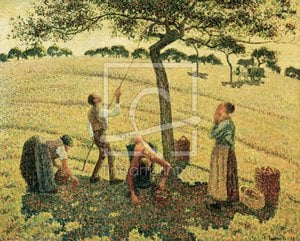
Giclée PrintDigitalImpressionism
 190119th Century
 38.0 x 46.0 cm
 兰斯美术馆
兰斯美术馆由我们的艺术家按需定制,为您提供您所选尺寸及画框的布面手工油画。 ( 切换至版画销售渠道 切换至数字图像销售渠道)
从与原作比例一致的预设尺寸中进行选择。

您可以输入自定义尺寸,以适配特定的画框或空间。如果所选尺寸与原图比例不符,我们将通过裁剪作品或添加手绘元素来扩展画面。数字样稿将在制作开始前发送给您确认。
请注意,屏幕预览无法准确反映实际的裁剪或扩展效果,只有样稿才能真实呈现最终的构图。
虽然我们提供定制尺寸服务,但为了保留原作比例,建议您从预设列表中选择尺寸。

The Louvre
复制品尺寸
Camille Pissarro’s “The Louvre,” painted in 1901 during his Impressionist period, isn't merely a depiction of Paris; it’s an embodiment of the movement’s core philosophy—capturing fleeting moments of beauty and emotion through nuanced observation. More than just a picturesque cityscape, this canvas speaks to the very soul of Impressionism, inviting viewers into a contemplative experience akin to witnessing dawn break over the Seine.
Pissarro’s approach distinguished him from many of his contemporaries who sought grand narratives or heroic figures. Instead, he focused on capturing the subtle interplay of light and color as it transformed the familiar surroundings of Parisian life. Influenced by artists like Claude Monet and Frédéric Bazille, Pissarro employed loose brushstrokes—characteristic of Impressionism—to blend pigments directly onto the canvas, eschewing meticulous detail in favor of conveying an overall impression. The resulting surface is textured and shimmering, reflecting the diffused sunlight filtering through the mist that hangs over the river.
Pissarro's masterful technique exemplifies Impressionist principles. He meticulously studied how light affects color perception, applying scientific observation alongside artistic intuition. The artist utilized a palette knife to apply thick impasto—textured paint—to create palpable ridges and valleys that enhance the visual drama of the scene. Careful layering of colors—primarily muted blues, greens, and tans—creates depth and luminosity, simulating the atmospheric haze prevalent in early morning hours. Notice how Pissarro captures the way light bounces off the buildings and reflects on the water’s surface, creating a mesmerizing dance of illumination.
"The Louvre," like many of Pissarro's landscapes from this era, reflects the burgeoning optimism of the Belle Époque—the “beautiful period”—a time marked by industrial progress and cultural flourishing. The painting captures a quintessential Parisian vista, portraying the Seine River lined with boats and buildings bathed in soft morning light. It’s a scene brimming with life – pedestrians strolling along the riverbank, barges gliding silently past—yet Pissarro manages to convey a profound sense of tranquility and contemplation.
Beyond its visual splendor, “The Louvre” carries symbolic weight. The misty atmosphere evokes feelings of serenity and mystery, inviting viewers to ponder the passage of time and the beauty inherent in everyday existence. The river itself symbolizes fluidity and continuity, mirroring the artist’s own belief that art should strive to capture not just what is seen but also what is felt—a testament to Pissarro's enduring legacy as a pioneer of Impressionist vision.
Pissarro’s work stands firmly within the Impressionist canon, sharing affinities with Claude Monet’s explorations of light and color. Both artists prioritized capturing atmospheric conditions—particularly mist and fog—to heighten the emotional impact of their paintings. Like Monet's Water Lilies series, “The Louvre” prioritizes sensory experience over precise depiction, inviting viewers to immerse themselves in a moment of sublime beauty.
WahooArt offers high-quality reproductions of “The Louvre,” meticulously crafted to preserve the essence of Pissarro’s original vision. Explore more about Camille Pissarro and his contribution to Impressionism at Camille Pissarro: The Louvre.

1830 - 1903 , 法国

Discover the ethereal beauty of Jean-Baptiste-Camille Corot. Explore how this master of light bridged Neoclassicism and Impressionism through his atmospheric landscapes, capturing the timeless essence of the French countryside with unparalleled poetic brilliance.

Discover the luminous world of Camille Pissarro. Explore how this Impressionist master captured light and rural life through evocative landscapes, from Pontoise to Eragny, and learn about his enduring legacy in art history.


 分享
分享 分享
分享
 详情
详情

 下载
下载
 相似作品
相似作品 幻灯片播放
幻灯片播放 统计数据
统计数据 展开详情
展开详情






































 玻璃选项仅适用于110厘米以下的尺寸。