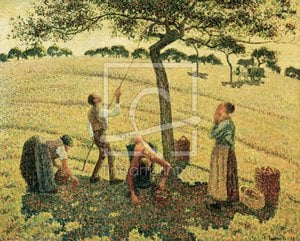
博物馆级艺术微喷或帆布版画,制作高效,并提供多种饰面选择。 ( 购买手绘画作 切换至数字图像销售渠道)





























从与原作比例一致的预设尺寸中进行选择。

您可以输入自定义尺寸,以适配特定的画框或空间。如果您选择的尺寸与原图比例不符,我们将对作品进行裁剪,或通过镜像填充/纯色填充边缘的方式来扩展图像。在开始制作之前,我们会向您发送一份数字效果图供您确认。
请注意,屏幕上的预览并不能反映实际的裁剪或扩展效果。只有效果图才能准确展示最终的构图。
虽然我们提供定制尺寸,但为了保持原图比例,我们建议您从预设列表中选择尺寸。

Farmyard
复制品尺寸
Camille Pissarro’s “Farmyard,” painted in 1863, offers a remarkably intimate and detailed glimpse into the rhythms of rural life – a scene both familiar and imbued with a quiet dignity. This work, executed during a pivotal period in the development of Impressionism, reveals Pissarro's meticulous observation and his burgeoning ability to capture not just the visual appearance of a subject but also its inherent atmosphere. The painting’s strength lies in its realism, yet it transcends mere documentation; it evokes a profound sense of connection to the land and the people who worked within it.
The scene unfolds with a carefully constructed narrative. A central figure – a man standing alongside a powerful horse – immediately draws the viewer’s eye, establishing a point of focus amidst the activity. The inclusion of other figures, subtly placed in the background, suggests a community engaged in daily tasks. Animals, particularly the dog and the two birds, add layers of interest and contribute to the overall feeling of a vibrant, living space. The architectural element – the open doorway leading into what appears to be a barn or stable – anchors the composition and reinforces the theme of agricultural labor. Pissarro’s masterful use of perspective guides the eye through the scene, creating a sense of depth and inviting the viewer to become part of this rural tableau.
“Farmyard” exemplifies Pissarro's evolving style, firmly rooted in Realism but increasingly influenced by the emerging tenets of Impressionism. Notice the loose brushwork, characteristic of the period, which avoids sharp outlines and instead emphasizes the play of light and shadow. The artist employs broken color – applying small strokes of pure pigment side-by-side – to create a shimmering effect, particularly evident in the depiction of the horse’s coat and the hay pile. This technique allows Pissarro to capture the transient qualities of light and atmosphere, a hallmark of Impressionist painting. While grounded in observation, the work demonstrates a growing willingness to prioritize subjective perception over strict adherence to academic conventions.
Painted in 1863, “Farmyard” reflects a time of significant social and artistic change. The rise of industrialization was beginning to transform rural landscapes, yet Pissarro’s work champions the enduring values associated with agricultural life – hard work, community, and connection to nature. The scene can be interpreted as a nostalgic celebration of a disappearing way of life. Furthermore, Pissarro's involvement in the Société des Artistes Indépendants, a group that championed independent artistic expression, aligns him with the broader movement challenging established artistic norms. This painting represents a crucial step in his development and foreshadows his later contributions to Impressionism’s evolution.
"Farmyard" possesses a quiet emotional resonance that continues to captivate viewers today. It is not a dramatic or overtly sentimental work, but rather one of subtle beauty and profound observation. The painting's ability to evoke a sense of peace and connection to the natural world speaks to Pissarro’s artistic skill and his deep understanding of human experience. A hand-painted reproduction offers an exceptional opportunity to bring this evocative scene into your home or office, celebrating the legacy of one of Impressionism’s most important figures.

1830 - 1903 , 法国

Discover the luminous world of Camille Pissarro. Explore how this Impressionist master captured light and rural life through evocative landscapes, from Pontoise to Eragny, and learn about his enduring legacy in art history.


 效果预览
效果预览
 分享
分享 分享
分享
 详情
详情 指南
指南

 下载
下载
 相似作品
相似作品 X射线
X射线 幻灯片播放
幻灯片播放 统计数据
统计数据

 展开详情
展开详情









 玻璃选项仅适用于110厘米以下的尺寸。