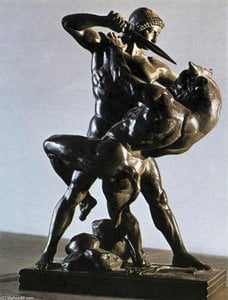
Benvenuto Cellini’s Perseus with the Head of Medusa: A Renaissance Triumph
Benvenuto Cellini’s sculpture “Perseus with the Head of Medusa,” created between 1545 and 1554 for the Loggia dei Lanzi in Florence, stands as a monumental testament to Mannerist artistry—a period characterized by dramatic flair and stylistic complexity that followed the High Renaissance. More than just a depiction of mythic heroism, Cellini’s masterpiece embodies the intellectual fervor and artistic ambition of its time, cementing Cellini's place among the foremost sculptors of his era.
The Myth Embodied in Bronze
The sculpture portrays Perseus, the legendary hero who slew Medusa—a Gorgon whose gaze turned men to stone—for King Polydectes. Cellini meticulously captured the decisive moment after Perseus decapitated Medusa, holding aloft her severed head by her hair with unwavering strength and determination. The pose itself is imbued with dynamism – Perseus’s raised right arm conveys triumph, while his musculature reflects the physical exertion required for this perilous feat.
Technique and Material: A Masterpiece of Bronze Craftsmanship
Cellini employed bronze—a material prized for its durability and ability to capture intricate detail—to achieve an astonishing level of realism. The sculptor skillfully hammered the metal into form, utilizing techniques honed over decades of experience. Careful observation reveals subtle nuances in musculature and facial expression, demonstrating Cellini’s profound understanding of human anatomy. Furthermore, the sculpture's surface is polished to a gleaming sheen, enhancing its visual impact and conveying an aura of grandeur.
Symbolism: Triumph Over Monstrosity and Divine Inspiration
Beyond its narrative depiction of Perseus’s victory, “Perseus with the Head of Medusa” resonates with deeper symbolic meanings. The Gorgon's head represents evil and terror—forces that Perseus vanquishes through courage and intellect. Cellini’s masterful rendering underscores the triumph of reason over primal fear. Moreover, the sculpture is considered to be inspired by classical ideals of beauty and heroism – a reflection of the humanist spirit prevalent during the Renaissance.
A Legacy Enduring Through Time
“Perseus with the Head of Medusa” remains one of Cellini’s most celebrated works—a cornerstone of Florentine sculpture and an exemplar of Mannerist style. Its enduring appeal lies in its ability to convey both physical prowess and intellectual conviction, capturing the essence of Renaissance ambition and artistic excellence. Today, reproductions of this iconic sculpture continue to inspire admiration for Cellini's unparalleled skill and his contribution to the artistic heritage of Italy.
常见问题与解答
本韦努托·切利尼 的作品《Perseus》是否属于公有领域?其原因是什么?
"Perseus" 的版权状态 —— 属于公有领域 —— 其版权已过期 —— 取决于艺术家于 1571 年逝世这一事实。
"Perseus" 的创作年份 1540 对应于 本韦努托·切利尼 艺术生涯中的哪个阶段?
1540 年的创作日期将《Perseus》置于 本韦努托·切利尼 艺术发展的 Renaissance 时期。
在本韦努托·切利尼反复探讨的主题中,"Perseus"处于怎样的地位?
在本韦努托·切利尼已记录的主题——classical greek ideals, mythological narrative, power & heroism themes, cellini's self-promotion, renaissance sculpture mastery, medusa's vengeful story, florentine artistic pride, artist's personal legend——之中,"Perseus" 则将焦点转向了mythological figure, greek mythology, medusa's head, perseus victory, bronze sculpture, renaissance art, classical hero。


 分享
分享 分享
分享
 详情
详情 指南
指南

 下载作品
下载作品
 相似作品
相似作品 幻灯片播放
幻灯片播放 问答
问答
 统计数据
统计数据


 展开全文
展开全文
 切换至版画销售渠道





































 玻璃选项仅适用于110厘米以下的尺寸。