


x

从与原作比例一致的预设尺寸中进行选择。

您可以输入自定义尺寸,以适配特定的画框或空间。如果您选择的尺寸与原图比例不符,我们将对作品进行裁剪,或通过镜像填充/纯色填充边缘的方式来扩展图像。在开始制作之前,我们会向您发送一份数字效果图供您确认。
请注意,屏幕上的预览并不能反映实际的裁剪或扩展效果。只有效果图才能准确展示最终的构图。
虽然我们提供定制尺寸,但为了保持原图比例,我们建议您从预设列表中选择尺寸。

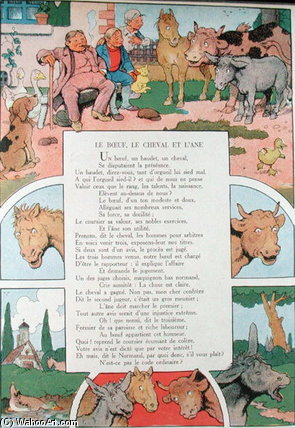
The Ox
复制品尺寸


Born in La Roche-sur-Yon, Vendée, in 1864, Benjamin Rabier’s life was a quiet yet profoundly influential journey into the realms of illustration and early comic art. Initially trained as a bookkeeper, his artistic inclinations led him to pursue a career that would ultimately reshape children's literature and lay the groundwork for the burgeoning world of animal comics. Rabier wasn’t merely an artist; he was a meticulous observer of rural life, capturing its charm and simplicity with a distinctive, almost nostalgic style – a style deeply rooted in the traditions of French *image d’Epinal* prints but imbued with a uniquely personal vision.
His early career saw him working as a freelance illustrator for various publications, including newspapers like La Chronique Amusante and magazines such as Le Rire. Crucially, he found his breakthrough through collaboration with Caran d’Ache, a renowned colorist, who recognized Rabier's talent and helped him secure commissions. This partnership proved pivotal, allowing Rabier to hone his skills and establish a recognizable aesthetic. It was during this period that he created Tintin-Lutin (1898), a beloved character whose mischievous adventures quickly captured the hearts of young readers – an image that would later inspire Hergé’s iconic Tintin.
Rabier's most enduring legacy lies in his creation of Gédéon, a gentle goose who became the star of sixteen illustrated albums published between 1923 and 1939. This series showcased Rabier’s remarkable ability to breathe life into animals, imbuing them with human-like qualities and engaging narratives. The characters were rendered in a round, dynamic line – a stylistic hallmark that distinguished his work from the more rigid conventions of the time. Gédéon wasn't simply a children's story; it was a subtle commentary on rural life, exploring themes of friendship, kindness, and the beauty of the natural world.
Beyond Gédéon, Rabier contributed significantly to other popular publications like Le Roman de Renart, further solidifying his position as a leading figure in French illustration. His work during this period demonstrated an impressive versatility, encompassing both whimsical tales and more sophisticated narratives. He also embraced the emerging field of animation, collaborating with Émile Cohl on a series of animated shorts featuring his beloved characters – a pioneering effort that foreshadowed the development of early cartooning.
Rabier’s influence extended beyond the realm of children's literature. Perhaps most famously, he designed the iconic logo for La Vache Qui Rit (The Laughing Cow) cheese in 1923 – a simple yet instantly recognizable image that continues to grace dairy products worldwide. This demonstrates his ability to translate artistic vision into commercial success and highlights his understanding of visual communication.
Despite facing health challenges later in life, Rabier remained dedicated to his craft until his death in Faverolles, Indre, in 1939. His work is now recognized as a cornerstone of French illustration and a significant precursor to the development of comic books. Benjamin Rabier’s legacy isn't just about charming illustrations; it’s about capturing a specific moment in time – a nostalgic vision of rural France that continues to resonate with audiences today. His influence can be seen in the works of generations of artists, particularly Hergé, who acknowledged Rabier as a key inspiration for his own creation of Tintin.
Rabier’s distinctive style is characterized by several key elements: a round, dynamic line – often described as “circular” – that gives his illustrations a sense of movement and energy; a meticulous attention to detail in depicting rural landscapes and animal characters; and a gentle, almost sentimental tone that evokes a feeling of warmth and nostalgia. His use of color was also notable, employing bright, cheerful hues to create visually appealing and engaging images.
His work reflects the influence of *image d’Epinal*, a traditional style of French printmaking known for its charming illustrations of fairy tales and folk stories. However, Rabier infused this tradition with his own unique sensibility, creating works that are both familiar and refreshingly original. He was a master of capturing the essence of rural life – the simple pleasures, the everyday routines, and the beauty of the natural world.
Benjamin Rabier’s contribution to art history is multifaceted. He played a crucial role in popularizing illustration as a form of storytelling for children, paving the way for future generations of comic book artists. His work demonstrated the potential of visual narratives to engage young audiences and foster an appreciation for literature and art. Furthermore, his pioneering efforts in animation helped to establish the foundations of the medium, demonstrating its ability to bring illustrations to life.
Rabier’s legacy extends beyond France, influencing artists around the world. His work is a testament to the power of imagination, observation, and artistic skill – qualities that continue to inspire and delight audiences today. He remains a vital figure in the history of illustration and a beloved icon of French art.

1864 - 1939 , France

深入探索二十世纪初达达主义的反艺术革命,解读杜尚现成品背后的哲学思辨与康德理性批判的影响。WahooArt为您提供专业的艺术品鉴赏、定制复制及收藏咨询服务。

Explore the captivating landscapes & portraits of Brian Hatton (1887-1916), a promising British artist lost too soon. Discover his unique style, Herefordshire roots, and lasting legacy in early 20th-century art.

深入探索二十世纪初美国现实主义绘画的社会批判与艺术创新。了解“八人”、“灰罐派”等先驱运动,以及大萧条时期对工人阶级生活的深刻描绘。WahooArt提供高品质油画复制、定制服务和专业艺术咨询。
Explore the life & work of Sir Daniel Macnee, a leading Scottish portrait and landscape painter. Discover his artistic evolution, influences, and legacy in 19th-century British art. Learn more at WahooArt.

Explore the captivating history of pastoral art, from classical Arcadia to 19th-century masterpieces. Discover key artists like Millet & Cole and find serene landscape paintings for your home at WahooArt.


第一时间获取最新的艺术新闻、独家优惠及装饰灵感。
向我们介绍您的项目需求,我们的艺术专家将为您提供 3 个个性化的艺术品推荐。
由我们的专家为您精选 3 款心仪之作 —— 完全免费!
 定制手绘复刻品
 分享
分享 分享
分享
 详情
详情

 下载
下载
 相似作品
相似作品 X射线检测
X射线检测 幻灯片播放
幻灯片播放
 展开详情
展开详情






































 玻璃选项仅适用于110厘米以下的尺寸。


