免费艺术咨询

x
购买版画 购买版画定制手绘复刻品 定制手绘复刻品 分享分享
详情详情 加入收藏 加入收藏 下载下载 相似作品相似作品 X射线检测X射线检测 幻灯片播放幻灯片播放

Composition

Discover Béla Kádár (1877-1956), a Hungarian pioneer of avant-garde art! Explore his vibrant paintings blending Expressionism, Cubism & Neo-Primitivism in evocative scenes of village life and bold abstract compositions.

购买高分辨率增强版数字图像,其品质远超在线预览。

每一份文件都由我们的内部专家使用先进工具与专业的后期润色技术精心打造。我们确保每一张图像都具备卓越的清晰度、精准的色彩还原度以及细腻的细节表现。

最终文件将在 72 小时内通过电子邮件交付,并针对专业、编辑及印刷用途进行了优化。其品质与顶级设计工作室、出版社和画廊所信赖的标准完全一致。

数字图像

下载高分辨率文件,用于个人展示、打印及创意项目。

最终价格

$9.99

每份数字图像订单均包含

专业数字图像交付,品质保障

选择 WahooArt.com,您获得的不仅仅是一张图像——您收到的是经过专业级增强、精雕细琢的数字艺术作品,并享有满意保证。以下是您的订单中自动包含的所有内容:

shipping_icon
邮件快速送达

您的高分辨率数字图像文件将在下单后 72 小时内通过电子邮件发送给您 —— 即可立即使用。

canvas_icon
AI 增强型数字文件

您的艺术品经过专业优化,结合先进的 AI 技术与人工修饰,确保呈现极致的细节、清晰度与色彩准确度。

insurance_icon
终身免费重发服务

不小心删除了文件或找不到了?没关系——我们将随时为您免费重发。

tax_icon
无需进口费用,始终如一

即刻拥有您的艺术作品,无需支付任何关税、税费或运费——数字下载始终免税。

color_icon
色彩精准保证

我们通过专业工具与色彩管理技术,确保您的数字图像尽可能真实地还原原作色彩。

return_icon
60天满意保证

如果您对所购买的数字图像不满意,我们将在60天内为您进行修改或退还100%的款项——无需任何解释。

guarantee_icon
100% 退款保证

如果不满意?在收到数字文件后的60天内,我们为您提供全额退款——无需任何理由。

discount_icon
批量订单优惠

购买 3 张图片可享 10% 折扣 - 购买 5 张可享 15% 折扣 - 购买 10+ 张可享 20% 折扣。非常适合创意项目、画廊和机构使用。


艺术家简介

A Hungarian Voice of the Avant-Garde: The Life and Art of Béla Kádár

Born into a working-class Jewish family in Budapest in 1877, Béla Kádár’s journey to becoming a pivotal figure in early 20th-century avant-garde art was one forged through both hardship and an unwavering dedication to artistic exploration. His formal education was limited to six years, yet this lack of traditional schooling seemed to liberate him from conventional constraints, allowing for a uniquely personal visual language to emerge. Kádár began his professional life not with a brush in hand, but as an apprentice iron-turner – a trade that profoundly impacted his artistic sensibilities, instilling within him a deep understanding of form, structure, and the inherent beauty found within industrial materials. Even in these early years, however, his creative spirit shone through; he initially focused on painting murals throughout Budapest, demonstrating an innate inclination towards large-scale visual expression and storytelling. This foundational period laid the groundwork for the bold and dynamic compositions that would later define his oeuvre.

Paris, Berlin, and a Synthesis of Styles

The true catalyst for Kádár’s artistic development arrived with his travels to Paris and Berlin in 1910. These journeys exposed him to the burgeoning avant-garde movements sweeping across Western Europe, irrevocably altering his artistic trajectory. He encountered the radical ideas of Der Blaue Reiter, the fragmented forms of Cubism, the dynamism of Futurism, and the raw energy of Neo-Primitivism – influences that he didn’t simply adopt wholesale, but rather synthesized into a distinctive visual vocabulary all his own. Kádár wasn't content to align himself with any single “school” of thought; instead, he embarked on a constant exploration of form, color, and composition, driven by an insatiable desire to break free from the constraints of traditional representational art. He absorbed elements from Constructivism and even the dreamlike qualities of Metaphysical painting, weaving them together in a complex tapestry that reflected his unique perspective. This period marked a crucial turning point, transforming him from a promising muralist into a truly innovative artist on the cusp of international recognition.

Recognition and International Exposure

Kádár’s breakthrough moment arrived in October 1923 with an exhibition at Herwarth Walden's prestigious Galerie der Sturm in Berlin. This showcase presented his work in a distinctly Expressionist style, immediately garnering attention and establishing him as a force to be reckoned with within the European art scene. The gallery, known for championing radical new artistic voices, provided Kádár with an ideal platform to connect with collectors and fellow artists who shared his commitment to experimentation. Further bolstering his international profile were two exhibitions organized by Katherine Dreier at the Brooklyn Museum of Art in New York City, in 1926 and 1928. Notably, Kádár attended the second exhibition, solidifying his presence on the American art landscape and fostering valuable connections within the burgeoning modernist movement across the Atlantic. His paintings during this period often depicted scenes drawn from Hungarian folklore, intimate portraits, and glimpses of village life – subjects rendered with a bold color palette and dynamic compositions that captured both the spirit of his homeland and the energy of the modern age.

A Legacy of Bold Innovation

Béla Kádár’s artistic style is immediately recognizable for its vibrant and expressive use of color, often employing non-naturalistic hues to convey emotion and atmosphere. His compositions are characterized by a palpable sense of movement and energy, achieved through the interplay of lines, shapes, and forms that seem to vibrate on the canvas. He frequently employed an impasto technique – applying thick layers of paint – creating textured surfaces that enhance the visual impact of his work and invite tactile exploration. But perhaps what truly sets Kádár apart is his remarkable ability to synthesize these diverse artistic influences into a cohesive and original style. He represents a crucial link between the Hungarian avant-garde and the broader European movements of his time, reflecting the social and political upheavals of the early 20th century in his art. While not always as widely celebrated during his lifetime as some of his contemporaries, Kádár’s work has experienced a resurgence in recent decades, with scholars increasingly recognizing his significant contributions to modern art. He died in Budapest in 1956, leaving behind a legacy of bold and innovative paintings that continue to inspire artists and captivate audiences today – a testament to the enduring power of an artist who dared to forge his own path.

Key Characteristics of Kádár’s Work

  • Bold Color Palette: Kádár was renowned for his vibrant and expressive use of color, often employing non-naturalistic hues to convey emotion and atmosphere.
  • Dynamic Composition: His compositions are characterized by a sense of movement and energy, achieved through the interplay of lines, shapes, and forms.
  • Impasto Technique: He frequently used thick layers of paint (impasto) to create textured surfaces and enhance the visual impact of his work.
  • Unique Synthesis: Kádár’s ability to synthesize diverse artistic influences into a cohesive and original style sets him apart as a significant figure in early 20th-century art.
  • Themes & Subjects: His paintings often depict scenes of folklore, village life, and intimate portraits, rendered with bold colors and dynamic compositions. He also explored abstract themes and experimented with fragmented forms.
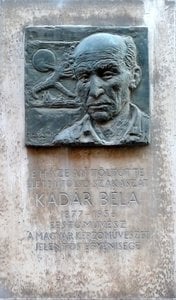
Béla Kádár

Béla Kádár

1877 - 1956