
由我们的艺术家按需定制,为您提供您所选尺寸及画框的布面手工油画。 ( 切换至版画销售渠道 切换至数字图像销售渠道)
从与原作比例一致的预设尺寸中进行选择。

您可以输入自定义尺寸,以适配特定的画框或空间。如果所选尺寸与原图比例不符,我们将通过裁剪作品或添加手绘元素来扩展画面。数字样稿将在制作开始前发送给您确认。
请注意,屏幕预览无法准确反映实际的裁剪或扩展效果,只有样稿才能真实呈现最终的构图。
虽然我们提供定制尺寸服务,但为了保留原作比例,建议您从预设列表中选择尺寸。

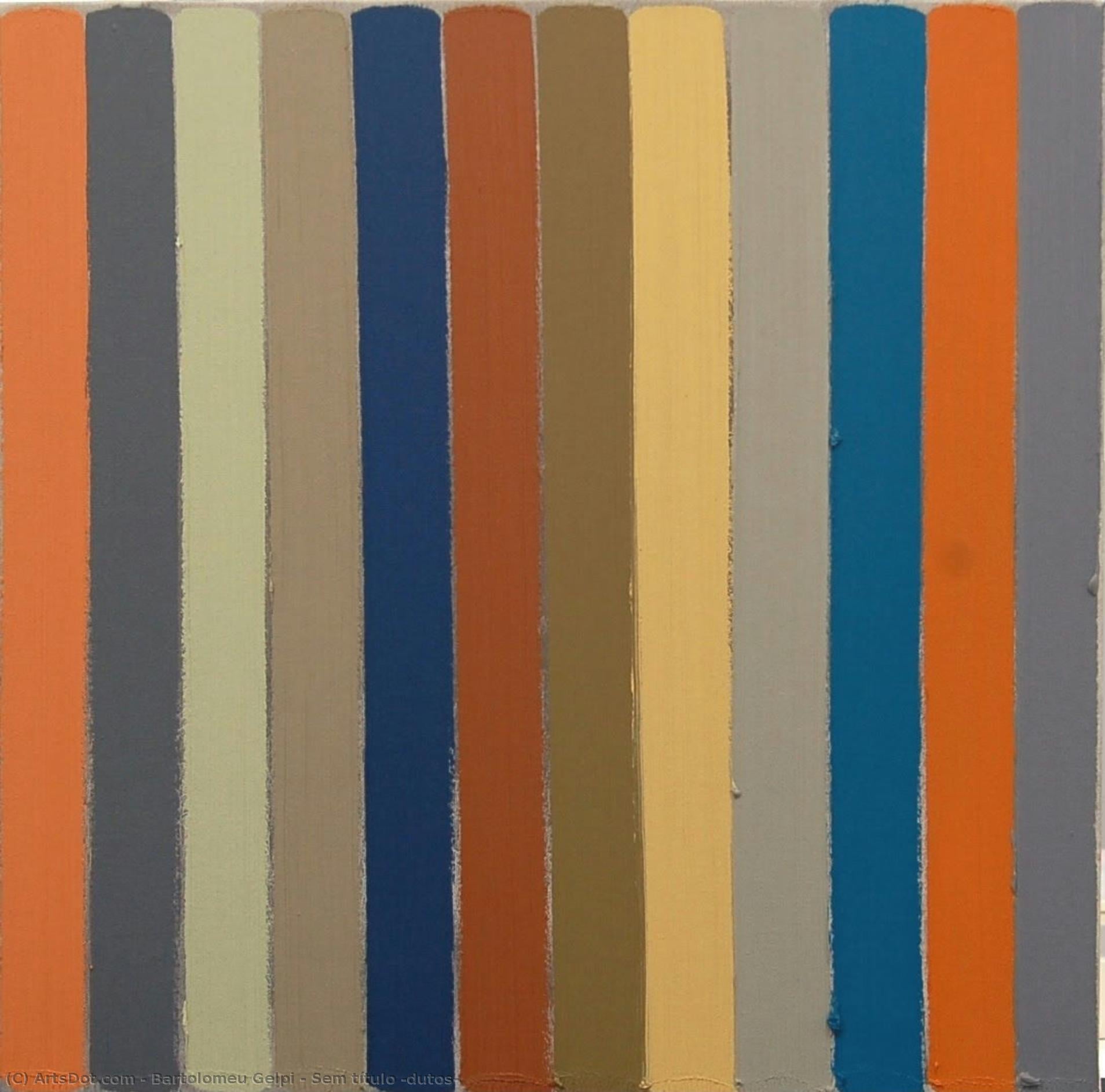
Sem título (dutos)
复制品尺寸

In the vibrant, pulsating heart of São Paulo’s contemporary art scene, the work of Bartolomeo Gelpi emerges as a profound meditation on form, color, and the architecture of perception. Born in Brazil in 1975, Gelpi has cultivated a visual language that transcends simple abstraction, inviting viewers into a world where geometric precision meets emotional depth. His artistic journey is deeply rooted in the rigorous academic traditions of his homeland, having honed his craft at the prestigious Faculdade Armando Álvares Penteado (FAAP). This formal foundation provided him with more than just technical mastery; it instilled a disciplined approach to the canvas, where every line and color swatch serves a deliberate purpose within a larger, cosmic order.
Gelpi’s early development was marked by an intense period of experimentation and scholarly pursuit. During the late 1990s, he immersed himself in the study of art history and contemporary practice, participating in influential groups such as the Escola 3º Andar under the guidance of masters like Dora Longo Bahia and Felipe Chaimovich. This era of mentorship allowed him to bridge the gap between classical technique and the avant-garde impulses of the new millennium. His travels through Italy and Germany during a sabbatical period further enriched his perspective, infusing his Brazilian roots with a broader European sensibility regarding space and light. This synthesis of influences is palpable in his mature works, which balance a certain structural austerity with an almost spiritual luminosity.
To encounter a Gelpi painting is to enter a dialogue with the fundamental elements of sight. His signature style is defined by meticulously crafted geometric abstractions, primarily executed in oil on canvas. Eschewing the distractions of representational imagery, he focuses the viewer's attention on the interplay of interlocking shapes—squares, rectangles, and triangles—that seem to dance across the surface of the work. These forms are not merely static objects; through his masterful manipulation of complementary hues and layered textures, Gelpi imbues them with a sense of kinetic energy. The canvases often appear to pulsate, as if the very pigments are breathing, creating a rhythmic tension that keeps the eye in constant motion.
The artist’s approach to color is nothing short of symphonic. He utilizes bold, saturated palettes to define boundaries and create depth, often employing light-filled swatches that suggest an infinite expansion beyond the frame. His work has been noted for its ability to evoke a sense of "site-specific" presence, where the painting becomes an extension of the environment itself. This is perhaps most evident in his site-specific installations, such as those seen in his exhibition Lá e Ali, where he applied paint directly onto masonry to transform architectural elements into sculptural, painted entities. In these moments, the distinction between the art object and the space it inhabits dissolves, leaving only the pure essence of color and form.
Throughout his career, Gelpi has achieved significant recognition within the Brazilian institutional landscape, marking him as a vital voice in contemporary abstraction. His trajectory is punctuated by prestigious accolades and exhibitions in some of South America's most important cultural venues. Notable milestones include:
Ultimately, Bartolomeo Gelpi’s contribution to art lies in his ability to find the sublime within the structured. By stripping away the anecdotal and focusing on the elemental, he creates a space for contemplation that is both intellectually rigorous and emotionally resonant. His work remains a testament to the power of abstraction to communicate the complexities of human perception, ensuring his place as a significant figure in the ongoing narrative of Brazilian modernism.

1961 - , Brazil

Explore the profound spiritual depth of geometric abstraction. From Malevich's Suprematism to modern masters, our expert guide reveals how pure form and color command presence in fine art collections.

 效果预览
效果预览
 分享
分享 分享
分享
 详情
详情

 下载
下载
 相似作品
相似作品 X射线
X射线 幻灯片播放
幻灯片播放 统计数据
统计数据


 展开详情
展开详情






































 玻璃选项仅适用于110厘米以下的尺寸。


