
 LithographyColor Field Painting
 1963Modern
 37.0 x 32.0 cm
由我们的艺术家按需定制,为您提供您所选尺寸及画框的布面手工油画。 ( 切换至版画销售渠道 切换至数字图像销售渠道)





























从与原作比例一致的预设尺寸中进行选择。

您可以输入自定义尺寸,以适配特定的画框或空间。如果所选尺寸与原图比例不符,我们将通过裁剪作品或添加手绘元素来扩展画面。数字样稿将在制作开始前发送给您确认。
请注意,屏幕预览无法准确反映实际的裁剪或扩展效果,只有样稿才能真实呈现最终的构图。
虽然我们提供定制尺寸服务,但为了保留原作比例,建议您从预设列表中选择尺寸。

Canto VII
复制品尺寸
Barnett Newman's "Canto VII," created in 1963 as part of his seminal 18 Cantos series, is more than just a painting; it’s an immersive experience. This lithograph offers a profound meditation on color and space, embodying the core tenets of Newman’s revolutionary approach to abstract expressionism. The artwork immediately draws the eye with its bold use of blue – not a single hue, but rather a complex interplay of shades that bleed into one another, creating a sense of ethereal depth. Two distinct blue stripes dominate the composition, offset by a vast expanse of pale blue background, testing the very boundaries of perception and inviting contemplation.
Newman conceived the 18 Cantos series as a unified whole, drawing inspiration from musical forms – specifically, symphonies. He described his work using musical analogies, stating that “their symphonic mass lends additional clarity to each individual canto” and “at the same time, each canto adds its song to the full chorus.” This deeply personal philosophy underscores the artwork’s intention: to evoke a sense of spiritual resonance through carefully orchestrated color relationships. The series represents Newman's desire to move beyond representational art and tap into something more profound – a universal harmony that transcends individual experience.
The title, "Canto VII," suggests a specific movement within this larger composition, inviting the viewer to consider it as one element of a greater whole. The artwork’s emotional impact is undeniably serene yet subtly unsettling, prompting introspection and a sense of awe in the face of its vastness.
"Canto VII" firmly places itself within the context of abstract expressionism, but it also distinguishes itself through its remarkable simplicity and elegance. While artists like Jackson Pollock embraced gestural abstraction with raw energy, Newman sought a more restrained approach – one that prioritized color as a primary subject matter. His work shares affinities with Henri Matisse’s celebrated use of color and fluid draughtsmanship, evident in the works showcased at The Matisse Museum in Nice, France. However, unlike Matisse's often decorative style, Newman aimed for something far more austere and contemplative.
Newman’s artistic journey is marked by a deliberate rejection of earlier work, signifying his commitment to forging a new visual language. This process reflects a broader trend within post-war art – a desire to break free from traditional conventions and explore the potential of abstraction as a means of expressing profound human emotions.
"Canto VII" is not merely a beautiful artwork; it’s an investment in artistic history. A hand-painted reproduction offers a tangible connection to one of the 20th century's most influential artists, allowing you to bring Newman’s vision into your own space. This lithograph represents a pivotal moment in the evolution of color field painting and stands as a testament to Newman’s enduring legacy. Consider this piece not just for its aesthetic qualities, but for the profound questions it raises about perception, spirituality, and the very nature of art itself.

1905 - 1970

Embark on a scholarly journey through the alchemy of lithography. This definitive guide offers collectors profound insights into the chemical mastery of stone and ink, the medium's historical legacy, and essential expertise for acquiring rare, museum-quality prints with absolute confidence.
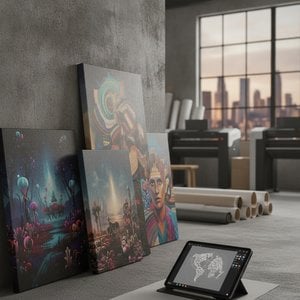
Transform your digital artistry into a prestigious global brand with WahooArt’s premium Giclée prints. Experience museum-quality archival excellence and seamless on-demand fulfillment designed for the modern creative entrepreneur seeking to build a lasting artistic legacy.

Master the nuances of Giclée printing with our expert guide. Discover how pigment-based inks and museum-grade substrates create fade-resistant, high-fidelity art reproductions designed for discerning collectors seeking unparalleled quality and longevity.


 效果预览
效果预览
 分享
分享 分享
分享
 详情
详情 指南
指南

 下载
下载
 相似作品
相似作品 X射线
X射线 幻灯片播放
幻灯片播放 统计数据
统计数据 展开详情
展开详情









 玻璃选项仅适用于110厘米以下的尺寸。


