































从与原作比例一致的预设尺寸中进行选择。

您可以输入自定义尺寸,以适配特定的画框或空间。如果您选择的尺寸与原图比例不符,我们将对作品进行裁剪,或通过镜像填充/纯色填充边缘的方式来扩展图像。在开始制作之前,我们会向您发送一份数字效果图供您确认。
请注意,屏幕上的预览并不能反映实际的裁剪或扩展效果。只有效果图才能准确展示最终的构图。
虽然我们提供定制尺寸,但为了保持原图比例,我们建议您从预设列表中选择尺寸。

Pear and Apple
复制品尺寸
Avigdor Arikha’s 1972 work, “Pear and Apple,” isn’t merely a still life; it’s a distilled meditation on form, texture, and the profound simplicity of observation. Born in Romania amidst displacement and hardship – his father perished during the horrors of World War II – Arikha's artistic journey is inextricably linked to this experience of loss and resilience. This piece, rendered with an almost austere elegance, speaks volumes about his commitment to capturing the essence of a subject through direct engagement, eschewing photographic representation for a deeply personal and immediate portrayal.
The composition itself is deceptively straightforward: two fruits – a pear and an apple – presented side-by-side against a muted, undefined background. Yet, within this apparent simplicity lies a remarkable depth of observation. Arikha doesn’t attempt to recreate the fruit with photographic precision; instead, he employs loose, gestural lines, a technique honed during his time studying fresco in Paris, to build up volume and texture. The marks themselves are imbued with a sense of movement and spontaneity, as if the artist were capturing a fleeting moment of perception rather than meticulously rendering an object.
Arikha’s masterful use of line is central to the work's impact. He employs hatching, cross-hatching, and varying pressures to create a rich tapestry of tones and textures. The surface isn’t smooth or polished; it’s deliberately rough and uneven, mirroring the natural imperfections of the fruit skin. This tactile quality invites the viewer to engage with the artwork on a sensory level, almost as if they could reach out and touch the cool, yielding flesh of the pear or the firm, waxy surface of the apple.
The choice of medium – etching on paper – further contributes to the work’s character. Etching, a technique involving transferring ink through a textured plate, lends itself beautifully to Arikha's expressive style. The delicate lines and subtle tonal variations are achieved through meticulous handwork, demonstrating the artist’s extraordinary control and precision. The monochrome palette—primarily shades of gray, black, and cream—amplifies this effect, stripping away any distractions and focusing attention on the fundamental elements of form and texture.
Arikha's artistic trajectory is deeply intertwined with his personal history. His early years in Bukovina, a region caught between empires and ravaged by conflict, instilled in him a profound appreciation for the fragility of life and the importance of bearing witness. “Pear and Apple” can be interpreted as a quiet meditation on these themes – a reminder of beauty amidst hardship, and a testament to the enduring power of observation.
The pairing of the pear and apple itself carries symbolic weight. The pear, often associated with innocence and fertility, contrasts with the apple, traditionally linked to temptation and knowledge. Together, they create a subtle tension, suggesting a contemplation on human desires and limitations. Furthermore, Arikha’s commitment to painting *from life*, directly observing his subjects without preliminary sketches or photographs, reflects a deliberate rejection of illusionism and an embrace of authentic experience – a philosophy deeply rooted in the traditions of Chinese brush painting.
“Pear and Apple” is more than just a still life; it's a window into the soul of one of the 20th century’s most compelling artists. Arikha’s ability to distill complex emotions and ideas into simple, evocative forms continues to resonate with viewers today. Whether displayed in a private collection or a public gallery, this work invites contemplation, prompting us to consider the beauty that can be found in the ordinary and the profound insights that emerge from direct observation.


1929 - 2010 , 罗马尼亚

Elevate your artistic practice with this expert guide to mastering the line. Discover advanced techniques in graphite, charcoal, and contour drawing designed for art students seeking technical precision and expressive depth in their fine art studies.

Explore the profound artistry of graphite drawing. Discover professional techniques for mastering depth, texture, and detail through a lens of art history, from classical sketches to modern masterpieces. Elevate your understanding of the pencil medium with our expert guide.

Discover the sophisticated mastery of graphite drawing. Explore expert techniques for achieving profound depth, intricate texture, and hyper-realistic detail through the alchemy of carbon, curated for the discerning art enthusiast and professional collector.

Embark on a sophisticated journey through art history with our exploration of still life masterpieces. Discover the profound symbolism behind classical paintings of drinks and fruit, curated for the true connoisseur seeking timeless elegance and academic depth.
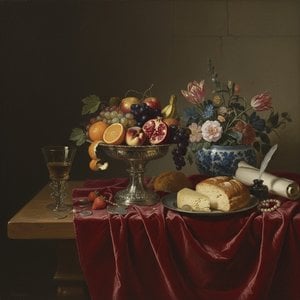
Embark on a sophisticated journey through the history of still life art. From Dutch Golden Age masterpieces to Baroque opulence, explore the profound symbolism and timeless beauty of the world's most exquisite table compositions.


 效果预览
效果预览
 购买手绘画作
 分享
分享 分享
分享
 详情
详情

 下载
下载
 相似作品
相似作品 X射线
X射线 幻灯片播放
幻灯片播放


 展开详情
展开详情









 玻璃选项仅适用于110厘米以下的尺寸。


