x
效果预览效果预览 AR 预览AR 预览 购买印刷品 购买印刷品购买图片 购买图片 分享分享
详情详情 加入收藏 加入收藏 下载下载 相似作品相似作品 X射线X射线 幻灯片播放幻灯片播放

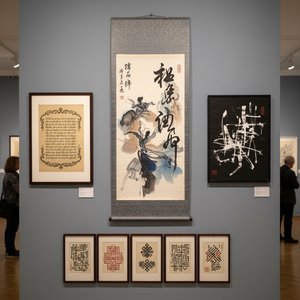
Untitled (DD2DKZ)

Exquisite Japanese calligraphy by Ashikaga Yoshimitsu – a rare aged paper piece showcasing traditional brushwork & historical significance. Discover this unique art.

Ashikaga Yoshimitsu (1358-1408): 3rd Ashikaga Shogun, patron of Zen Buddhism & art. Unified Japan, fostered Sino-Japanese trade. Explore his legacy!

手工油画复制品

由我们的艺术家按需定制,为您提供您所选尺寸及画框的布面手工油画。 (购买印刷品 购买印刷品购买图片 购买图片)

标准尺寸
定制
CM
INCH

从与原作比例一致的预设尺寸中进行选择。

宽度
高度

您可以输入自定义尺寸,以适配特定的画框或空间。如果所选尺寸与原图比例不符,我们将通过裁剪作品或添加手绘元素来扩展画面。数字样稿将在制作开始前发送给您确认。
请注意,屏幕预览无法准确反映实际的裁剪或扩展效果,只有样稿才能真实呈现最终的构图。
虽然我们提供定制尺寸服务,但为了保留原作比例,建议您从预设列表中选择尺寸。

可定制示例:将面部替换为客户照片;添加宠物(例如,将猫替换为狗);在背景中加入隐藏信息;更改背景风景或元素。
下单后,WahooArt.com 团队将通过电子邮件联系客户获取具体要求,并提供效果预览图。

全球配送(),仅需 3-4 周即可送达,无需等待标准时效的 5 周。(29 August)。品质绝不妥协。

why_choose_icon
全球免费特快专递服务
why_choose_icon
优质亚麻画布
why_choose_icon
全程运输保险
why_choose_icon
关税退款保证
why_choose_icon
色彩还原度保证
why_choose_icon
60天退货政策(仅限制造缺陷)
why_choose_icon
100%退款保证
why_choose_icon
多件购买优惠

总计金额

$ 272

reproduction

Untitled (DD2DKZ)

复制材质

复制品尺寸

-

最终总价

$ 272


艺术家简介

Ashikaga Yoshimitsu: A Life of Power and Patronage

Early Life and Ascension

  • Ashikaga Yoshimitsu (September 25, 1358 – May 31, 1408) was the third shōgun of the Ashikaga shogunate, ruling Japan during the Muromachi period.
  • Born in Kyoto as Haruō, he was the oldest surviving son of Ashikaga Yoshiakira.
  • He ascended to the position of shōgun at the young age of ten in 1368, inheriting a hereditary title that commanded the military estate.
  • By twenty, Yoshimitsu had gained prominence within the imperial court, serving as acting grand counselor (gon dainagon).

Political and Institutional Reforms

  • In 1379, Yoshimitsu initiated a significant reorganization of the *gozan zen* (Five Mountain Zen) establishment, solidifying its institutional framework.
  • He broke precedent in 1381 by becoming the first member of the samurai class to host a reigning emperor at his private residence – a demonstration of growing shogunal power.
  • A pivotal achievement was his successful negotiation in 1392, bringing an end to the Nanboku-chō imperial schism that had divided Japan for over half a century.
  • Further elevating his status, he became grand chancellor of state (daijō daijin) in 1394, the highest rank within the imperial court.

Retirement and Cultural Flourishing

  • Yoshimitsu retired from public office in 1395, taking religious vows and retreating to his lavish retirement villa, Kitayama-dono.
  • Kitayama-dono was renowned for its opulence, most notably the Kinkaku Shariden (Golden Pavilion), two-thirds covered in gold leaf – a symbol of Yoshimitsu’s wealth and power.
  • During his retirement, he received envoys from both the Ming and Joseon courts on at least six occasions, establishing crucial trade relations with China that lasted over a century.

Diplomacy and Recognition

  • Yoshimitsu skillfully navigated diplomatic complexities, often employing displays of subservience to secure favorable terms from the Ming dynasty.
  • In recognition of his efforts, the Chinese sovereign bestowed upon him the title “King of Japan” (Nihon Kokuō).
  • In 1407, he ambitiously attempted to assume the title *daijō tenno* – a designation typically reserved for retired emperors. Though unrealized due to his death, this move underscored his desire for ultimate authority.

Artistic and Religious Legacy

  • Late in his career, Yoshimitsu increasingly sought to legitimize his power through the lens of Buddhist kingship.
  • He employed elaborate rituals, symbolic imagery, and monumental architecture – like Kitayama-dono – to portray himself as a universal monarch or *dharma king*, mirroring rulers in Southeast Asia.
  • His posthumous name was Rokuon'in (鹿苑院), further cementing his place in Japanese history.

Historical Significance

  • Yoshimitsu’s reign marked a golden age for Zen Buddhism, art, and architecture during the Muromachi period.
  • His diplomatic achievements fostered cultural exchange and economic prosperity.
  • He is remembered as a complex figure – a powerful shogun who skillfully balanced political ambition with artistic patronage and religious devotion.
  • His legacy continues to influence Japanese culture and aesthetics today.
Ashikaga Yoshimitsu

Ashikaga Yoshimitsu

1358 - 1408 , Japan

艺术家简介

  • Birth Date: September 25, 1358
  • Birth Place: Kyoto, Japan
  • Death Date: May 31, 1408
  • Movement: Muromachi period art & architecture
  • Name: Ashikaga Yoshimitsu
  • Nationality: Japanese
  • Notable Works: Kitayama-dono villa (Kinkaku-ji)