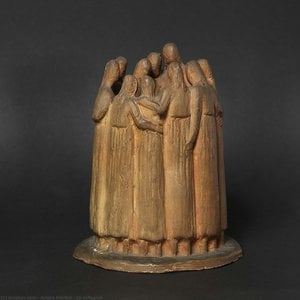
TerracottaNovecento Italiano
 Modern
 5.0 x 23.0 cm
 Fondazione Cariplo
由我们的艺术家按需定制,为您提供您所选尺寸及画框的布面手工油画。 ( 切换至版画销售渠道 切换至数字图像销售渠道)
您可以从与原作比例一致的预设尺寸中进行选择。

您可以输入自定义尺寸,以适配特定的画框或空间。如果所选尺寸与原图比例不符,我们将通过裁剪作品或添加手绘元素来扩展画面。数字样稿将在制作开始前发送给您确认。
请注意,屏幕预览无法准确反映实际的裁剪或扩展效果,只有样稿才能真实呈现最终的构图。
虽然我们提供定制尺寸服务,但为了保留原作比例,建议您从预设列表中选择尺寸。

Horse
复刻品尺寸说明
In the quiet presence of Arturo Martini’s Horse, one encounters more than just a depiction of an animal; one meets a profound dialogue between ancient tradition and the burgeoning modernism of the early twentieth century. This captivating sculpture, originally conceived in cast terracotta, serves as a window into a pivotal moment in Italian art history. The piece captures a sense of raw, unbridled vitality, with its powerful head and open mouth suggesting a breath caught in time. While the original work is celebrated for its light blue finish—a color palette inspired by the storied ceramics of Savona—the essence of the sculpture lies in its ability to convey movement and life through the deliberate simplification of form.
The technique employed by Martini reflects his deep-seated roots in craftsmanship. Having begun his journey as a goldsmith, Martini possessed an intimate understanding of how material responds to the artist's touch. In this work, we see the influence of his studies with Etruscan and Roman antiquities, where the heavy, earthbound nature of terracotta is transformed into something ethereal. The way the legs are positioned, spreading outward to create a dynamic visual tension, demonstrates a mastery of composition that avoids mere imitation of nature in favor of capturing its underlying energy. For the discerning collector or interior designer, this piece offers a sophisticated interplay of texture and silhouette, making it an ideal focal point for spaces that value sculptural depth.
To understand the Horse is to understand the turbulent artistic landscape of post-World War I Italy. Martini was an artist who refused to be confined by a single movement; he navigated the experimental fervor of Futurism and the structured elegance of the Novecento Italiano with unparalleled grace. This specific work, produced around 1926-1927, represents a period where Martini sought to move beyond the "primitivist purification" of forms toward a more expressive, liberated style. He moved away from rigid constraints to find a new language of sculpture—one that utilized freer forms to achieve a deeper emotional resonance.
For those looking to integrate art into a contemporary living space, a high-quality reproduction of this masterpiece brings with it an aura of historical significance and timeless aesthetic appeal. The sculpture’s ability to bridge the gap between classical stability and modern fluidity allows it to complement diverse decor styles, from minimalist galleries to richly textured, classical interiors. It is not merely a decoration but an invitation to contemplate the enduring power of the animal spirit and the transformative hand of a master who turned humble clay into an eternal icon of motion.


1889 - 1947

Explore the rich history of sculpture from ancient masterpieces to contemporary innovations. Discover key techniques, influential artists & investment potential for discerning art collectors.

Explore the rich history of sculpture with WahooArt. Discover key techniques, influential artists & investment potential for discerning collectors. Expert insights into valuing and collecting timeless masterpieces.

Journey through art history with our Top 10 bronze sculptures! Explore masterpieces by Rodin, Michelangelo & more. Discover stories behind iconic statues and find museum-quality reproductions for your home decor at WahooArt.com.

Immerse yourself in the captivating world of slate blue! Explore 10 iconic paintings by Monet, Van Gogh & Renoir. Discover their stories, techniques & find museum-quality art reproductions for your home at .

Journey through art history with 10 legendary bronze sculptures – from Michelangelo's David to Rodin’s Thinker. Explore the stories, techniques & timeless beauty of these masterpieces. Find museum-quality reproductions & elevate your home decor on WahooArt.com.


 发送
发送 分享
分享
 详情
详情 指南
指南

 下载图片
下载图片
 相似作品
相似作品 幻灯片播放
幻灯片播放 统计数据
统计数据 阅读全文
阅读全文






































 玻璃选项仅适用于110厘米以下的尺寸。