
 Gelatin Silver PrintPhoto
 1923Modern
 21.0 x 13.0 cm
 Arnold Schönberg Center
博物馆级艺术微喷或帆布版画,制作高效,并提供多种饰面选择。 ( 订购此收藏品的纯手工复刻画作 切换至数字图像销售渠道)
您可以从与原作比例一致的预设尺寸中进行选择。

请输入您所需的宽度和高度,以适配您的画框或墙面。由于印刷品只能进行裁剪,无法超出原图尺寸,因此若比例不一致,画面的一部分将会被裁切。在正式印刷之前,我们会为您发送一份数字效果图供您确认。本页面显示的图片并非最终裁剪后的效果——只有效果图才能展示真实的裁剪情况。
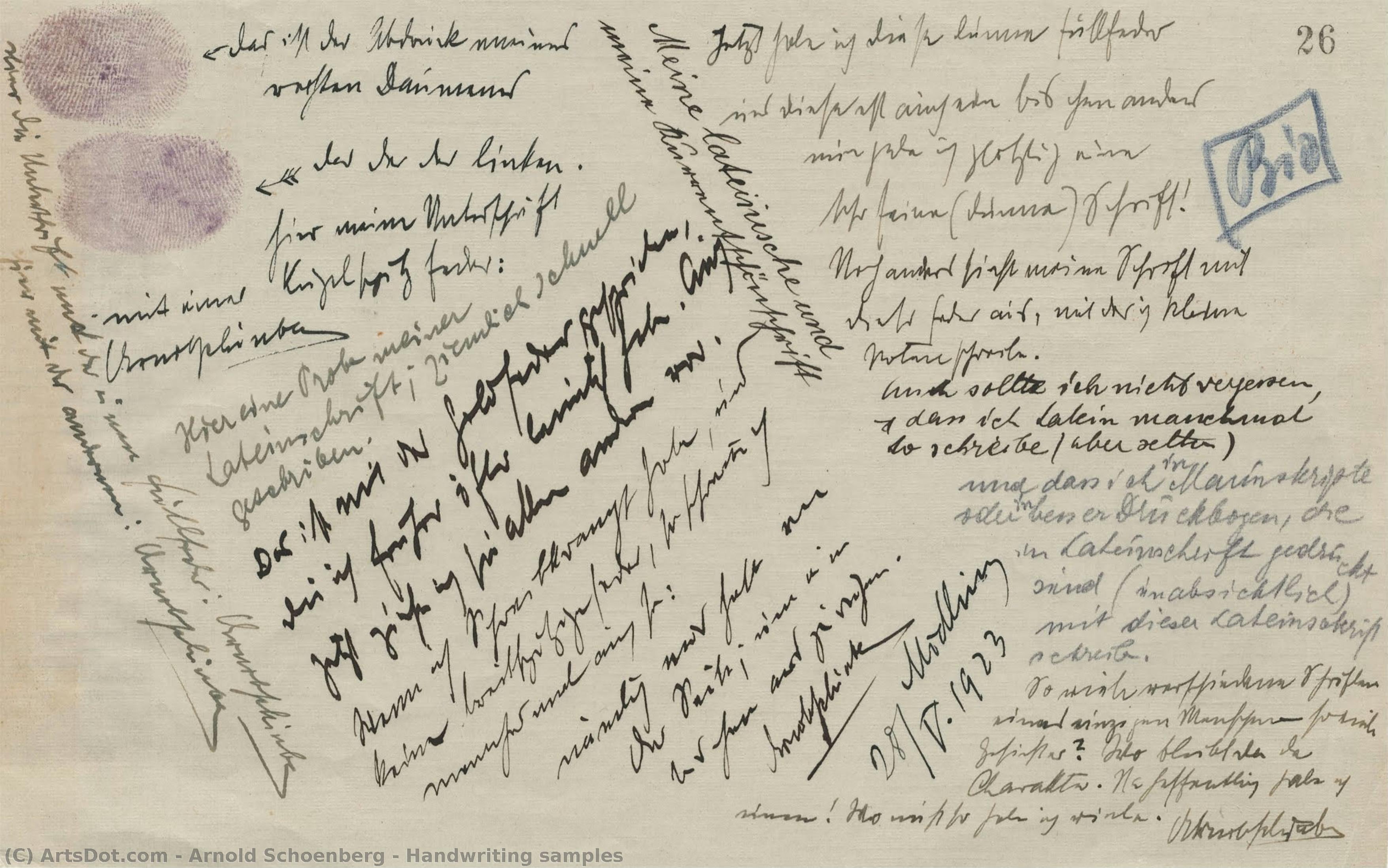
Handwriting samples
复刻品尺寸说明
In the quiet, monochromatic expanse of Arnold Schoenberg’s 1923 handwriting samples, we find something far more profound than mere calligraphy; we encounter a raw, unfiltered dialogue between a genius and his tools. This archival photograph captures a moment of deep introspection, where the legendary composer—the architect of atonality—turns his gaze inward to examine the very traces of his physical presence on paper. The document is a dense, beautiful tapestry of script, ranging from the sweeping, confident strokes of a gold-nibbed fountain pen to the hurried, delicate tremors of a fine writing instrument. To look upon these pages is to witness the rhythmic pulse of a mind that was constantly redefining the boundaries of musical and structural expression.
The composition of this piece possesses an organic, almost hypnotic quality. There is no empty space; instead, the parchment is alive with the movement of ink, creating a textured landscape of black and gray tones. The varying weights of the lines—some bold and authoritative, others thin and ghostly—mirror the complexity of Schoenberg’s musical language. For the collector or the lover of historical artifacts, this work offers a rare glimpse into the process of creation. It is not just a record of words, but a visual symphony of pressure, speed, and intent, where each loop and serif serves as a note in a silent, written composition.
Beyond its aesthetic allure, the document serves as a fascinating psychological study. Schoenberg’s accompanying notes act as a guide through his own metamorphosis, as he reflects on how different pens alter his very character. He muses on the "many faces" revealed by his varying scripts, posing a poignant question: "Where is the character? Well hopefully I have one! Where not so I have many." This philosophical inquiry into identity and multiplicity resonates deeply with the modernist spirit of the early 20th century. The handwriting becomes a metaphor for the fragmented yet unified self—a concept that mirrors his revolutionary twelve-tone technique, where individual notes are liberated from traditional hierarchies to form a new, cohesive whole.
For interior designers and curators, this piece offers a sophisticated, minimalist elegance. Its monochromatic palette allows it to integrate seamlessly into modern, academic, or classical settings, providing a focal point of intellectual depth. The texture of the paper and the subtle shadows within the ink strokes provide a tactile quality that invites close inspection. It is an artwork that does not merely decorate a wall; it anchors a room with a sense of history, gravity, and profound human vulnerability.
To possess a reproduction of this work is to hold a fragment of the Second Viennese School’s legacy. Created in May 1923, during a period of immense musical transition, these samples capture Schoenberg at a pivotal moment in his life and career. The document stands as a testament to the era's obsession with breaking tradition and exploring the subconscious. It is an evocative piece for anyone moved by the intersection of fine art, musicology, and the human condition. This archival treasure reminds us that even in the most disciplined masters, there exists a beautiful, wandering spontaneity—a trace of the hand that continues to inspire generations of thinkers and creators.
在阿诺德·勋伯格已记录的主题——personal identity exploration, self-reflective writing process, documentary archival record, musical composer's personal notes——之中,"Handwriting samples" 则将焦点转向了handwriting, document, calligraphy, monochrome, personal notes, archival, script。
阿诺德·勋伯格 的《Handwriting samples》 的亮度为 Luminous。亮度描述了色彩呈现出的反射光量。
您可以在 数字图像 页面直接购买 “Handwriting samples” 的 高分辨率数字图像下载。


1874 - 1951 , 奥地利

Discover the science of permanence at WahooArt.com. Learn how our museum-grade archival pigments, heavy-duty canvases, and master-level varnishing ensure your hand-painted oil reproductions endure for generations as a lasting legacy.

Elevate your most cherished memories with WahooArt’s bespoke service. We transform your personal photos into breathtaking, hand-painted black & white oil masterpieces. Experience museum-quality craftsmanship and timeless elegance for your private collection. Discover the art of legacy.
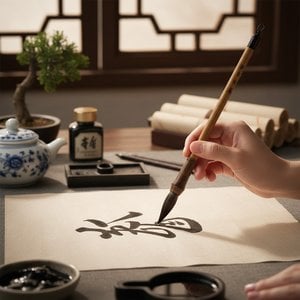
Embark on a profound journey through the soul of Chinese calligraphy. Explore the historical mastery of ink, brush, and script, from ancient Zhuanshu to elegant running script, and discover how this timeless art form reflects the enduring spirit of classical East Asian aesthetics.

Discover how monochrome masterpieces elevate modern luxury interiors. Explore the profound impact of single-color fine art, from geometric abstraction to textured oil reproductions, curated for the discerning collector seeking sophisticated architectural elegance.

Discover the enduring allure of hand-painted oil reproductions. WahooArt offers museum-quality, archival masterpieces designed for discerning collectors seeking timeless beauty and a lasting legacy. Invest in fine art that transcends generations with our expert craftsmanship.

 发送
发送 分享
分享
 详情
详情 指南
指南

 下载图片
下载图片
 相似作品
相似作品 幻灯片播放
幻灯片播放 统计数据
统计数据 阅读全文
阅读全文






































 玻璃选项仅适用于110厘米以下的尺寸。


